

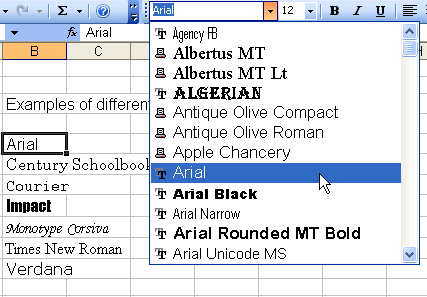
The realm of visual communication is intricately bound to typographic choices, where font styles play an instrumental role in conveying messages effectively. A specific inquiry emerges: which font style would compete with a cell border? To fathom this conundrum, one must first understand the context in which cell borders and fonts coexist—typically within spreadsheet applications, word processors, and design software. These tools often rely on grids and cells to organize information, presenting a unique challenge: the selection of a font style that not only enhances readability but also stands firm against visual distractions posed by cell borders.
When considering fonts in relation to cell borders, one must appreciate how the characteristics of typography can complement or clash with the delineation of cells. Borders delineate space; they serve as outlines that can either enhance or inhibit the perception of the content within. Therefore, choosing a font style that exhibits boldness and distinction could successfully draw the eye away from the confines of the border. This aspect invites a deeper exploration into various font classifications, with a focus on their aesthetic and functional attributes.
### 1. Understanding Cell Borders
Before delving into font styles, it is essential to comprehend the purpose of cell borders. Cell borders provide clarity by separating distinct data points within a grid. They guide the viewer’s gaze and establish a hermetic seal around information. The thickness, color, and style of these borders can influence visual hierarchy. In practice, decisions regarding cell borders are not made lightly; they are calibrated to create an engaging yet structured environment. Thus, any font chosen must consider the visual weight of the border it faces.
### 2. Font Characteristics that Compete with Borders
The decision-making process regarding font styles involves an evaluation of several characteristics: weight, contrast, style, and legibility. Herein lies an exploration of these attributes.
- Weight: Fonts that possess a substantial weight, such as bold or extra-bold styles, command attention. Their assertiveness can successfully divert focus from the bordering lines. Fonts like Arial Black or Impact provide a resolute presence within any cell.
- Contrast: High-contrast fonts, particularly those that juxtapose light and dark tones, incite visual interest. Utilizing a light font against a dark border, or vice versa, will not only highlight text but draw attention away from the edges of a cell.
- Style: Unique font styles such as serif types often create a dynamic visual tension with boxy cell borders. Fonts like Georgia or Garamond can compete with the rigidity of a border through their inherent curves and flourishes, fostering a sense of elegance.
- Legibility: In the heart of communication lies comprehension. Fonts that boast clear, unambiguous characters, like Helvetica or Verdana, ensure that the message prevails, effectively standing their ground against cell borders.
### 3. The Versatility of Sans Serif Fonts
In modern design, sans serif fonts are often favored for their crispness and clarity. Fonts such as Arial, Roboto, and Lato provide a clean visual experience that can effectively counteract the harshness of cell borders. These fonts not only boast exemplary legibility but can also adapt seamlessly across various digital mediums. Implementing sans serif fonts in a cell can imbue the layout with a clean, contemporary ambiance while competing adeptly with the rigidity of bordering lines.
### 4. The Allure of Decorative Fonts
Although decorative fonts tread a fine line between artistry and functionality, they possess an undeniable charisma that can challenge the confines of a cell border. Such fonts have the potential to transform mundane data entries into visually compelling statements. For instance, fonts like Pacifico or Playfair Display can create whimsical contexts within tables, encouraging users to engage with the information presented. Nevertheless, it is crucial to wield decorative fonts judiciously, as overuse may detract from legibility.
### 5. Establishing a Hierarchical Structure
In any layout, establishing hierarchy is paramount. A font that competes with cell borders must not only be visually appealing but purposeful. Fonts can be applied in varying sizes to prioritize information. Titles in a larger, bolder font can mitigate the influence of cell borders by asserting prominence. Conversely, smaller subtext can offer supporting details without overwhelming the primary message. Such an approach will enhance the overall navigation of the document or digital interface.
### 6. Color Choices and Their Impact
The interplay of color in font choice can magnify or diminish the effect of cell borders. A stark contrast between the font color and the cell border can reinforce the latter’s presence while simultaneously rendering the text readable. For example, pairing a vibrant hue with a muted border can draw attention to the text. On the other hand, similar color schemes can create a harmonious flow that diminishes the impact of borders, allowing the viewer to focus on the content.
### 7. Conclusion: A Cognitive Shift in Perspective
Ultimately, the question of which font style would compete with a cell border extends beyond mere aesthetic decisions; it challenges designers and communicators to think critically about how typography and borders interact. The conscious selection of font styles should stimulate curiosity and connection with the audience, enhancing the overall impact of presented information. By understanding how weight, contrast, style, and color converge, one can master the art of visually compelling communication that not only competes with cell borders but triumphs in clarity and engagement.

Leave a comment