

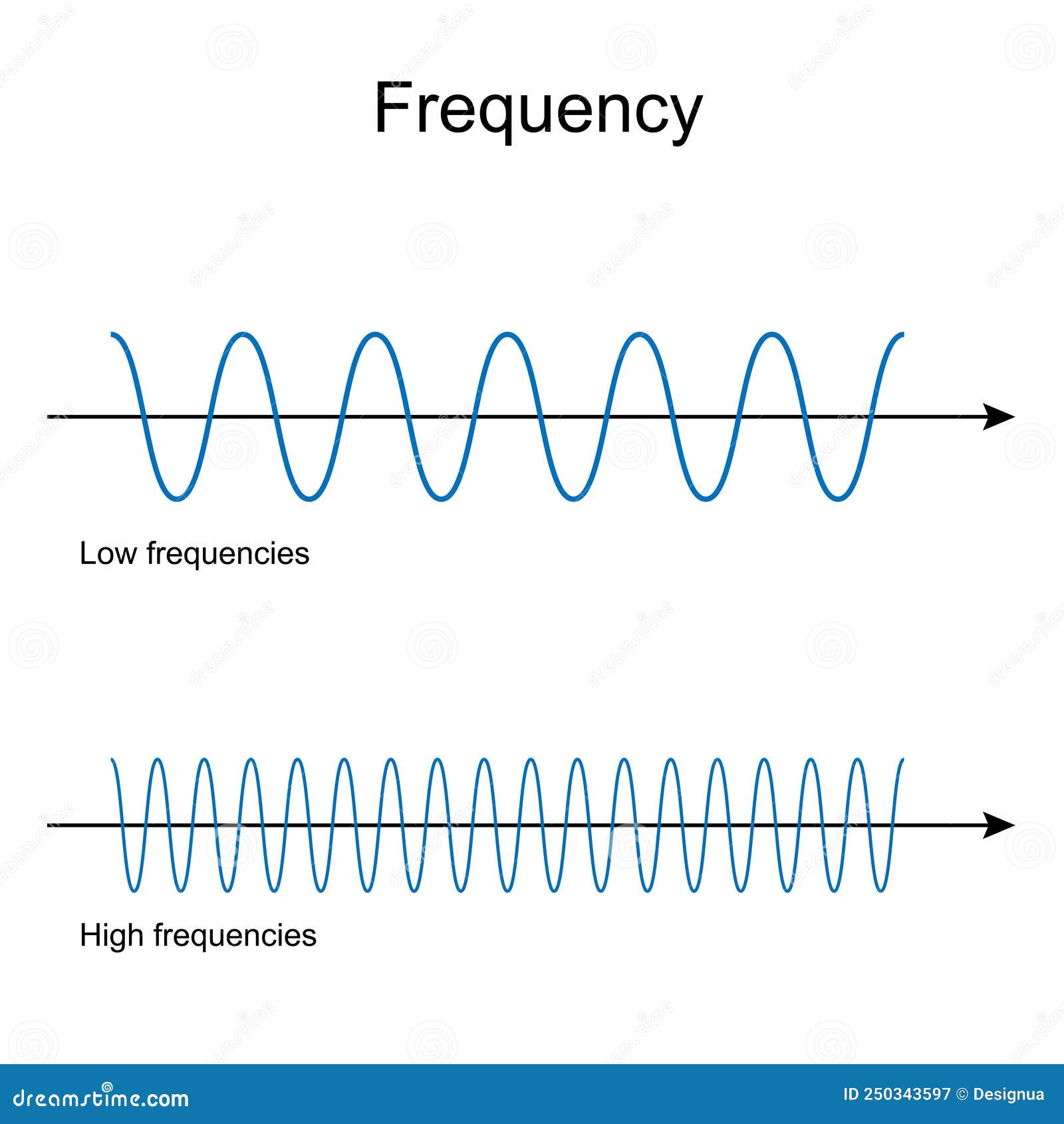
Understanding the frequency bands utilized for communication is imperative, particularly in applications demanding long-distance transmission. Brought forward by the advent of electronic communication, the proliferation of various frequency bands has delineated specific functionalities across different domains. Among these, several frequency ranges have been established and studied for their capability to effectively permeate vast distances.
First and foremost, it is critical to distinguish between the different frequency bands and their respective properties. Radio frequency (RF) bands are traditionally classified into categories based on their wavelengths. The most pertinent band for long-distance communication is the Low Frequency (LF) band, typically encompassing frequencies from 30 kHz to 300 kHz. This range showcases remarkable propagation characteristics due to its ability to diffract around obstacles and follow the curvature of the Earth.
To assess why the LF band excels in long-distance communication, one must consider the phenomena of diffraction and ground wave propagation. The unique dimensional attributes of LF waves allow them to bend over the horizon and engage in ground wave propagation. This results in reduced signal degradation over vast distances, making LF particularly well-suited for applications like maritime communication, navigation systems, and even certain types of telecommunication.
Conversely, the Medium Frequency (MF) band, ranging from 300 kHz to 3 MHz, also plays a significant role in long-distance communication. While not as pronounced as LF, MF employs similar diffraction properties and facilitates skywave propagation via ionospheric reflection. This feature enables MF signals to be transmitted over hundreds, if not thousands, of miles when atmospheric conditions are conducive. The MF band is predominantly utilized for AM radio broadcasting, offering reliable coverage across extensive geographic areas.
In addition to LF and MF bands, the High Frequency (HF) band, spanning from 3 MHz to 30 MHz, warrants attention for its long-distance capabilities. HF communication relies heavily on the ionosphere’s reflective properties, allowing radio waves to bounce back to Earth. By utilizing multiple hops, HF signals can traverse global distances, often in the range of thousands of kilometers. This capability is exploited in maritime, aviation, and even amateur radio communications. The fascination with HF propagation is further amplified by its unpredictability—dependent on solar activity and atmospheric conditions—making it both a challenging and exciting field for communication enthusiasts.
Amidst the plethora of frequency bands, the intricacies of ionospheric interaction become a focal point of investigation. The ionosphere is a dynamic layer of the Earth’s atmosphere, consisting of charged particles that fluctuate with solar radiation and geomagnetic activity. Understanding this interplay is imperative for optimizing HF communication, enabling practitioners to predict favorable conditions for long-distance transmissions. The variability of these conditions not only enhances the scientific understanding but also cultivates a sense of wonder regarding the natural phenomena that govern our communication capabilities.
Interestingly, advancements in technology have facilitated the exploration of higher frequency bands for long-distance communication. Utilizing frequencies above 30 MHz, such as Very High Frequency (VHF) and Ultra High Frequency (UHF), can yield successful long-distance transmission through the utilization of advanced modulations and reflection techniques. For instance, VHF communication, ranging from 30 MHz to 300 MHz, is often deployed in VHF radio for aircraft communications and marine services. While the reach may not be as extensive as LF or HF under ordinary conditions, innovations such as repeaters and satellite systems significantly enhance transmission ranges, emphasizing a continuing evolution in communication technology.
As one delves deeper into the phenomenon of long-distance communication, the discussion inevitably leads to explorations of the electromagnetic spectrum and its inherent limitations. The dispersion of signals across broader frequency bands invariably results in challenges, such as noise interference and attenuation, affecting both the quality and reliability of long-distance communication. In this context, engineers and scientists actively pursue novel solutions—ranging from sophisticated encoding techniques to adaptive modulation strategies—to mitigate these challenges and ensure robust communication links.
Ultimately, the choice of frequency band for long-distance communication is influenced by a confluence of factors, including signal propagation characteristics, environmental considerations, and technological innovations. Consequently, while LF and MF bands remain staples for reliable transmission over extensive areas, higher frequency bands are continually reshaping the landscape of communication through technological advancements.
The deeply rooted fascination for long-distance communication transcends mere technical inquiry. It embodies human curiosity and desire for connection, facilitating interactions across vast geographical expanses. As society grows increasingly interconnected, understanding the role of various frequency bands becomes paramount, not only for practical applications but also for appreciating the intricate dance of physics and technology that enables communication across the globe.
In conclusion, the extensive exploration of frequency bands has illuminated the critical functions they serve in long-distance communication. LF, MF, and HF bands each play vital roles, underlined by principles of diffraction and ionospheric interaction. The ongoing evolution in frequency utilization and technology hints at a future enriched by enhanced communication capabilities, blending observation with a sense of collective curiosity that drives humanity’s unquenchable thirst for connection.

Leave a comment