

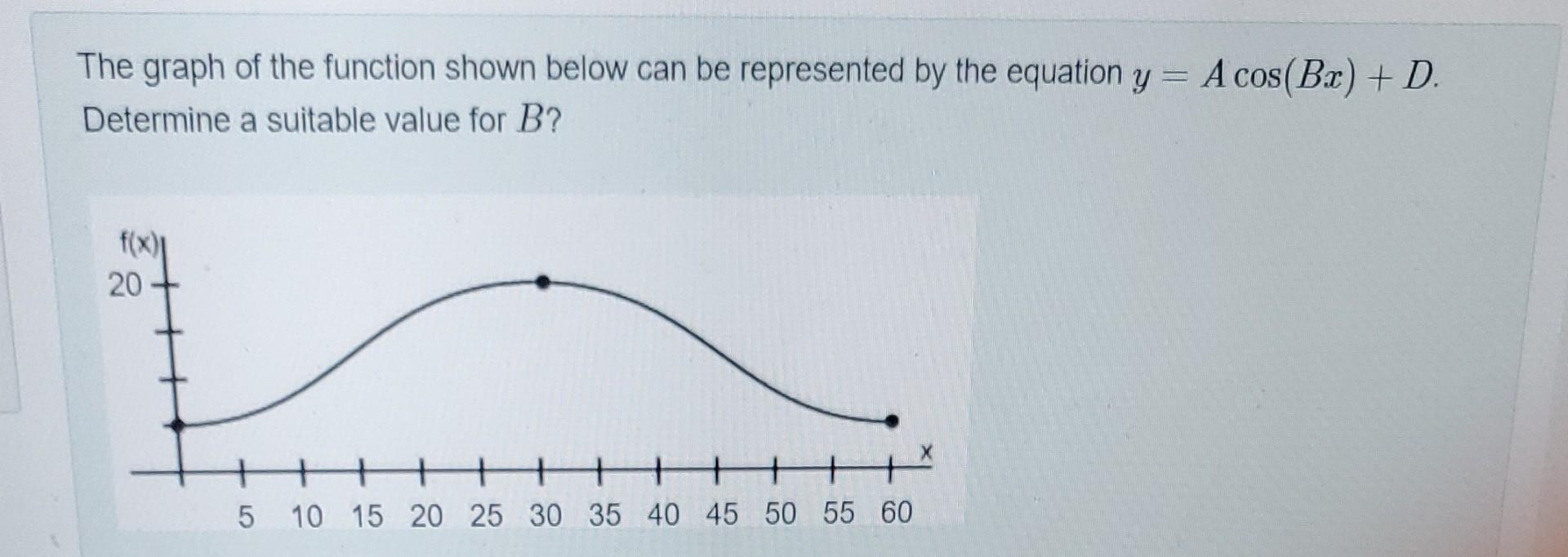
Understanding the nature of a function represented in a graph is akin to deciphering an intricate tapestry of relationships and behaviors. To embark on this intellectual adventure begins with analyzing the visual representation of data—an artwork of mathematical potential where curves and lines tell stories beyond mere numbers.
Visual graphs serve as a conduit to comprehending functions, allowing one to traverse complex concepts with greater ease. It is not merely about recognizing shapes; it necessitates a discerning eye that identifies particular attributes inherent in functions—a skill that can transform one’s analytical capabilities. The focus here will traverse the nuances of function behavior, the significance of intercepts, and the implications of asymptotic behavior, culminating in the identification of the function represented in the graph.
1. Interpreting the Axes: The Foundation of Graph Analysis
Every graph rests upon a foundation laid by two axes: the x-axis and the y-axis. Essential to discerning the function presented, these axes allow the observer to map out coordinates. Each point on the graph corresponds to a unique pair of values, typically denoted as (x, f(x)). Herein lies a pivotal moment in charting the trajectory of function analysis—does the graph present linearity, polynomial behavior, exponential growth, or some other form altogether?
Understanding how axes are scaled becomes paramount. A consistent scale on both axes ensures accuracy in interpreting distances between points. Conversely, an inconsistent scale may distort perceptions of function behavior, leading to incorrect assumptions about continuity or limits. Observing the axes with meticulous scrutiny opens gateways to deeper insights.
2. Identifying Key Features: The Heart of the Graph
As the analysis proceeds, one must grapple with the vital attributes that characterize functions. Critical features include intercepts (where the graph intersects axes), extrema (points of local maxima and minima), concavity (the direction of curvature), and continuity (whether the graph is unbroken).
Intercepts serve as initial focal points. The x-intercept reveals where the function crosses the x-axis (i.e., f(x) = 0), while the y-intercept indicates where x equals zero (i.e., f(0)). Tracking these intercepts can quickly shed light on fundamental properties. Are there one or multiple intercepts? Does the graph hover above or below the x-axis for sections or is it trending upwards or downwards consistently?
Moreover, extrema indicate where the function achieves its highest or lowest values locally—these points are essential in understanding the overall shape and behavior of the graph. Is the graph predominantly rising, suggesting a positive correlation between variables, or does it demonstrate oscillation, indicative of periodic functions?
3. Unraveling Symmetry and Periodicity: The Graph’s Intrinsic Qualities
Proceeding with the analysis demands an exploration of both symmetry and periodicity. Many functions exhibit symmetry, either odd or even about the axes. An odd function, for instance, reflects symmetry through the origin, while an even function displays symmetry about the y-axis, allowing for unique properties to emerge in evaluations and calculations. Identifying such traits can narrow down the field of potential functions drastically.
Periodicity, the characteristic of repeating values at regular intervals, also bolsters understanding. Trigonometric functions are the quintessential example of periodic behavior. If the graph reveals such a quality, one might suspect a function of sine or cosine, thereby significantly shaping one’s inquiries.
4. Asymptotic Behavior: Probing Limits and Discontinuities
Venturing further into the analysis leads to examining asymptotic behavior—how a function behaves as it approaches specific limits or infinity. This peculiar characteristic manifests itself in rational functions, wherein the graph might not touch a certain line, known as an asymptote, but approaches it indefinitely.
Considering both vertical asymptotes, where divisions by zero occur, and horizontal asymptotes, which depict end behavior, arms the analyst with deeper insights. The discoveries made here can often determine the function’s type, especially in the realm of rational or logarithmic functions where growth patterns behave in notably divergent manners.
5. Formulating Hypotheses: Identifying the Function
Having accrued substantial information through strategic analyses of axes, key features, symmetry, and asymptotic behavior, one can begin hypothesizing about the nature of the function present. With considerations on smoother, continuous behaviors or stark discontinuities, the potential types expand—from linear functions defined by straight lines to quadratic, cubic, logarithmic, exponential, or trigonometric specifications.
In synthesizing all observations, one can pose potential equations that would define this graph. The beauty lies in the possibilities—each hypothesis drawn would require verification against the data points initially gleaned, validating the function’s fit through evaluation and calculation.
6. The Convergence of Analysis: Drawing Conclusions
Ultimately, the endeavor of identifying the function represented by a graph is a challenge that rewards diligent examination and critical thought. Given the myriad concepts discussed, one embraces a comprehensive viewpoint, inviting curiosity and enthusiasm into explorations of mathematical functions. By embracing this holistic approach, we pivot from mere observation into a realm of understanding that enhances analytical prowess.
As you ponder the intricacies of the graph before you, consider this: every curve, every point holds secrets waiting to be uncovered. As the graph transforms into a dynamic exploration of mathematical relationships, the quest for identifying the function becomes an exhilarating journey into the world of numbers and their profound implications.

Leave a comment