

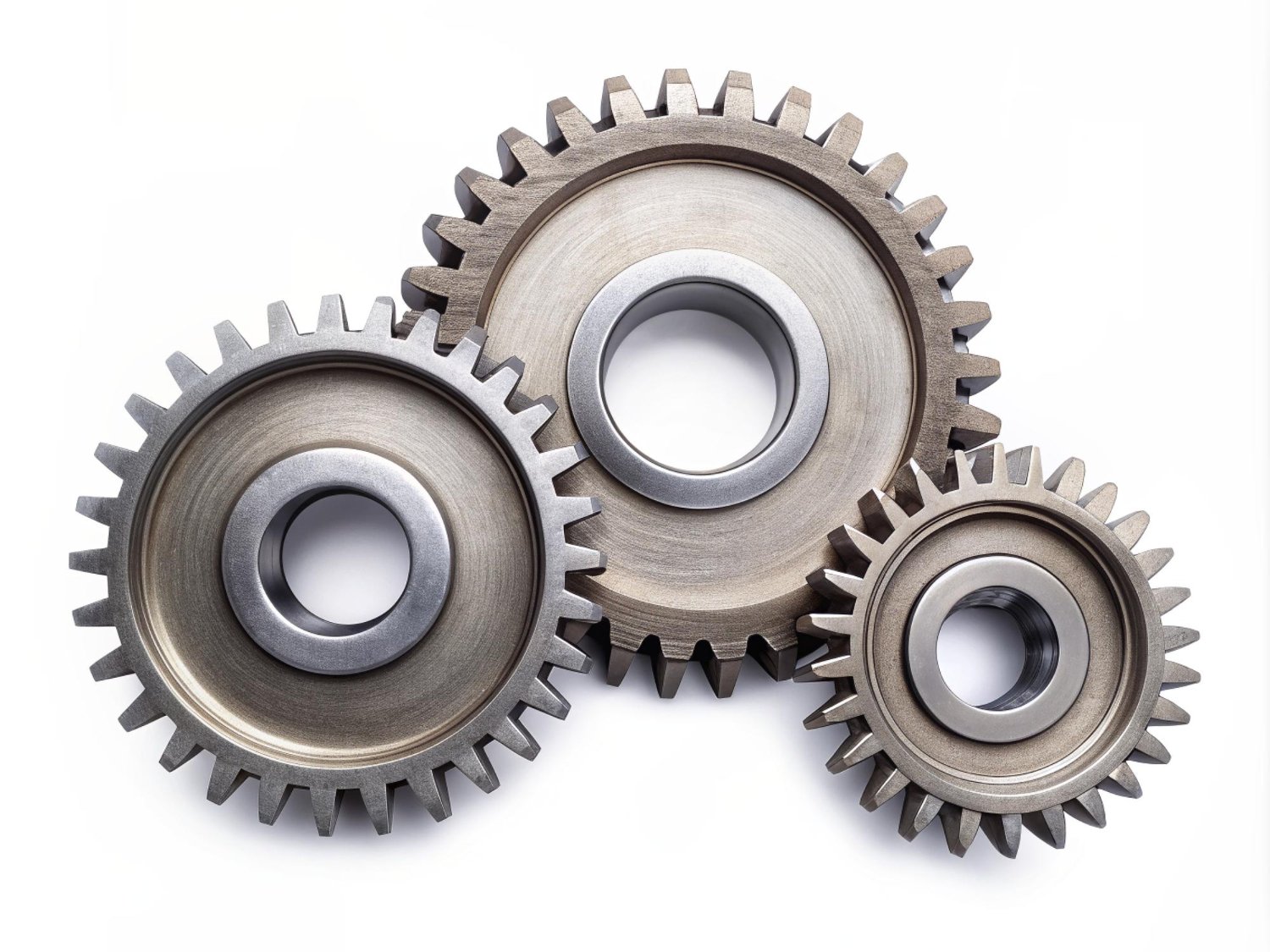
In the intricate realm of mechanical engineering, understanding gears is akin to delving into the harmonious symphony of a finely tuned orchestra. Each cog and wheel plays its part, contributing to the overall performance of machinery. One of the most crucial queries in the operation of gears is the fascinating phenomenon of rotational velocity, specifically: “Which gear will rotate the most times in a minute?” This question, while seemingly straightforward, unveils the complexities of gear ratios, torque, and speed, culminating in a myriad of applications across engineering disciplines.
To comprehend which gear will rotate the most in any given minute, one must first grasp the fundamental concept of gear ratios. Gear ratios are a mathematical representation of the relationship between the number of teeth on two meshing gears. Consider this relationship as a dance – where the smaller gear, often referred to as the drive gear, takes the lead, commanding the tempo, while the larger gear, or the driven gear, follows in pursuit. The fundamental principle is encapsulated in the equation:
Gear Ratio (GR) = Number of Teeth on Driven Gear / Number of Teeth on Drive Gear
A lower gear ratio implies a quicker speed of rotation for the drive gear, while a higher gear ratio signifies increased torque at the expense of speed. Thus, the drive gear, often endowed with fewer teeth, rotates more frequently than its counterpart, the driven gear.
Once the gear ratio is established, the equation interlinking speed and gear ratio emerges; it defines how many revolutions each gear completes within a minute. This relationship can be encapsulated as:
Speed of Drive Gear (RPM) = Speed of Driven Gear (RPM) × Gear Ratio
Therefore, to ascertain which gear will rotate the most times per minute, one simply needs to identify the drive gear within a given system. A cog with lesser teeth, thus functioning as the drive gear, invariably surpasses its companions in rotational frequency.
For instance, imagine a scenario with a drive gear featuring 10 teeth operating in conjunction with a driven gear adorned with 30 teeth. The gear ratio here is 3:1. Consequently, for every rotation of the drive gear, the driven gear only makes one-third of a turn. In this arrangement, the drive gear ultimately outpaces the driven gear, completing three rotations while the larger gear merely rotates once.
An intriguing aspect to consider is the mechanical advantage imparted by gear systems. Mechanical advantage pertains to how effectively force is transformed into motion; it becomes particularly salient when examining multi-stage gear trains. These are systems wherein multiple gears interact, creating sequences of rotation. A gear train can magnify speed even further, amplifying the rotations of the drive gear exponentially with every additional gear stage.
Moreover, in complex machinery—like that found in automotive transmissions or clockworks—gear ratios transform accordingly depending on the scenario. For example, during acceleration, a vehicle’s transmission will switch to a lower gear ratio, thereby enhancing torque and boosting rotational speed of the drive wheels to facilitate rapid movement. Conversely, at cruising speeds, it shifts to higher ratios where the driven gears can spin efficiently without compromising speed, echoing the rhythmic efficiency of an orchestra reaching its crescendo.
Pursuing the question of which gear rotates the most culminates in two paramount considerations: the size of the gears and the configuration of the entire gear system. Smaller gears inherently rotate more times in a fixed duration than larger gears, which may elevate torque but at a cost to rotational frequency. Indeed, this relationship underscores a universal truth—a small but mighty cog can dictate the operational tempo of an entire apparatus.
Delving deeper into practical applications, consider the bicycle: a quintessential embodiment of gear systems wherein gear ratios dictate performance directly. Cyclists utilize varying gears to optimize efficiency depending on terrain and conditions. In uphill scenarios, lower gear ratios allow for greater torque and easier pedaling, while on flat stretches, higher ratios promote swifter speeds. Through this practical lens, one can witness the tangible impact of gear selection on performance.
In a more abstract sense, understanding which gear will rotate the most times in a minute serves as a metaphor for many elements of life. Just as smaller gears assume a pivotal role in propelling the larger machine forward, so too can the smallest actions lead to monumental changes in broader contexts. This philosophy resonates beyond the mechanical into personal and societal domains, highlighting that every small effort can indeed generate profound impacts.
In conclusion, the inquiry into which gear will rotate the most times in a minute reveals a confluence of mechanical principles, mathematical relationships, and practical applications. Through the lens of gear ratios, one can discern that smaller drive gears inherently yield more rotations, overshadowing their larger driven counterparts. Whether viewed in the context of complex machinery, bicycles, or the overarching metaphor of life, the principles governing gears resonate deeply, echoing the harmonies of both engineering and existence. When navigating through gears, remember that each turn, no matter how minuscule it appears, contributes to the grand orchestration of progress and innovation.

Leave a comment