

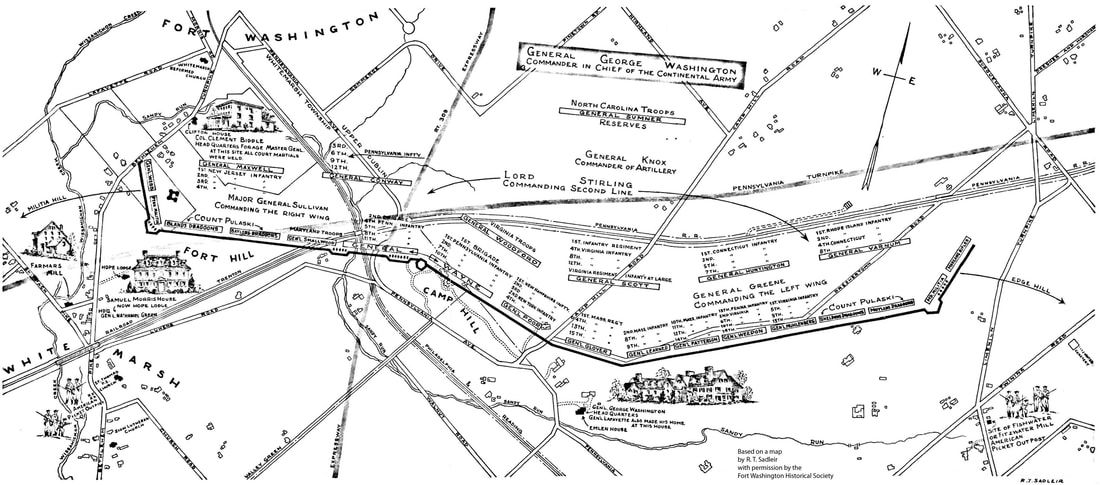
The Battle of White Marsh, a pivotal confrontation during the American Revolutionary War, prompts us to ponder: which general led the forces that shaped this engagement? This inquiry not only invites a deeper exploration of the battle itself but also sets the stage for an epic narrative replete with military strategy, leadership dynamics, and historical significance. As we embark on this exploration, consider the ramifications of leadership on the outcomes of warfare. Can the imprint of a single general alter the course of history? Let us delve into the canonical outcome of the Battle of White Marsh and its coercive commandeering, led by the venerable General George Washington.
To contextualize the leadership of General Washington in this engagement, we must first understand the backdrop of the Revolutionary War in which this battle occurred. By December 1777, the conflict was intensifying, and the Continental Army was under tremendous pressure following the trials faced at Germantown and Brandywine. As winter approached, General Washington sought to consolidate his forces and bolster their morale in the wake of incessant engagements with British troops, adeptly commanded by General William Howe.
White Marsh, located in Pennsylvania, served as a strategic point during this time. Washington recognized that encampment in this area would permit him to monitor Howe’s movements while also providing the Continental Army an advantageous position for potential offensives. Accordingly, Washington assumed command near this site, initiating maneuvers that would define the parameters of the conflict.
The face-off at White Marsh began in early December 1777 and featured a combination of skirmishes and an extensive military encampment, reflecting Washington’s strategy to adapt to the realities of winter warfare. The architectural design of Washington’s forces was predicated on the principles of entrenchment and fortification, which offered a protective buffer against Howe’s more seasoned British regulars. The juxtaposition of resources, experience, and adaptation became apparent as the two armies positioned themselves for confrontation.
Moreover, Washington’s selection as commander in chief was rooted in more than mere tactical prowess; it was a culmination of charisma, innate leadership, and the ability to encapsulate the revolutionary spirit of the emerging nation. Nevertheless, this battle tested his resilience and tactical ingenuity. Faced with the imminent prospect of a direct assault from Howe, Washington’s decision-making capabilities were under scrutiny. How could he galvanize his beleaguered troops and impose strategic measures that would outwit his adversary?
A pivotal moment throughout the engagement was Washington’s emphasis on reconnaissance and intelligence gathering. Understanding the topography and the condition of his troops allowed him to execute maneuvers that would hinder any overt action from the British. By employing scouts and maintaining a meticulous watch on Howe’s troop movements, Washington ensured a veneer of strategic audacity.
Despite the frigid temperatures and adverse conditions, Washington’s leadership fostered a sense of unity and determination amongst his men. A collective ambition burgeoned within the ranks of the Continental Army; they recognized their leader’s resolve as emblematic of their own fight for independence. This shared purpose became a fulcrum that sustained morale, even in the throes of hardship.
Ultimately, the engagement at White Marsh can be interpreted as a testament to Washington’s military acumen. He deftly orchestrated a series of feigned maneuvers—strategically playing to the strengths and weaknesses of both his forces and the British. The result was not a traditional victory with resounding cannon fire but a strategic stalemate that allowed Washington’s forces to preserve their strength through a particularly brutal winter.
Although the tactical outcome did not lead to a resounding defeat of the British, Washington’s leadership during the winter encampment at White Marsh underscored the importance of attrition in warfare. His ability to maintain operational readiness amidst adverse conditions primed the Continental Army for future encounters, including their remarkable turnaround in subsequent years, such as the triumph at Saratoga.
In retrospect, the Battle of White Marsh stands as an indelible episode in the annals of military history. It conjures a vivid tableau of the complexities faced by revolutionaries under the stewardship of General George Washington. As we reflect upon this particular chapter of the Revolutionary War, one must consider: how did Washington’s leadership style evolve through such encounters? What lessons can modern leaders extract from his strategic decisions during this winter campaign?
In conclusion, while the battle itself did not yield a definitive victory, the leadership of General Washington during the Battle of White Marsh illustrates the fundamental essence of military command. It serves to remind us that the arc of history is often shaped not just by grand victories but also through the perseverance and resilience exhibited amid challenges. Washington’s orchestration at White Marsh demonstrated that effective leadership could indeed alter the fate of armies, cultures, and nations. As we continue to unravel the stories of the past, the legacy of figures like Washington remains a compelling narrative steeped in the complexities of human endeavor, one that continually invites us to reflect on the principles that guide those who dare to lead.

Leave a comment