

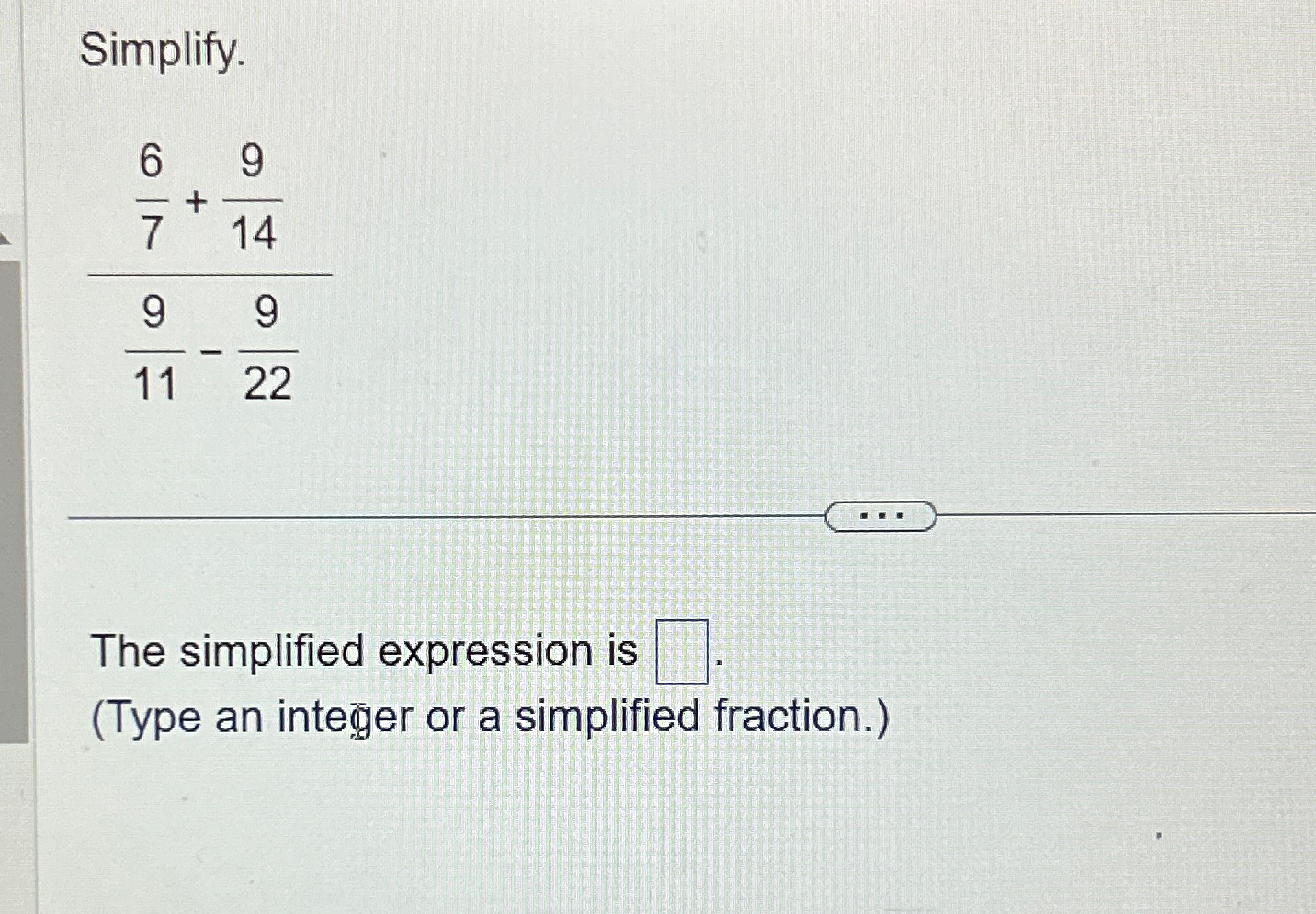
Understanding how to add mathematical expressions, especially when they contain variables and numbers, can often seem like an intricate puzzle. Have you ever found yourself staring at the equations 9 – 73 and 21 – 6, wondering how on earth they can be simplified into a cohesive answer? The challenge is not merely about finding a numerical solution; it’s about grasping the fundamental principles underpinning these operations. In this article, we will meticulously unravel the steps needed to successfully add and simplify these mathematical expressions.
Before delving into the specifics, let’s ponder a playful question: What if our math problems had personalities? If 9 – 73 were a character, would it be a grouchy villain due to its negative result? And how would the positive demeanor of 21 – 6 fare against it? Each expression brings its own challenges to the table, and understanding their individual characteristics will guide us on our journey toward simplification.
Step 1: Understand the expressions
To start off, we will examine each expression independently. The first expression, 9 – 73, involves a straightforward subtraction problem where you must take 73 away from 9. Visually, this is akin to trying to lift less weight than what is available; the result will undoubtedly push us into the negative territory. Conversely, 21 – 6 is a simpler calculation where subtracting 6 from 21 results in a positive number, specifically 15. Recognizing the emotional landscapes of these calculations is essential; one is a descent into negativity, while the other uplifts.
Step 2: Compute the individual expressions
Let’s explicitly calculate the values. Starting with 9 – 73:
- 9 – 73 = -64
Next, compute 21 – 6:
- 21 – 6 = 15
Here, we discover our characters: 9 – 73 yields -64, a number burdened with negativity, while 21 – 6 offers a cheerful 15. Both numbers are essential, as they set the stage for the final act in our arithmetic play.
Step 3: Combine the results
Now, we’ll add our two results together:
- -64 + 15
When you combine these two numbers, you must grasp that adding a negative is akin to moving left on a number line:
- -64 + 15 = -49
The process captures the struggle between the villainous negativity of -64 and the vibrant positivity of 15, ultimately yielding -49. This result epitomizes not just an arithmetic operation, but a tale of conflict—a clash between positive and negative influences.
Step 4: Interpret the significance
What does our final outcome of -49 signify? In mathematical parlance, it’s essential to retain clarity amidst the digits and symbols that whirl around us. Negative results can indicate a deficit, which can be interpreted in various contexts, such as financial scenarios, temperature measurements, or even abstract concepts like emotional states. Nurturing an understanding of how these figures apply in real life elevates mere computation into a dialogue with our world.
Step 5: Explore alternative methods
As with all challenges, there are often multiple angles to approach a problem. You might find it beneficial to rearrange terms or apply the associative property to visualize the equations differently. For instance, instead of treating each expression independently, consider them as parts of a whole:
- (9 + 21) – (73 + 6)
This gives rise to another intriguing narrative, where two heroes strive to overcome the burdens of their respective villains. This method could enhance your understanding and perhaps simplify your work.
Step 6: Reflect on learning outcomes
At the conclusion of our mathematical journey, one must ask, “What have I gleaned from this exercise?” Beyond merely achieving the answer of -49, it’s about internalizing the deeper concepts of arithmetic operations. How do different signs interact? What does this tell us about the larger picture in mathematics and life? Recognizing that numbers tell stories is vital in honing one’s analytical skills.
Conclusion
Summarizing everything, tackling addition problems such as 9 – 73 and 21 – 6 offers more than just an opportunity to perform calculations. It’s a pathway to developing a robust mathematical mindset. From recognizing the nature of expressions to engaging with them creatively, each step builds towards a comprehensive understanding of arithmetic. So, the next time you encounter a similar mathematical quandary, ask yourself: How can I embrace the challenge? By doing so, you cultivate a love for numbers that transcends mere calculation.

Leave a comment