

In the grand tapestry of life, every organism plays a unique role, akin to the notes in a flourishing symphony. The term “niche” encompasses the specific function or position that a species occupies within its ecosystem, essentially delineating its environmental requirements, behaviors, and interactions. Understanding how an organism’s niche is formed involves unraveling the complex interplay of various ecological factors, each acting as threads woven together in this intricate design.
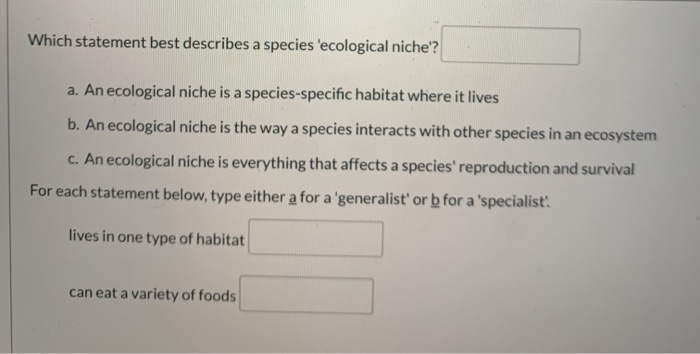
To elucidate the concept of a niche, one must first grasp that it transcends mere habitat selection. While habitat refers to the physical environment an organism inhabits, its niche encapsulates its mode of existence within that environment. This includes its dietary habits, reproductive strategies, and interactions with other species, including predation, competition, and symbiosis. In the ecological theater, the niche defines the role each actor plays, contributing to the broader narrative of ecosystem dynamics.
Several fundamental factors determine an organism’s niche, creating a confluence of biotic and abiotic influences. Understanding these elements is vital for grasping the nuances of ecological relationships:
- Resource Availability: At the heart of niche determination lies the availability of essential resources: food, water, shelter, and mating partners. The distribution of these resources shapes how organisms evolve and adapt over time. For instance, the beak variations in Darwin’s finches elucidate how resource availability can lead to divergent evolutionary pathways, ultimately leading to specialized niches tailored to exploiting specific food sources.
- Environmental Conditions: An organism’s niche is profoundly influenced by the physical conditions of its environment, including temperature, humidity, light, and soil composition. These abiotic factors dictate the limitations within which an organism can thrive. For example, cacti flourish in arid deserts, their adaptations enabling them to conserve water while other flora succumb to the unforgiving environment.
- Interactions with Other Species: The web of life is interconnected, and the relationships between organisms profoundly influence niche determination. Interspecific competition for limited resources can lead to niche differentiation—a process through which similar species evolve to occupy distinct niches, thereby minimizing competition. The classic example is the various warbler species that inhabit the same tree but forage in different zones, reducing overlap in resource utilization.
- Adaptations and Evolution: The evolutionary trajectory of a species shapes its niche through the filtering mechanism of natural selection. Adaptive traits, tailored to exploit specific environmental resources or withstand particular challenges, mark the boundaries of an organism’s niche. An example lies in the polar bear’s adaptations—from its white fur for camouflage in ice-covered regions to its profound swimming ability—enabling it to thrive in the frigid Arctic ecosystem.
- Temporal Dynamics: Niche determination is not static; it evolves through time scales ranging from ecological succession to climate change. As environments undergo transformations—whether gradual or abrupt—organisms must either adapt to the changes or face the prospect of extinction. The aftermath of disturbances, such as forest fires, leads to a dynamic process of niche reallocation among species seeking to reestablish their roles in a reshaped landscape.
As we navigate this intricate landscape of ecological niches, one must also consider the concept of keystone species. These pivotal players exert a disproportionately influential role within their communities. The removal of a keystone species can unravel the delicate balance, highlighting the significance of niche preservation in maintaining ecological integrity. For example, sea otters cultivate healthy kelp forest ecosystems by preying on sea urchins, serving as an essential link in the ecological chain.
Moreover, the concept of the realized and fundamental niche enhances our understanding of how biotic interactions shape an organism’s role. A fundamental niche represents the potential habitat and role an organism could occupy in the absence of competition and other ecological pressures. In contrast, the realized niche encompasses the actual conditions under which an organism lives, often modified by competition, predation, or habitat degradation. This distinction reinforces the idea that niches are fluid, shaped by both inherent capabilities and external influences.
In conclusion, the determination of an organism’s niche is an elegant interplay of myriad factors, resulting in a rich tapestry of ecological interactions. Each organism exists within a multitude of roles that contribute not only to its survival but also to the overall health of its ecosystem. As we uncover the layers that define these niches, we also discover the greater interconnectedness of life itself. This intricate weave of competitive dynamics, evolutionary adaptations, environmental gradients, and symbiotic relationships serves as a poignant reminder of nature’s complexity, emphasizing the importance of preserving biodiversity and the delicate balances within our ecosystems. By understanding and appreciating these intricate relationships, we empower ourselves to protect the ecological sanctuaries that harbor life on Earth.

Leave a comment