

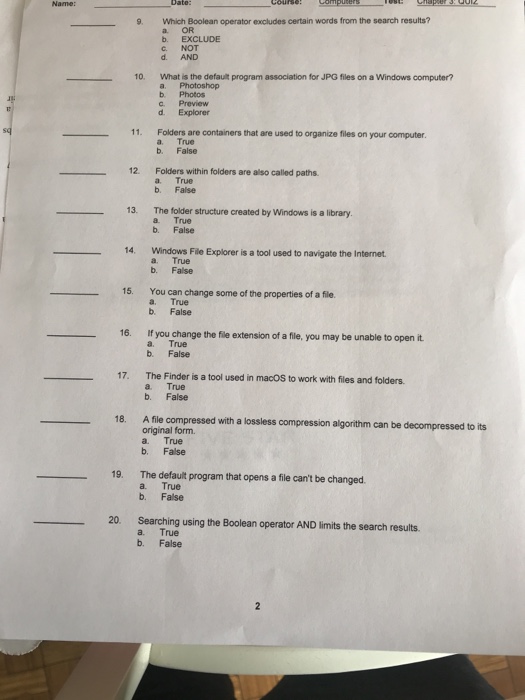
In the vast digital expanse where information flows like a ceaseless river, researchers often find themselves adrift, navigating through torrents of data, academic journals, and unrefined web pages. Amidst this chaos, the discerning seeker knows that precision is paramount. Like a skilled archer aiming for the bullseye, employing the right tools can greatly enhance the efficacy of one’s research endeavors. One such tool is the Boolean operator that excludes certain words from search results—namely, the NOT operator. Understanding how to wield this logical gatekeeper can transform the research process from a haphazard quest into a focused expedition.
The Essence of Boolean Logic
At its core, Boolean logic operates on a simple premise: it allows users to refine their searches through a selection of connective operators. The primary operators—AND, OR, and NOT—serve as the foundational constructs through which search queries are shaped. Each operator builds a unique skyline of relevance, but it is the NOT operator that constructs a barrier, preventing unwanted elements from infiltrating one’s curated results.
Envision Boolean operators as the architects of your search strategy. The AND operator, with its connective nature, builds a bridge between related concepts, ensuring that all terms are included. The OR operator broadens the horizon, welcoming synonymous or alternate terms into the fold. In contrast, the NOT operator acts as a vigilant guardian, standing sentinel to ensure that irrelevant data is rigorously excluded from the research journey.
The Role of the NOT Operator
The NOT operator, often symbolized by a simple minus sign (-) or explicitly written as NOT, empowers researchers to tailor search results with surgical precision. Imagine preparing a fine feast: if the chef includes only the preferred ingredients while discarding the unwanted, the outcome is a dish of exquisite flavor. In the realm of digital inquiries, the NOT operator allows researchers to remove distractions, leading them to desired scholarly works without the clutter of extraneous information.
Employing the NOT Operator: Practical Applications
Using the NOT operator is akin to wielding a scalpel—effective, yet requiring caution to avoid unintentional exclusions that may lead to overlooking critical information. Here are a few guidelines to employ this operator effectively:
- Define Core Terms: Begin your search with the identification of key terms associated with your research topic. For example, if researching marine biology but wishing to exclude content related to aquaculture, your query could be structured as ‘marine biology NOT aquaculture’. This straightforward application directs your search focus precisely.
- Utilize Quotation Marks: When phrasing your search, use quotation marks around the key phrases to enhance specificity. For instance, ‘climate change NOT “global warming”‘ will yield results pertaining to climate change while filtering out discussions explicitly focused on global warming.
- Combine Operators: The potency of the NOT operator multiplies when combined with other Boolean operators. A nuanced query like ‘renewable energy AND technology NOT solar’ can direct you to literature related to renewable energy technologies other than solar power, ensuring a more comprehensive exploration.
- Regular Refinement: Continually assess and refine your search strategies. The academic landscape is dynamic; as you gather materials, you may uncover new terms or concepts to exclude. Regularly utilizing the NOT operator as a tool for refinement can enhance the efficiency of your research.
Common Pitfalls to Avoid
While the NOT operator is an invaluable element of Boolean search strategies, researchers must navigate potential pitfalls that can thwart their progress. The exclusion of vital information can occur if not applied judiciously. Here are some nuances to consider:
- Excessive Exclusion: Vigilance in the application of the NOT operator is critical. An overly aggressive approach can lead to the omission of relevant studies that might merely have tangential concepts linked to the excluded terms.
- Lexical Variations: Terms in academia often possess various synonyms and related terminology. Excluding one term might inadvertently filter out literature valuable to your research question. Thoroughly explore synonyms before deploying the NOT operator.
- Testing and Iteration: During the research process, remain open to revising your search strings based on initial findings. Flexibility is key; what seems irrelevant at one point may prove significant as the research unfolds.
The Complementary Role of Other Search Techniques
Although the NOT operator is a potent tool for narrowing search results, its efficacy is magnified when employed in conjunction with other strategies. Utilizing filters and advanced search options available in many databases can further streamline the research process. For instance, leveraging subject areas, publication dates, and peer-reviewed statuses can also refine search outcomes, complementing the exclusionary function of the NOT operator.
Conclusion: Navigate with Efficacy
The digital seas of academic research can be tumultuous, but the savvy researcher possesses the navigational skills to chart a course through murky waters. The NOT operator stands as a stalwart ally, enabling one to excise extraneous noise from the symphony of information that may overwhelm the senses. By employing this operator thoughtfully and with intent, researchers can hone in on the essence of their inquiry, uncovering insights that would otherwise lie obscured beneath the surface. Embrace the power of the NOT operator and refine your pursuit of knowledge, ensuring your research ship sails smoothly into the harbor of understanding and innovation.

Leave a comment