

Are you ready to unlock the secrets of cellular architecture? The fascinating world of biology presents an intriguing question: what characteristic is shared by both prokaryotes and eukaryotes? These two cellular domains, while distinct in many respects, are unified by certain fundamental features. Understanding these traits not only fascinates the curious mind but also paves the way for a deeper comprehension of life at the molecular level. So, let’s embark on this enlightening exploration of cell structure comparison!
To begin with, let’s clarify who these cellular entities are. Prokaryotes are primarily unicellular organisms, renowned for their simplicity and lack of a defined nucleus. Examples include bacteria and archaea. In contrast, eukaryotes encompass a more complex and diverse array of organisms, including plants, animals, fungi, and protists, characterized by membrane-bound organelles and a well-defined nucleus.
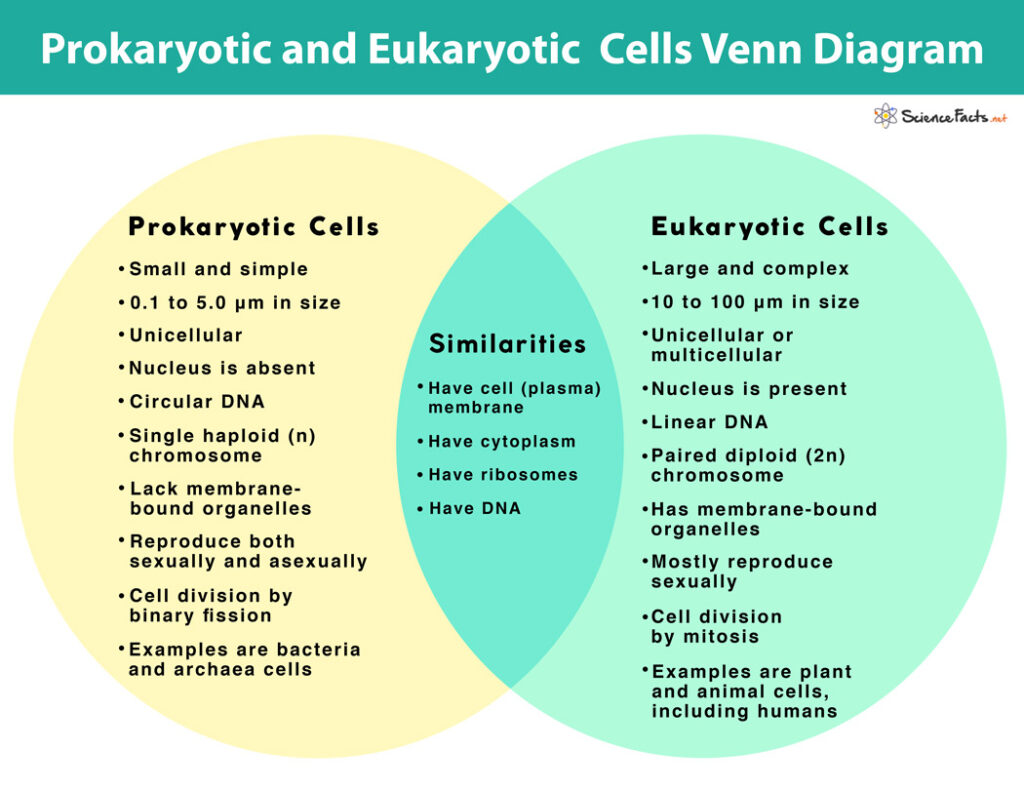
Despite their differences, prokaryotes and eukaryotes share a crucial feature: the presence of a cell membrane, often termed the plasma membrane. This structure is integral to the survival of cells, acting as a barrier that regulates the ingress and egress of substances, thus maintaining homeostasis. But how do these membranes vary between the two domains?
The prokaryotic cell membrane is primarily a phospholipid bilayer, similar to that of eukaryotes. However, it often incorporates hopanoids—sterol-like compounds that contribute to the stability of the membrane. This contrasts with eukaryotic membranes that contain various sterols, such as cholesterol, adding a different layer of functionality and structural complexity.
Next, we delve deeper into the cellular composition and functionality of these two groups. At the core of all living cells lies genetic material—which, in both prokaryotes and eukaryotes, is crucial for the synthesis of proteins and the transmission of hereditary information. In prokaryotes, DNA exists as a singular, circular chromosomal strand located in a region known as the nucleoid. On the flip side, eukaryotic cells possess multiple linear chromosomes encapsulated within a nuclear membrane—a stark contrast that highlights their evolutionary divergence.
Furthermore, both cell types utilize ribosomes for protein synthesis, albeit with some notable distinctions. Prokaryotic ribosomes are smaller (70S) in comparison to their eukaryotic counterparts (80S). Yet, the fundamental role they play remains unwavering: translating messenger RNA (mRNA) into proteins—essentially the workhorses of the cell.
Another shared trait is the presence of cytoplasm, a viscous fluid that houses various cellular components. This cytoplasmic matrix is where numerous metabolic activities occur. However, the complexity of what exists within the cytoplasm differs markedly between the two groups. Eukaryotic cells are replete with a variety of organelles, such as mitochondria, endoplasmic reticulum, and Golgi apparatus, all of which enhance cellular efficiency and specialization.
Now, let’s consider the enigmatic role of cell wall structures. Many prokaryotes possess a rigid cell wall composed of peptidoglycan, which provides structural integrity and protection. Conversely, while some eukaryotes (such as plants and fungi) also have cell walls, they are composed of cellulose or chitin, respectively. This fundamental difference raises intriguing questions about how these variances in cell wall composition impact the overall functionality and adaptability of each group.
Moreover, both prokaryotic and eukaryotic cells exhibit fascinating adaptations for energy acquisition. Some prokaryotes, particularly heterotrophs, rely on organic substances for energy, while others, such as phototrophic bacteria, harness sunlight. Eukaryotic organisms display an even greater variety; they may perform photosynthesis (as seen in plants) or consume organic material (as in animals) to yield ATP, the universal energy currency. The biochemical pathways involved in these processes are complex yet share the fundamental goal of energy production.
One cannot overlook the concept of cellular reproduction as another point of similarity. Both groups engage in the daunting task of replication to ensure the continuity of life. Prokaryotes predominantly employ binary fission—a straightforward method of division that results in clones of the original cell. In contrast, eukaryotic cells follow a more intricate process that includes mitosis for somatic cell division and meiosis for gametes, reflecting their complex genomic architecture.
As we unfold the various characteristics shared by prokaryotes and eukaryotes, a pattern emerges—each group’s cellular structure is tailored to meet specific survival needs while retaining fundamental traits crucial for life’s continuity. Ultimately, these similarities and differences do more than merely encapsulate the essence of cellular life; they illuminate the evolutionary thread that binds all living organisms.
In conclusion, the exploration of cellular characteristics offers a compelling narrative about the interconnectedness of life. Both prokaryotes and eukaryotes, while differing in structural complexities and methods of reproduction, share the vital attributes of a cell membrane, genetic material, ribosomes, cytoplasm, and mechanisms for energy acquisition. Understanding these fundamental commonalities not only enriches our appreciation for the diversity of life but also poses a challenge: how can this knowledge be harnessed to address pressing biological and ecological questions in a rapidly changing world?

Leave a comment