

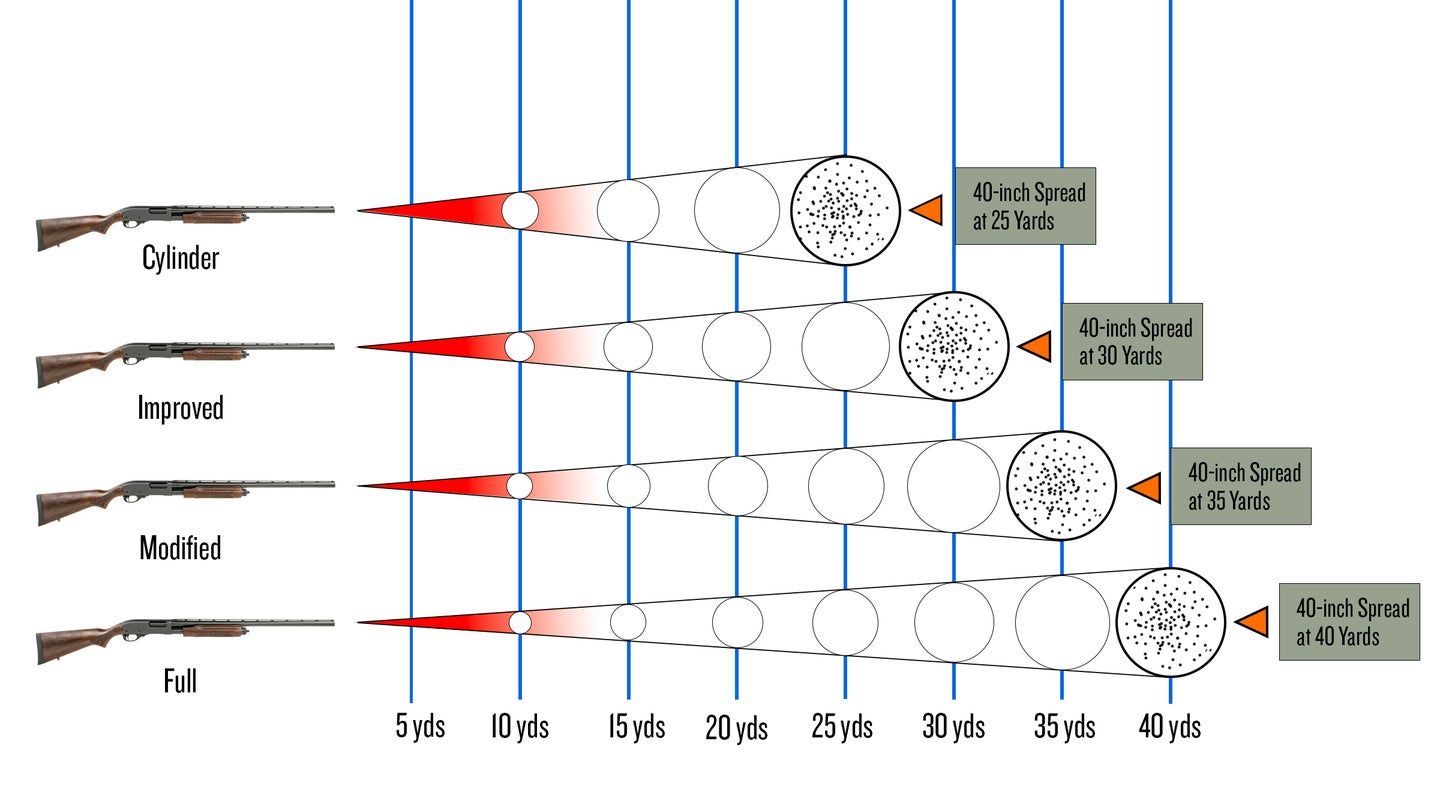
When it comes to shotgun performance, one question reverberates through the minds of avid marksmen and lay enthusiasts alike: “Which choke has the tightest pattern?” It’s a quest that extends beyond mere preference; it encapsulates the delicate balance between precision and proficiency, significantly impacting one’s efficacy when aiming at a variety of targets. Imagine the exhilaration of hitting an elusive clay pigeon with impeccable accuracy. The choke you choose could be your greatest ally—or your most inconvenient adversary.
At its core, the discussion surrounding choke patterns delves deeply into the art of shot dispersion. The choke, an essential component of a shotgun, serves to regulate the spread of shot as it exits the muzzle. A tighter pattern often correlates with greater effectiveness at longer ranges, enhancing your chances of successful strikes. But is it merely a matter of selecting the tightest choke or understanding the multifaceted nature of each option?
Before delving deeper, it is imperative to delineate the various chokes available and their respective interplay with shot patterns. Here, we unravel the hierarchy of chokes, each meticulously crafted to fulfill distinct shooting scenarios.
Understanding Shotgun Chokes
The terminology surrounding shotgun chokes can become labyrinthine. Thus, clarity is pivotal. Chokes can be categorized based on how they constrict shot dispersion:
- Cylinder Bore: This type exudes the widest pattern, allowing the shot to spread broadly. It is ideal for short distances.
- Improved Cylinder: This offers a slight constriction compared to the cylinder bore, providing a more controlled pattern while maintaining versatility.
- Modified: Striking a balance, the modified choke provides a moderate constriction, suiting a myriad of shooting endeavors.
- Improved Modified: This choke tightens the shot considerably more, resulting in a denser pattern at extended ranges.
- Full: The crowning jewel in tight patterning, the full choke creates a substantial constriction that yields an exceptionally compact shot spread.
Pondering the distinctions among these chokes poses an interesting challenge. When do you employ each type to maximize effectiveness? What if the majority of your shooting occurs at variable distances? Is the full choke always the best choice?
The Full Choke: Reigning Champion
In the realm of shot patterning, the full choke stands tall, often regarded as the indisputable champion of tight patterns. This choke achieves an approximate constriction of 0.700 inches or narrower, granting it the ability to deliver an unmatched density. However, its supremacy is often accompanied by caveats.
While the full choke is prodigious for turkey hunting or trap shooting, where precision at distances exceeding 40 yards is paramount, it may render shooters less effective at closer ranges. The challenge lies in the necessity to evaluate the shooting scenario comprehensively. What distances are you likely to encounter? The answer to this question could very well dictate your choke choice.
Implications of Shot Size and Type
Choke efficiency does not exist in a vacuum; it is heavily influenced by the type and size of shot you utilize. Smaller pellets may yield a more dispersed pattern, while larger shot sizes will possess a denser configuration. Therefore, when utilizing a full choke, it is prudent to opt for larger shot sizes to optimize the tightness of your pattern.
Additionally, the choice between lead and steel shot introduces another layer of complexity. Steel shot, typically denser and less malleable than lead, may not perform optimally through tighter chokes, which can result in unintended consequences such as damage to both choke and barrel.
Patterning Your Shotgun
To ascertain which choke delivers the tightest pattern, empirical testing is indispensable. Patterning your shotgun is a critical step for any serious shooter, as it enables you to understand the behavior of your shotgun with various chokes and loads.
Begin by selecting a safe location and a designated target area. Using large sheets of paper or cardboard, fire a series of shots at various distances using different chokes. Measure the dispersion of shot upon impact; this practice provides invaluable insights into how each choke interacts with your specific shotgun and ammunition combination.
The Role of Shooting Technique
Lastly, consider the undeniable impact of shooting technique on choke efficacy. A well-executed stance, proper trigger control, and an unwavering focus on your target dramatically enhance your probability of success. The most sophisticated choke cannot compensate for a lack of foundational skills.
In the end, the question of which choke delivers the tightest pattern does not yield a universally applicable answer. Rather, it incites a deeper contemplation of personal shooting habits, ammunition selection, and situational awareness. Each shotgunner must take it upon themselves to engage with their equipment, conduct patterning tests, and derive conclusions based on quantitative analyses. As you continue this journey, may you find not just the choke that fits your needs but also the confidence required to unleash its full potential.

Leave a comment