

In the realm of genetics, chromosomal mutations play a pivotal role in shaping the genetic landscape of organisms. Understanding the various types of chromosomal changes is essential for grasping the complexities of inheritance, evolution, and the manifestation of certain traits in living beings. This article delineates the spectrum of chromosomal changes, meticulously classifying them into distinct categories, and elucidating their implications in genetic studies.
Chromosomal changes, also known as chromosomal mutations, can be broadly classified into two major categories: structural mutations and numerical mutations. Each type presents its unique characteristics, influencing genome integrity and functionality profoundly.
Structural Mutations
Structural mutations involve alterations in the structure of chromosomes, leading to changes in gene arrangement. These mutations can occur due to various factors, including errors during DNA replication, exposure to radiation, and certain chemical agents. Structural mutations can be further divided into four primary types: deletions, duplications, inversions, and translocations.
Deletions
Deletions occur when a segment of a chromosome is removed or lost entirely. This chromosomal change can result in the loss of crucial genetic information, potentially leading to gene dosage imbalances. Depending on the extent of the deleted segment, the phenotypic consequences may range from subtle to severe. An example of a disorder caused by deletions is Turner syndrome, which affects females who have only one functional X chromosome due to the deletion of genetic material.
Duplications
In contrast to deletions, duplications entail the replication of a segment of a chromosome, resulting in multiple copies of certain genes. While this can potentially create an excess of protein products, the effects are not universally detrimental. Some duplications can facilitate adaptive evolution by providing additional genetic material upon which mutations can act. However, instances of pathogenic duplications have also been observed, such as in Williams syndrome, where duplications lead to specific developmental and health issues.
Inversions
Inversions occur when a chromosome segment breaks off, rotates 180 degrees, and reattaches in the reversed orientation. This alteration can disrupt the normal regulation of gene expression and may lead to reproductive issues. Inversions are particularly interesting from an evolutionary standpoint, as they can create new genetic combinations while preserving the overall integrity of the genome. Although many inversions are benign, they have been implicated in certain genetic disorders, highlighting their potential consequences.
Translocations
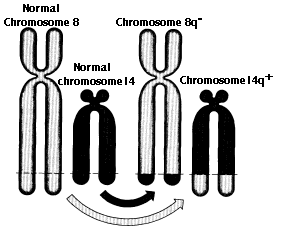
Translocations involve the rearrangement of genetic material between non-homologous chromosomes. This type of structural mutation can be either reciprocal, where segments from two different chromosomes exchange places, or non-reciprocal, where genetic material is transferred without equivalency. Translocations may lead to polyploidy or aneuploidy and are often associated with various forms of cancer, such as chronic myeloid leukemia (CML), which is linked to a specific translocation between chromosomes 9 and 22 known as the Philadelphia chromosome.
Numerical Mutations
Unlike structural mutations, numerical mutations relate to the changes in chromosome number, typically classified into aneuploidy and polyploidy. These alterations can result from nondisjunction during cell division, leading to the gain or loss of whole chromosomes.
Aneuploidy
Aneuploidy refers to the presence of an abnormal number of chromosomes, which can manifest as either monosomy (loss of one chromosome) or trisomy (gain of an extra chromosome). The consequences of aneuploidy can be markedly detrimental; for instance, trisomy 21, commonly known as Down syndrome, is characterized by an extra copy of chromosome 21, leading to a range of cognitive and physical challenges. The prevalence and impact of aneuploidy underscore its significance in clinical genetics and prenatal diagnostics.
Polyploidy
Polyploidy involves the presence of more than two complete sets of chromosomes, a condition frequently observed in plants. Although less common in animals, certain species exhibit polyploidy as a adaptive trait. Polyploidy can enhance genetic diversity and resilience, enabling organisms to adapt to environmental changes. However, it can also pose challenges in reproduction and development, necessitating careful consideration in genetic studies.
Conclusion
In summary, understanding chromosomal changes is essential to the fields of genetics and molecular biology. Structural mutations, including deletions, duplications, inversions, and translocations, along with numerical mutations, such as aneuploidy and polyploidy, represent the multitude of ways in which chromosomes can be altered. Each type of chromosomal change introduces complex implications for gene expression, phenotypic variation, and evolutionary dynamics. As research continues to unravel the intricacies of genetic phenomena, the implications of chromosomal mutations will remain a cornerstone of genetic inquiry and medical genetics.

Leave a comment