

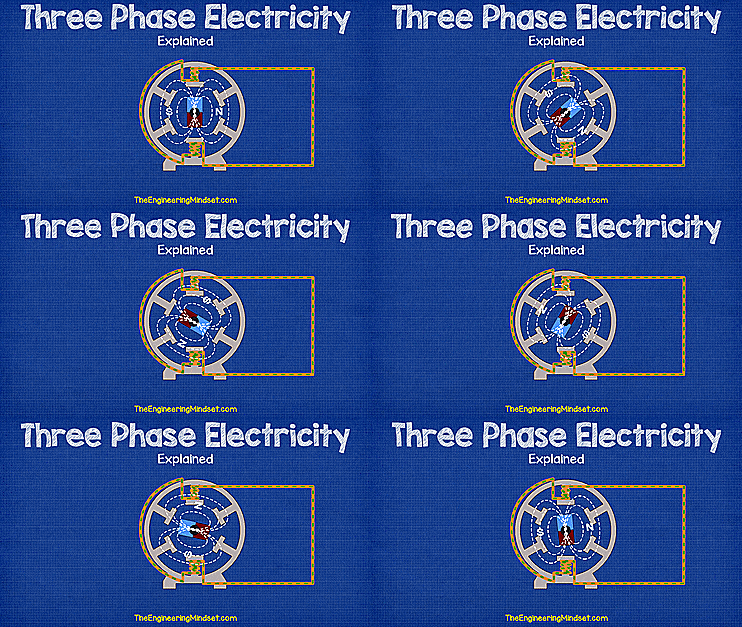
The realm of electrical machines encompasses a myriad of devices engineered for conversion of mechanical energy into electrical energy and vice versa. At the fulcrum of these marvels lies a vital component known as the revolving field generator. This apparatus deftly utilizes electromagnetic principles to facilitate efficient energy generation. An intrinsic question often arises: “Which component contains the magnet in a revolving field generator?” Understanding this pivotal aspect requires both a grasp of the machine’s architecture and an acknowledgment of the interplay among various components.
To elucidate this topic, we must first delve into the operational foundation of an alternating current (AC) generator, commonly referred to as a synchronous generator. The classical design of this generator typically incorporates two principal components that interact harmoniously: the stator and the rotor. The rotor is the heart of the revolving field generator, housing the magnetic field essential for generating electricity through electromagnetic induction.
The rotor, often termed the field winding, serves as the component where the magnetic poles are established. Depending on the design of the generator, the rotor can either be constructed with permanent magnets or electromagnets. This choice is pivotal, as it influences the generator’s efficiency, size, weight, and output characteristics.
In the case of a generator utilizing permanent magnets, the rotor’s magnets are affixed in a specific orientation to create a magnetic field. These configurations can vary from cylindrical to sinusoidal, thereby determining the uniformity and strength of the generated electromagnetic field. Moreover, the fixed nature of the permanent magnets alleviates the need for auxiliary electrical supply, often simplifying operational requirements.
Conversely, in generators employing electromagnetic rotors, the rotor coils are energized using direct current (DC). When electric current flows through the rotor windings, a strong magnetic field is generated, which interacts with the stator windings to produce alternating current. This arrangement allows for greater control over the magnetic field strength, thus enhancing the generator’s performance under varying operational loads. The application of various winding designs, such as salient poles or round rotor configurations, further optimizes the magnetic characteristics for specific operational requirements.
Procurement of magnetic properties can also involve the use of hysteresis or reluctance-type rotors. These types are discourse-worthy as they eschew conventional excitation methods in favor of a design that capitalizes on magnetic reluctance variation induced by the physical rotor configuration. Such ingenuity renders the machine not only lightweight but also remarkably efficient, underscoring ongoing innovations in electrical machine design.
Transitioning now to the stator, it plays an equally critical role within the generator. The stator houses the armature windings, which are configured to intercept the magnetic field produced by the rotor. This interaction between the rotor’s magnetic field and the stator windings induces an electromotive force (EMF), yielding the desired electrical output.
The embrace of modern technologies has led to various advancements in winding techniques, including the development of slotless designs, which minimize eddy current losses. Additionally, optimizing the air gap between the rotor and stator minimizes losses due to back EMF, thus amplifying overall operational efficiency.
Furthermore, the caliber of materials utilized in the construction of both the rotor and stator profoundly influences the generator’s performance. High-conductivity materials, such as copper for windings and high-permeability magnetic materials for cores, are integral to maximizing energy transfer efficiency within the system.
It is vital to acknowledge the thermal considerations associated with the operation of revolving field generators. The rotor, especially in the case of electromagnetic setups, generates heat due to resistive losses. Adequate cooling mechanisms, such as ventilated or water-cooled systems, are paramount to ensure sustained performance and longevity of the generator.
In summary, the revolving field generator exemplifies the intersection of robust engineering principles and advanced electromagnetic theory. The magnet resides in the rotor, either as a permanent magnet or an electromagnet, forming an intricate relationship with the stator that culminates in the generation of electrical energy. Understanding these components facilitates a deeper appreciation of the functionality and nuanced design of electrical machines, thereby enriching one’s knowledge of this critical field.
The evolution of generator design continues to be informed by advancements in material science, electrical engineering innovation, and the increasing demand for renewable energy sources. Emerging technologies, such as distributed generation systems and smart grid integration, promise to redefine the operational landscape of revolving field generators and their applications. Ultimately, knowledge of the fundamental components—particularly the significance of the rotor and its magnetic attributes—remains essential for engineers, researchers, and students alike who aspire to contribute to the burgeoning field of electrical machines.

Leave a comment