

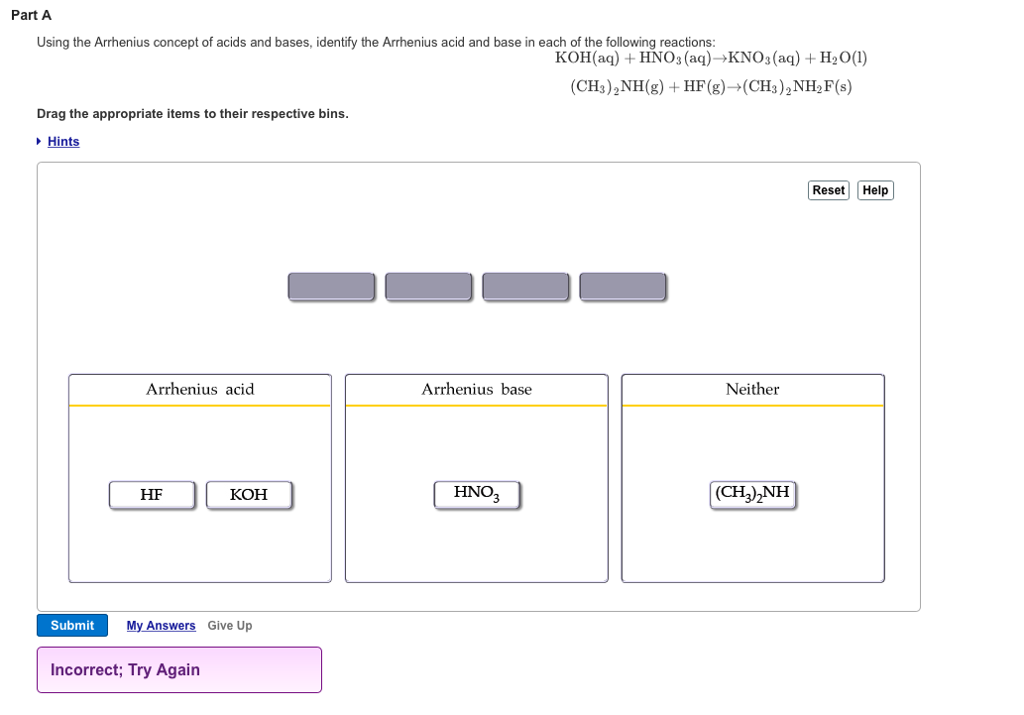
In the realm of chemistry, the classification of substances into acids and bases is a fundamental aspect that aids in understanding myriad chemical reactions. The Arrhenius theory, proposed by Svante Arrhenius in the late 19th century, provides a foundational perspective on how acids and bases interact in aqueous solutions. One key tenet of this theory is the definition of an Arrhenius acid, which can be simply stated: an Arrhenius acid is a substance that increases the concentration of hydrogen ions (H+) when dissolved in water. However, the implications of this definition extend far beyond mere memorization, beckoning a deeper exploration into the nature of acids, their behavior, and their reactions with bases.
To appreciate the full scope of Arrhenius acids, one must embark on an investigative journey through various compounds recognized as Arrhenius acids. Acetic acid (CH3COOH), hydrochloric acid (HCl), and sulfuric acid (H2SO4) are prime examples that serve as archetypes within this category. Each of these compounds shares the common trait of producing H+ ions when introduced to water, but their individual characteristics and applications unearth fascinating nuances worth exploring.
Hydrochloric acid, for instance, is a strong and monoprotic Arrhenius acid, exhibiting a complete dissociation in aqueous solutions. Its prowess in the context of acid-base reactions is underscored by its extensive utilization in industrial applications, from metal cleaning to food processing. In contrast, acetic acid presents a more subdued profile, characterized as a weak acid that only partially dissociates in solution. Commonly known as vinegar, acetic acid’s unique flavor and culinary applications not only enhance various dishes but also prompt intriguing discussions around dietary acids and their physiological impacts.
Furthermore, sulfuric acid, another quintessential Arrhenius acid, is remarkable for being diprotic, able to donate two protons (H+) per molecule. Its role in battery manufacturing and as a dehydrating agent reflects its industrial significance and strength as a reactive agent. However, the conversation surrounding these acids isn’t merely limited to their chemical compositions and reactions but extends to their safety profiles, handling, and environmental impacts, necessitating a comprehensive approach to their usage.
The interactions between acids and bases entail a captivating dynamism that showcases the principles of acid-base chemistry. In an Arrhenius framework, the introduction of an acid into a basic solution results in a neutralization reaction, whereby H+ ions from the acid interact with hydroxide ions (OH–) from the base to form water (H2O) and a salt. For example, when hydrochloric acid is added to sodium hydroxide (NaOH), the resulting reaction produces sodium chloride (NaCl), a common salt, alongside water. This fundamental reaction exemplifies the concept of acidity and basicity in a practical context, highlighting the elegance of chemical interactions.
However, to limit the definition of acids to their aqueous behavior risks encapsulating a more expansive concept. The Brønsted-Lowry and Lewis theories extend our understanding by defining acids and bases in broader terms. According to Brønsted-Lowry, an acid is any substance capable of donating protons, while a Lewis acid accepts an electron pair. Consequently, the identification of a compound as an Arrhenius acid can open pathways to explore varying types of acidity in multiple contexts, transcending the boundaries of aqueous solutions.
The classification of compounds as Arrhenius acids invites an appreciative gaze into the broader realm of acids, allowing for the exploration of organic acids, mineral acids, and their multifunctional effects in both biological and chemical processes. Organic acids, such as citric acid (C6H8O7), further broaden the conventional understanding of acidity and are pivotal in metabolic pathways, influencing energy production and cellular function.
As we delve deeper, it is essential to consider the implications of acid strength—comprehending the distinctions between strong and weak acids is critical. A strong Arrhenius acid, like HCl, will dissociate completely in water, yielding a high concentration of H+ ions, whereas a weak acid like acetic acid remains largely undissociated at equilibrium. This equilibrium state is more than a mere chemical concept; it bears profound significance for fields ranging from biochemistry to environmental science, prompting inquiry into buffer systems, pH levels, and biochemical reactions.
Furthermore, an exploration into the behavior of Arrhenius acids invites discussion on acid-base indicators. Compounds such as litmus and phenolphthalein serve as invaluable tools for determining acidity levels, underpinning their role in both educational settings and laboratory practices. The colorimetric changes attributed to these indicators provide visual evidence of acid-base reactions, fostering an intuitive understanding of pH dynamics.
It is also worth scrutinizing the socio-economic implications of Arrhenius acids. From agriculture—where sulfuric acid plays a role in soil amendment—to pharmaceuticals, where they are vital for drug formulation, the ubiquity of acids in everyday life cannot be understated. As innovations continue to emerge across various industries, the role of Arrhenius acids will undoubtedly remain a focal point of research and practical application.
In summary, a thorough understanding of which compounds qualify as Arrhenius acids hinges on a multifaceted exploration of their chemical properties, reactions, and wider implications. By dissecting the definitions, reactions, and applications of these compounds, one can foster a profound appreciation for the intricate tapestry of acid-base chemistry. Enveloping the inquiry with curiosity leads to a nuanced understanding of the pivotal roles that Arrhenius acids play, encouraging a perspective that transcends rote memorization and propels deeper scientific inquiry. The allure of acids and bases not only invites exploration but promises a wealth of knowledge across numerous scientific domains.

Leave a comment