

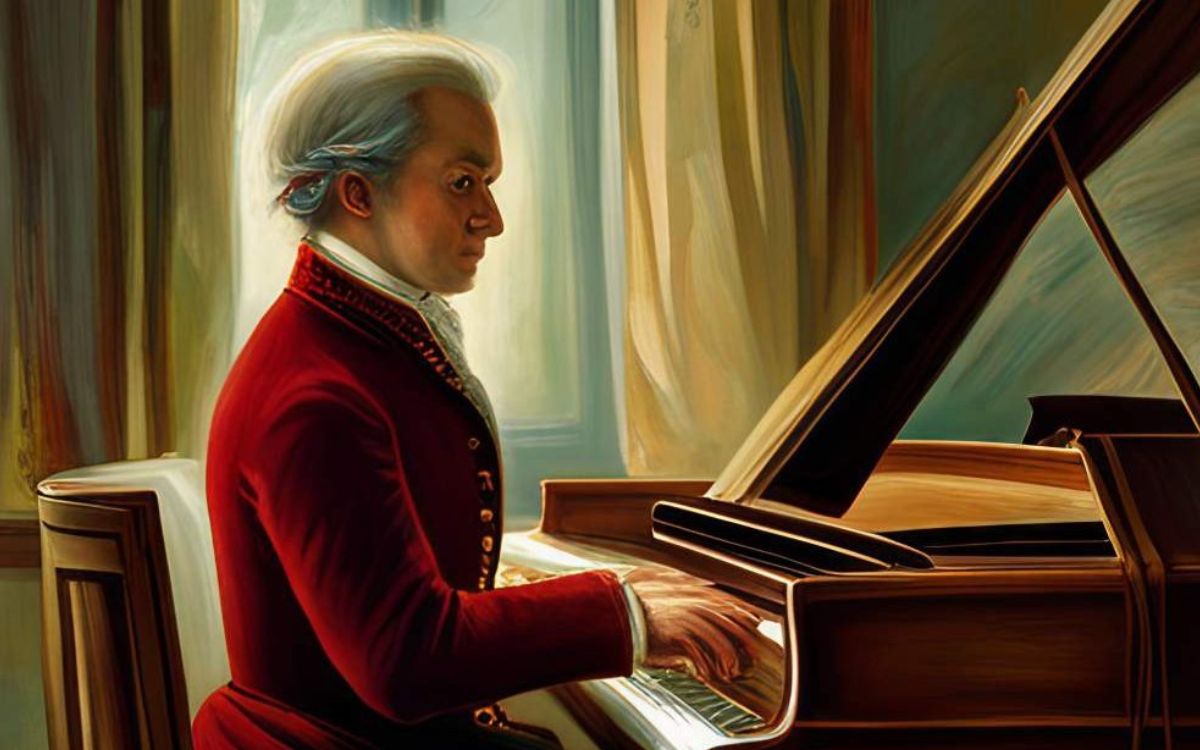
The relationship between composers and their patrons has long been a subject of intrigue, striking a delicate balance between artistic freedom and economic necessity. While numerous composers rebelled against such systems, there existed notable figures who thrived within the confines of patronage, transforming it into a useful vehicle for both financial security and creative flourishing. This exploration delves into the life of Wolfgang Amadeus Mozart, a composer whose remarkable ability to navigate the landscapes of nobility and art exemplifies the elegance and complexity of the patronage system.
Understanding Mozart’s relationship with patronage requires a deeper examination of the socio-cultural and economic frameworks in which he operated. Born in 1756 in Salzburg, a city that was a cultural hub of the Holy Roman Empire, Mozart was immersed in an environment that celebrated music. His prodigious talent attracted the attention of aristocrats and nobility early in his life. This is a salient point: Mozart did not merely endure the patronage system; he adeptly utilized it to craft his public persona and facilitate artistic innovation.
The patronage system itself was an intricate web of relationships. Nobles and monarchs sought to enhance their status through the arts, commissioning works that would not only elevate their social standing but also provide cultural enrichment to their courts. For Mozart, this situation presented both opportunities and challenges. On one hand, patrons such as the Archbishop Colloredo and Emperor Joseph II provided financial stability that enabled him to compose without the incessant anxiety of monetary uncertainty. On the other hand, these patrons often imposed creative restrictions, dictating stylistic preferences and demanding certain types of works.
What is remarkable about Mozart is how he assiduously navigated these restrictions while still producing some of the most innovative and beloved music in the canon. Unlike many artists who viewed patronage as an imposition, Mozart found ways to leverage the demands of his patrons to refine his craft and broaden his artistic horizons. This adaptation was not merely opportunistic; it reflects a profound understanding of the symbiosis between art and societal structure. The very constraints that threatened to stifle his creativity often served to refine it instead. As a composer, he was sophisticated enough to recognize that within the confines of patronage, he could still engage in a dialogue with the prevailing musical styles and cultural expectations of his time.
The trajectory of his career showcases a kaleidoscopic evolution where interdependence between composer and patron was evident. For instance, his early symphonies composed for the court of Salzburg exhibit the baroque influences favored by his patrons, yet they invariably contain a depth and originality that signal his emerging voice. Upon moving to Vienna, the eclectic mix of patrons offered an even richer tapestry for artistic expression, leading him to revolutionize the opera genre, particularly through works such as “The Marriage of Figaro,” which masterfully interwove social commentary with comedic elements, reflecting the zeitgeist of Enlightenment thought.
A critical observation about Mozart’s relationship with patronage is the layers of negotiation that influenced his works. The commissioning of a new opera or symphony was not merely a straightforward transaction; it involved a negotiation of personal ideals and societal expectations. One must wonder: what deeper psychological and cultural currents drove Mozart’s artistic choices? His ability to seamlessly blend the demands of his patrons with his artistic vision reveals a fascinating duality: the artist as a creator and the artist as a social agent. His works could simultaneously serve the whims of nobility while engaging with the broader public, effectively bridging the divide between the elite and the masses.
Moreover, the evolving patronage landscape during the late 18th century, marked by the Enlightenment, presented new challenges and opportunities. As the bourgeois class began to gain prominence, composers started to seek not only patronage from nobility but also participation in the public sphere. Mozart was at the forefront of this movement; his works for the Teatro di Salisburgo and subsequent engagements in Vienna reflected an awareness of new audiences and the burgeoning commercial aspect of music. This shift delineates the nuanced dynamics of patronage, illustrating how Mozart was not simply a passive recipient of noble favor but an active participant in shaping the musical landscape of his time.
In examining how Mozart flourished under the patronage system, one cannot ignore the emotional and psychological dimensions of his interactions with patrons. The dichotomy of creativity and subservience often breeds a sense of conflict within artists, yet for Mozart, this dynamic seemed to catalyze his creative prowess. Despite the tensions inherent in his relationship with figures like Archbishop Colloredo, who sought to control his output, Mozart derived a sense of purpose from these interactions. The interplay of admiration and frustration manifested in a rich oeuvre that incorporated elements of personal struggle, aspiration, and societal critique.
Thus, Mozart’s legacy under the patronage system is not merely a chronicle of compliance and artistic surrender. Instead, it exemplifies a remarkable harmony between art, money, and nobility—an intricate dance that celebrates the multifaceted nature of human expression within structured societal confines. His capacity to innovate while concurrently conforming to patron demands illustrates a broader phenomenon where art can thrive, even in seemingly oppressive circumstances. The fascination with Mozart lies not only in his stunning body of work but also in the deeper understanding of how he navigated and ultimately transcended the confines of patronage to leave an indelible mark on the musical world, a testament to the resilient spirit of creativity when woven into the fabric of societal expectations.

Leave a comment