

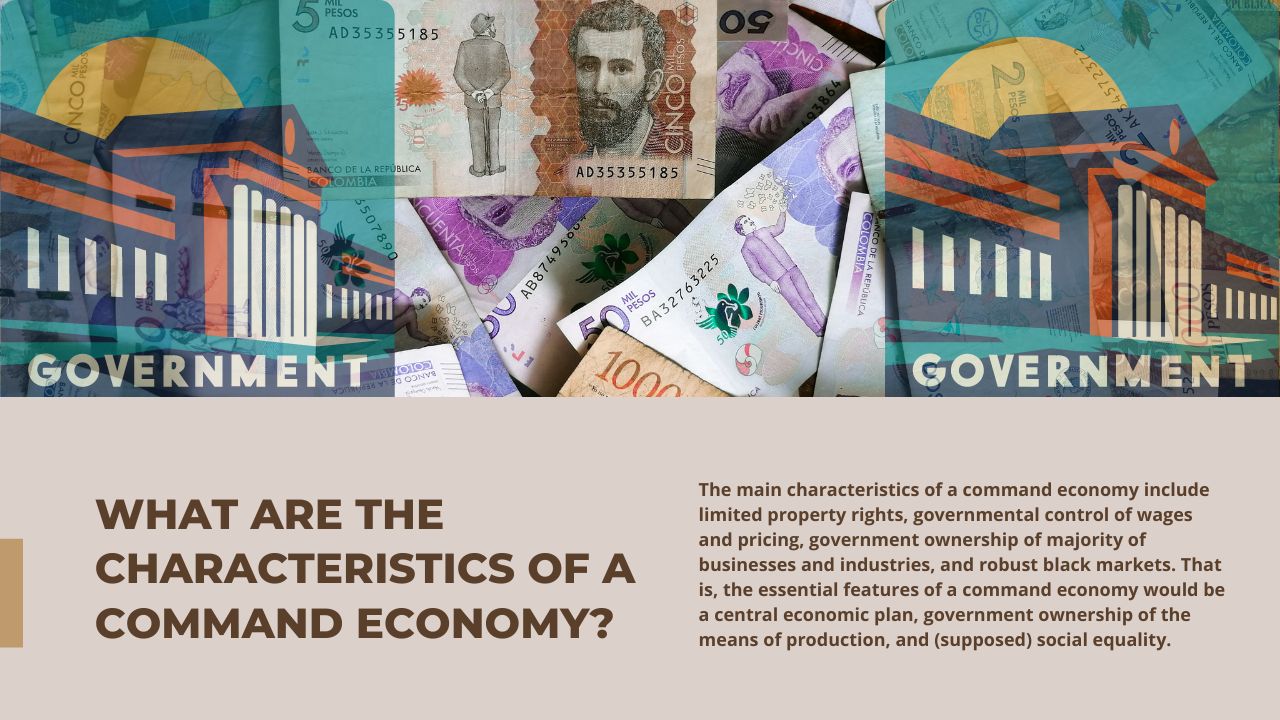
In the study of economics, few concepts evoke as much debate and scrutiny as the command economy, a system where the government exerts substantial control over the production and distribution of goods. This model starkly contrasts with market economies, where decisions are largely dictated by the forces of supply and demand. Exploring the nuances of command economies not only illuminates their operational mechanics but also prompts examination of real-world examples. Among the most emblematic nations exhibiting these characteristics is North Korea, a country whose economy serves as a case study for the profound impact of government control.
To truly understand command economies, one must first grasp the foundational traits that distinguish them. At the heart of a command economy lies centralized planning. Governments make critical decisions regarding what goods to produce, how much should be produced, and the pricing structures for those goods. Like a maestro conducting a symphony, government officials orchestrate economic activity with the intent of achieving collective goals, often at the expense of individual choice.
As we delve deeper into the characteristics of a command economy, we find another defining feature: state ownership of resources. In countries where this system prevails, the government maintains ownership over land, labor, and capital. The theoretical rationale behind this approach is that it mitigates inequality and promotes uniformity among citizens. Yet, rather than fostering collaboration, this can stifle innovation and entrepreneurial spirit, as individuals are often stripped of the incentives that fuel competition.
In examining North Korea, we observe a classic command economy in full swing. Here, the government dictates not only economic directives but also social agendas, tightly weaving together the fabric of society with the ideological threads of Juche, or self-reliance. The North Korean regime’s unabashed control of resources manifests in its agricultural sector, where collectivized farms operate under strict regulations. Farmers are often reduced to mere cogs in a vast machine, producing crops not for personal profit but to meet the predetermined quotas established by the state.
However, the allure of an uninterrupted, government-controlled economic framework is often illustrated through the promise of stability. Proponents argue that such economies can safeguard against the volatility that frequently plagues market-oriented systems, thereby ensuring basic needs are met for every citizen. This has been a compelling argument in advocating for command economies; during times of economic turmoil, advocates herald the virtues of efficiency and planning.
Yet, the harsh reality of command economies, particularly in North Korea, unveils a paradox that hinders true prosperity. While the government professes to prioritize the needs of its people, the monotony of state-run markets leads to significant inefficiencies. With little to no competition, a peculiar stagnation takes root. Innovations, which are often the lifeblood of economic evolution, are systematically quenched. This results in a landscape where the citizens remain shackled, forced into a monotonous existence that bears little semblance to the vibrancy of life within free-market economies.
Despite these challenges, perhaps an even more pressing concern is the global perception of countries operating under command economies. When assessing nations like North Korea, the prevalence of human rights abuses and widespread poverty casts a long shadow over any potential economic benefits. The dichotomy of a government that promotes its economic stability while concurrently violating the fundamental freedoms of its citizenry creates a deeply unsettling biography for nations identified as command economies.
Furthermore, globalization poses an additional challenge to pure command economies. In an age defined by interconnectedness and rapid technological advancement, the rigidity of a command economy seems increasingly archaic. The gulf between nations that embrace free trade and those that resist it grows more pronounced each passing year. Here lies a critical juncture where command economies must contemplate their relevance in a world dominated by competitive marketplaces. Will nations like North Korea evolve or remain stagnant? The answer may determine the future of such economic landscapes.
Juxtaposing command economies with their market counterparts thus becomes a study of contrasts. In market economies, individuals act as architects of their destinies, wielding the freedom to innovate, invest, and inspire. In command economies, however, the state assumes the role of both creator and puppeteer, dictating the actions of its populace. This imbalance underscores the critical importance of individual agency, suggesting that a collaborative society thrives on the ideas and input of its constituents.
As we navigate the complexities of command economies, the case of North Korea starkly highlights the repercussions of extreme government control. The economy operates like an intricate clockwork mechanism, well-constructed yet ultimately stifled in its innovation, growth, and success. History has shown that while command economies may appear robust in theory, they ultimately risk suffocating their own populace through rigid restrictions and a lack of adaptability.
In conclusion, absorbing the realities of command economies prompts an introspective inquiry into the potent effects of state control on economic vitality. Countries like North Korea stand as reminders of the delicate balance that must be maintained between governance and individual freedom. The tale of command economies is one not merely of economic systems, but a testament to the indomitable human spirit, ever yearning for the liberty to redefine its own narrative. As history unfolds, the struggle between regulation and innovation will continue to shape our understanding of economies worldwide.

Leave a comment