

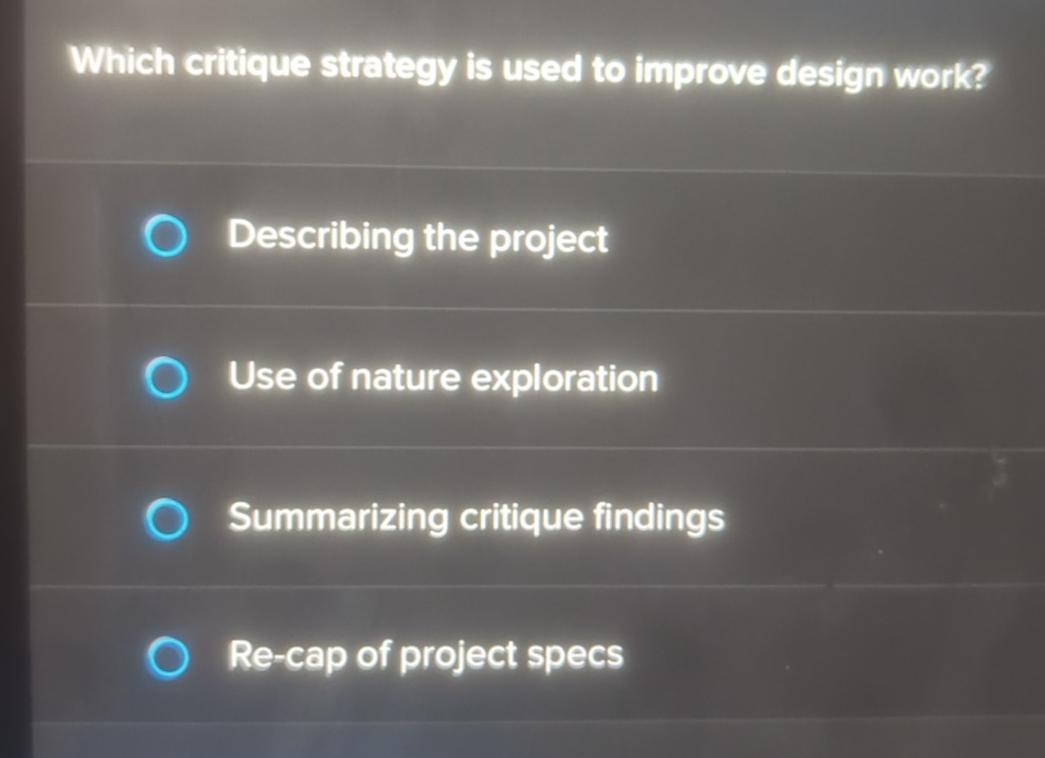
In the realm of design, critique strategies serve as pivotal tools that enable designers to refine their work, elevate creativity, and ultimately inch closer to perfection. These strategies foster an environment of constructive feedback, prompting designers to question their assumptions, embrace new perspectives, and develop innovative solutions. This exploration delves into various critique strategies that assist in transforming initial concepts into polished masterpieces, facilitating a nuanced understanding of their roles in the design process.
1. **Peer Review**: One of the most fundamental critique strategies is the peer review. This approach involves gathering a group of colleagues or fellow designers to assess each other’s work. The essence of peer review hinges on diverse perspectives. Designers can uncover blind spots in their own work, as peers may perceive elements differently. Additionally, the mere act of articulating feedback can enhance one’s own understanding, allowing for a more profound contemplation of design choices. Emphasizing the importance of honesty and respect is crucial; the goal is to distill the essence of design excellence from various viewpoints.
2. **Design Critique Sessions**: These sessions offer a structured approach to evaluation and feedback. Unlike impromptu discussions, critique sessions provide a dedicated time for in-depth analysis. Utilizing the ‘show and tell’ format encourages designers to present their work in a narrative form, articulating their intent, inspiration, and functionality. Feedback is often organized into three primary categories: praises, observations, and suggestions. The beauty of a formal session lies in its ability to foster an atmosphere of collaboration. Participants are encouraged to ask probing questions, which necessitates a critical reflection on the design’s purpose and audience engagement.
3. **User Testing**: Integrating the user perspective into the critique process is invaluable. User testing involves presenting design work to real users to observe how they interact with it. This strategy highlights usability, functionality, and aesthetic appeal from the end-user’s point of view. Designers collect qualitative and quantitative data through observation and feedback, leading to a more effective iterative process. By identifying pain points and areas of satisfaction, user testing serves not merely as a critique but as a catalyst for evolution in design. This cyclical feedback loop ensures that designs remain relevant and user-centric.
4. **Expert Critique**: Engaging industry experts for critique elevates the feedback process further. Experts possess a wealth of experience and a comprehensive understanding of design principles, trends, and innovations. Their insights can illuminate industry standards and best practices that one may not have considered. The discourse is typically more technical, focusing on aspects like composition, typography, or color theory. While this approach can be intimidating, it accelerates professional growth and competency, pushing designers to hone their craft to meet elevated expectations.
5. **Self-Critique**: An often overlooked yet powerful technique in the design critique arsenal is self-critique. This introspective approach compels designers to step back from their work and assess it with a critical eye. By employing techniques such as design journals or reflective notes, designers can articulate their thought processes, the evolution of their work, and areas needing refinement. This self-analysis not only cultivates critical thinking but also allows designers to establish clear benchmarks for improvement. Furthermore, developing a habit of self-critique fosters resilience and adaptability, essential traits for thriving in the dynamic design landscape.
6. **Collaborative Critique**: Team-oriented critique sessions encourage collective brainstorming. This strategy benefits from collaborative synergy, where team members build off each other’s ideas to generate innovative solutions. In an environment where brainstorming is welcomed, designs can evolve through a process of hybridization, merging different styles and concepts. Using collaborative tools such as digital whiteboards facilitates the sharing of ideas in real-time, allowing for a more dynamic discourse. The emphasis on collective input can lead to unexpected breakthroughs, enhancing the creative process.
7. **Visual Critique**: When it comes to design work, the visual elements speak volumes. Conducting a visual critique focuses exclusively on the aesthetic aspects—composition, layout, color palettes, and typography. This strategy encourages participants to analyze the work purely from a design standpoint rather than functional considerations. Visual critique sessions often employ techniques such as thumbnail sketches to explore multiple ideas quickly. By concentrating on visual language, designers can hone their ability to communicate effectively through imagery, ensuring that their messages resonate with intended audiences.
8. **Iterative Feedback Loops**: The process of design is seldom linear; rather, it is a series of iterative loops. By establishing checkpoints throughout the design journey, creators can solicit feedback at critical phases. This method allows for the integration of critique into the design evolution, resulting in incremental improvements. Each layer of feedback enhances understanding, ultimately leading to a more refined final product. Embracing an iterative mindset cultivates a culture of continuous improvement, enabling designers to achieve not just completion, but excellence.
In conclusion, employing diverse critique strategies within the design process is essential for transcending mediocrity. Each method—from peer reviews to user testing—plays a crucial role in shaping the final piece. Emphasizing collaboration, expert input, and self-reflection cultivates a rich environment conducive to creativity and innovation. Through these varying lenses of critique, designers can navigate the complexities of their craft, ultimately moving from mere concepts to extraordinary creations. Embracing these strategies will undoubtedly lead to a more purposeful and considered design process, paving the way toward perfection.

Leave a comment