

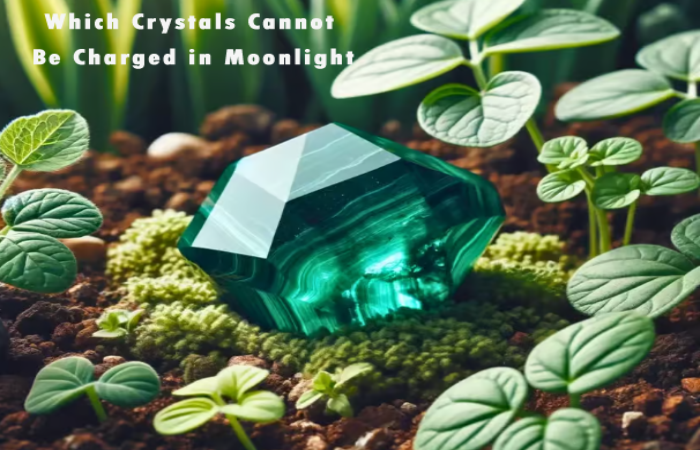
The allure of crystals has captivated human interest for centuries, transcending cultures and evolving into a vibrant contemporary practice. Among the myriad beliefs surrounding these minerals, one particularly intriguing observation pertains to their energetic capacities when exposed to moonlight. While many practitioners extol the benefits of charging crystals under this celestial light, a pertinent question arises: Which crystals cannot or should not be subjected to lunar illumination? This exploration delves into the specifics of the matter, providing clarity on the delicate nature of certain stones.
To understand the nuances involved, one must first grasp the fundamental properties of crystals. Each mineral possesses a unique crystalline structure and vibrational frequency, which can be affected by external forces, including light. The moon represents a passive force in the celestial hierarchy, offering a gentle energy conducive to certain types of crystal charging. However, not all crystals respond favorably to this lunar treatment, primarily due to their inherent characteristics and sensitivities.
The first category that warrants attention consists of **crystals that are susceptible to fading or discoloration**. Certain minerals can undergo structural alterations when exposed to prolonged sunlight or any intense light source, including moonlight. For instance, **amethyst**, while often appreciated for its serene purple hues, can fade when left under moonlight too long. Though the moon’s light is softer than that of the sun, the prolonged exposure can still diminish the vibrancy of this particular crystal.
Another notable mention is **rose quartz**, a stone revered for its associations with love and emotional healing. While it typically possesses robust energy under moonlight, some variances in its composition make it prone to discoloration and fading. Thus, it is advisable to limit exposure to avoid diminishing its aesthetic and energetic qualities. Similarly, **citrine**, often linked to abundance and prosperity, can witness a waning of its bright yellow coloration if subjected to the moon’s glow for extended periods.
**Porous stones** and those with **trapped moisture** present further complications in the context of lunar charging. Crystals such as **selenite** and **opal** can absorb water, resulting in potential structural damage when illuminated by moonlight. Selenite, while powerful for cleansing and energy work, is particularly porous. Therefore, exposing it to moisture—whether from dew or the indirect influence of moonlight—may lead to deterioration. This principle extends to opals, which may experience changes in their internal composition, leading to visible cracks and changes in opalescence.
Moreover, certain **technically fragile rocks** warrant caution. **Fluorite**, celebrated for its rainbow translucence and energy-cleansing capabilities, exhibits delicate layers that can become disrupted under the influence of moonlight. The subtleties of its crystallography mean it can lose structural integrity if overexposed. Similarly, **calcite** is known for its varied and exquisite coloration; however, its fractal nature makes it a candidate for rapid depletion of vibrational strength when exposed excessively to any form of light.
In addition to the physical properties to consider, the **energy dynamics** of certain crystals imply advisories against lunar exposure. Many practitioners believe that crystals serve as conduits for specific energies and vibrations. An example is **black tourmaline**, a grounding stone celebrated for its protective qualities. While it thrives in natural earthy settings, its vibrational energy may be compromised under the ethereal influence of moonlight. The implications extend further to **tigers eye**, which, revered for prosperity and protection, can awkwardly align with the passive qualities of lunar energy, potentially dimming its effectiveness.
Interestingly, **crystals associated with fire** can also indicate volatility when faced with lunar charges. Stones like **carnelian** and **garnet**, which resonate with the element of fire, might prefer vibrant sunlight rather than the softer, cooler emissions of moonlight. The moon’s energy, in looser alignment with these fiery stones, could potentially lead one to feel a disconnect, thus impacting their utilization in practices centered around manifestation and enthusiasm.
Furthermore, the aspect of **intention** should not be underestimated. Some practitioners assert that intention carries more weight than the physical properties of the crystals themselves. For instance, if a crystal is believed to thrive through solar energy, attempting to charge it under moonlight could yield unfavourable outcomes. This subjectivity underscores the significance of personal intuition when working with crystals.
To summarize, while the moonlight can indeed radiate a soothing energy conducive to many crystals, it’s crucial to recognize the subset of stones that may not endure this gentle illumination unscathed. Crystals like amethyst, rose quartz, citrine, selenite, opal, fluorite, and others exemplify the delicate balance of vibrational energies and physical properties that dictate their compatibility with lunar exposure. Knowledge and understanding remain integral to the effective and respectful use of these natural elements. When cared for thoughtfully, crystals can maintain their vibrant energies and enchanting aesthetics, contributing to personal practices with lasting and profound significance.

Leave a comment