

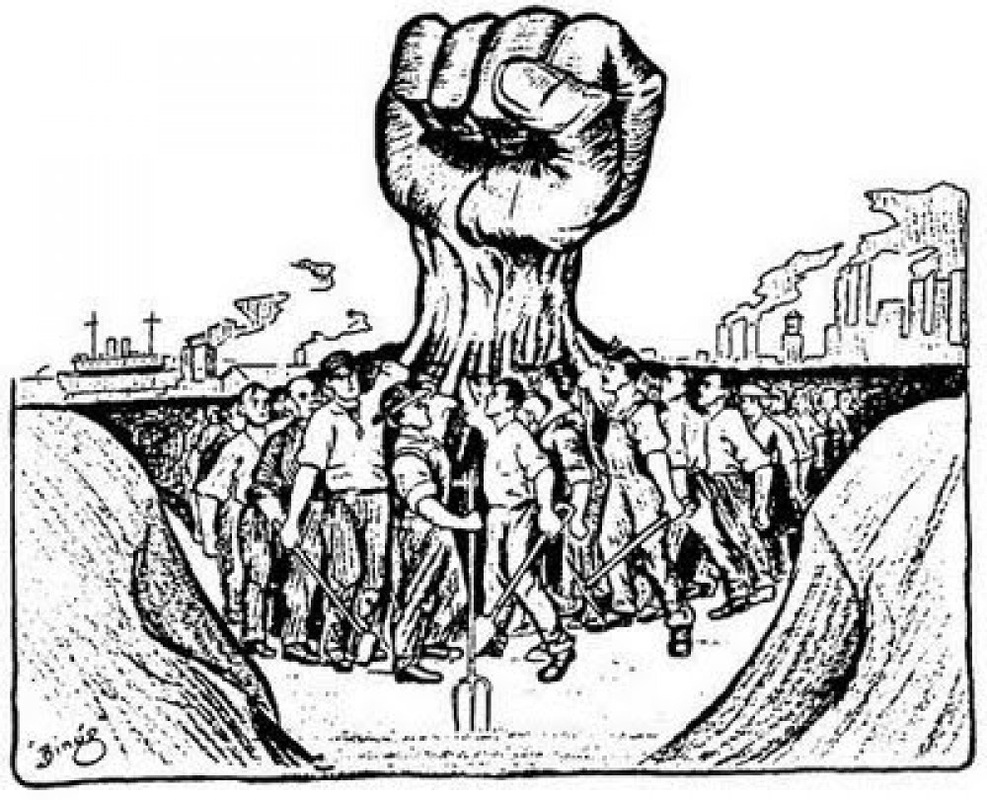
The history of labor unions is a fascinating tapestry woven from the threads of struggle, negotiation, and triumph. Have you ever pondered the multitude of factors that spurred workers to organize? What if we posed a challenge—how would you articulate the common demands that united these early labor unions? Indeed, understanding the foundational aspirations of such organizations not only illuminates the plight of workers in the past but also provides insight into contemporary labor movements. This exploration delves deeply into the shared demands of early labor unions, revealing the horsepower behind their mobilization.
To fully appreciate the scope of early labor unions, one must first recognize the sociopolitical milieu that gave rise to them. The late 19th century heralded an era of industrialization, characterized by rapid economic growth and, concurrently, stark worker exploitation. Laborers faced grueling hours, paltry wages, and abhorrent working conditions. In such an environment, the seeds of discontent were nurtured, ultimately culminating in organized resistance.
Despite the diversity inherent in various labor unions, they commonly coalesced around several fundamental demands that reflected the collective aspirations of their members. Foremost among these was the appeal for shorter working hours. For many laborers, the standard workweek often stretched to sixty hours or more. The call for a reduction to an eight-hour workday became emblematic of the labor movement. This demand resonated not only as a quest for improved personal welfare but also as a declaration of workers’ rights against relentless capitalist exploitation.
Another paramount demand shared among early labor unions was the quest for increased wages. With inflation eroding living standards, workers sought compensation that would accurately reflect the labor they contributed. The pervasive cry for fair remuneration was rooted in the conviction that every worker deserved a living wage—an idea that transcended mere monetary value and touched upon dignity and respect. Without an adequate financial recompense, the very foundation of family stability was jeopardized.
Equally significant was the demand for safer working conditions. The horrific industrial accidents that marred the lives of countless laborers prompted a vigorous advocacy for occupational safety. Early unions fought for regulations that would mitigate hazards, emphasizing the inalienable right of workers to labor in environments that did not threaten their health or lives. This demand underscored a transformational shift in recognizing the moral responsibility of employers toward their workforce.
Furthermore, the reduced emphasis on child labor became a unifying claim among early labor unions. The employment of children in perilous conditions was an affront to the notion of childhood itself. Unions advocated for laws that restricted child labor, positing that education should take precedence over industrial labor for the young. This demand illustrated not only a commitment to the welfare of the younger generation but also highlighted the unions’ broader aspirations for societal progress.
The right to unionize itself represented a pivotal demand of early labor unions. The establishment of collective bargaining as a legitimate avenue for discourse between labor and management was crucial. Workers sought legal recognition of their right to organize, thereby enabling them to negotiate for their interests. This requirement was often met with staunch opposition from employers and government entities, leading to strikes and protests that would reverberate throughout the social landscape.
As public awareness of labor issues burgeoned, so too did the call for equitable treatment and non-discrimination in the workplace. The burgeoning labor movements recognized that gender, race, and ethnicity should not hinder a worker’s access to fair treatment or inflammatory workplace practices. Their demands advocated for inclusivity, pushing against the prevailing discriminatory sentiments of the time.
Moreover, early labor unions also championed the concept of pensions and disability benefits, fostering a security net for workers in the twilight of their careers or after debilitating injuries. The notion of a safety net was revolutionary, evolving beyond the immediate concerns of salary and hours to encompass long-term care for individuals who had dedicated their lives to labor. This holistic approach to worker welfare established a paradigm shift in employer-employee relations.
In addition to these prominent demands, the pursuit of anti-trust laws and policies was also part of the early labor unions’ agenda. They sought to curtail monopolistic practices that stifled competition and exploited workers. By advocating for legislation that limited the power of industrial giants, labor unions positioned themselves as champions of the economically marginalized.
In conclusion, the common demands of early labor unions serve as a testament to their enduring impact on the socio-economic fabric of society. Their quest for shorter hours, fair wages, better working conditions, and the right to organize were not mere grievances; they represented a collective aspiration for equity and dignity. As we reflect on these historical demands, one must consider whether modern labor movements echo this spirit of solidarity. Will contemporary workers rise to address their own challenges with the same fervor? The dance between labor and capital continues, and the resonance of the early labor unions remains a pivotal chapter in this ongoing narrative.

Leave a comment