

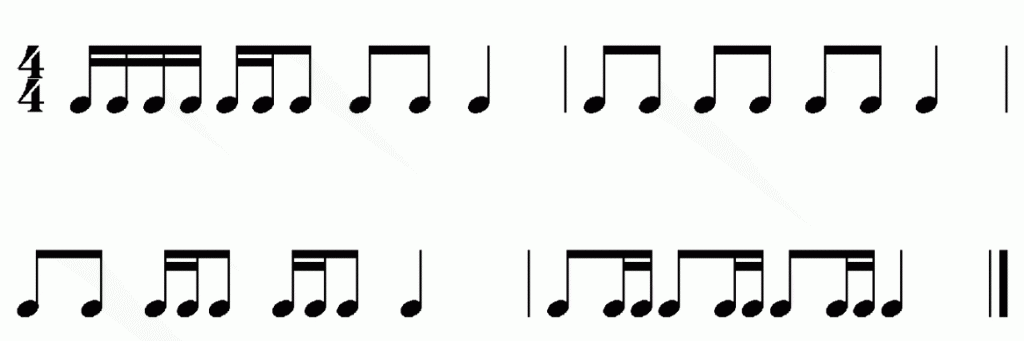
The exploration of rhythm in music is akin to a vibrant tapestry, intricately woven with threads of sound that color our auditory experience. The rhythm played in the right hand, particularly in the context of keyboard or percussion instruments, serves as a beacon of melodic contour, guiding listeners through a labyrinth of musical expression. This article endeavors to elucidate the multifaceted nature of this rhythmic component, shedding light on its unique appeal and the underlying artistry that characterizes right-hand rhythms.
1. The Right Hand: Conductor of Motion
In the realm of music, the right hand often assumes the role of a conductor, orchestrating the flow of sound with a precision that is both deliberate and spontaneous. This rhythmic movement is akin to a river, flowing effortlessly yet possessing the potency to carve valleys through stone. The right hand’s rhythm is characterized by its ability to instigate momentum, propelling the musical narrative forward. It can evoke feelings of exhilaration or introspection, a dichotomy that speaks to its versatility.
2. Syncopation: The Unexpected Intrigue
One hallmark of rhythm played in the right hand is the element of syncopation—an enchanting interplay of accents that diverges from the expected beat. This delightful disruption creates a playful tension, akin to a jester dancing on the precipice of a cliff, perpetually teasing the ground below. Syncopation imbues the music with a sense of unpredictability, inviting the listener to engage more deeply as they grapple with the rhythmic nuances that emerge. The layering of off-beats and the strategic placement of rhythmic emphasis cultivate a vibrant dialogue between silence and sound, amplifying emotional expressiveness.
3. Polyrhythmic Embellishments: A Dance of Textures
The right-hand rhythm can also serve as a vehicle for polyrhythmic embellishments, which are intricate patterns woven together to create a rich auditory tapestry. This multifaceted approach is reminiscent of a masterful painter layering colors on canvas, each stroke contributing to a larger narrative. Here, the right hand acts as a pioneer of complex meters, juxtaposing varied time signatures to produce a kaleidoscope of rhythms. The charm of such rhythms lies in their capacity to draw listeners into a labyrinth of sound, where every twist and turn presents new revelations. This complexity invites continual engagement, enthralling all who dare to traverse its depths.
4. Melodic Interweaving: Harmonizing with the Left Hand
Moreover, the right-hand rhythm often functions in a symbiotic relationship with the left hand, creating a harmonic interplay that transcends mere accompaniment. In this context, the right hand may embody lyrical motifs that weave through the musical fabric, providing both rhythmic propulsion and melodic contour. This delicate balance is akin to a courtship dance, where the two hands engage in an intricate exchange, responding to and enhancing one another’s contributions. The synergy between the hands fosters a holistic musical experience, one in which rhythm and melody coalesce into a singular expression of art.
5. Expressive Articulation: The Voice of Emotion
The nuances of articulation in the right hand can profoundly influence the emotional gravitas of the piece being performed. Techniques such as staccato, legato, and accents can transform a straightforward rhythmic pattern into an emotive discourse. Staccato notes, crisp and punctuated, evoke urgency and excitement, while legato passages offer a smooth, flowing narrative reminiscent of a gentle breeze drifting through a tranquil glade. This expressiveness serves as the soul of the rhythm played in the right hand, empowering the performer to infuse their interpretation with personal emotion and insight.
6. Cultural Variations: A Global Perspective
Exploring the rhythm played in the right hand unveils a rich tapestry of cultural variations that shape musical expression around the globe. From the syncopated flourishes of African drumming to the intricate patterns of Eastern classical music, each cultural lens offers a unique perspective on rhythmic structure and its emotional connotations. The right hand, irrespective of cultural context, often emerges as a vessel of storytelling and communal connection, reflecting the values and traditions of its origin. This global perspective enriches the understanding of rhythm, celebrating the diversity that binds us through the universal language of music.
7. The Educational Emphasis: Foundations of Musical Literacy
Understanding the rhythm played in the right hand is crucial for aspiring musicians, as it forms the foundation of musical literacy. Educators emphasize the development of right-hand techniques through exercises, encouraging students to explore dynamics, articulation, and timing. These pedagogical elements are instrumental in nurturing not only technical proficiency but also an appreciation for the artistic possibilities that arise when rhythm is treated with intention and creativity. The journey through these foundational exercises is akin to a rite of passage, transforming budding musicians into adept interpreters of sound.
8. Conclusion: The Indelible Impression of Right-Hand Rhythm
In conclusion, the rhythm played in the right hand is a vital element of musical expression, characterized by its dynamic interplay of motion, syncopation, and melodic articulation. It acts as a conduit of emotional resonance, allowing performers to engage deeply with their repertoire while inviting listeners to traverse an auditory landscape rich in complexity. As we delve into the nuances of this rhythm, we ultimately discover that it is not merely a series of sounds organized in time, but rather an enchanting narrative that transcends the confines of mere notation. The right hand, with its rhythmic artistry, offers a glimpse into the profound and enduring power of music to evoke, connect, and inspire.

Leave a comment