

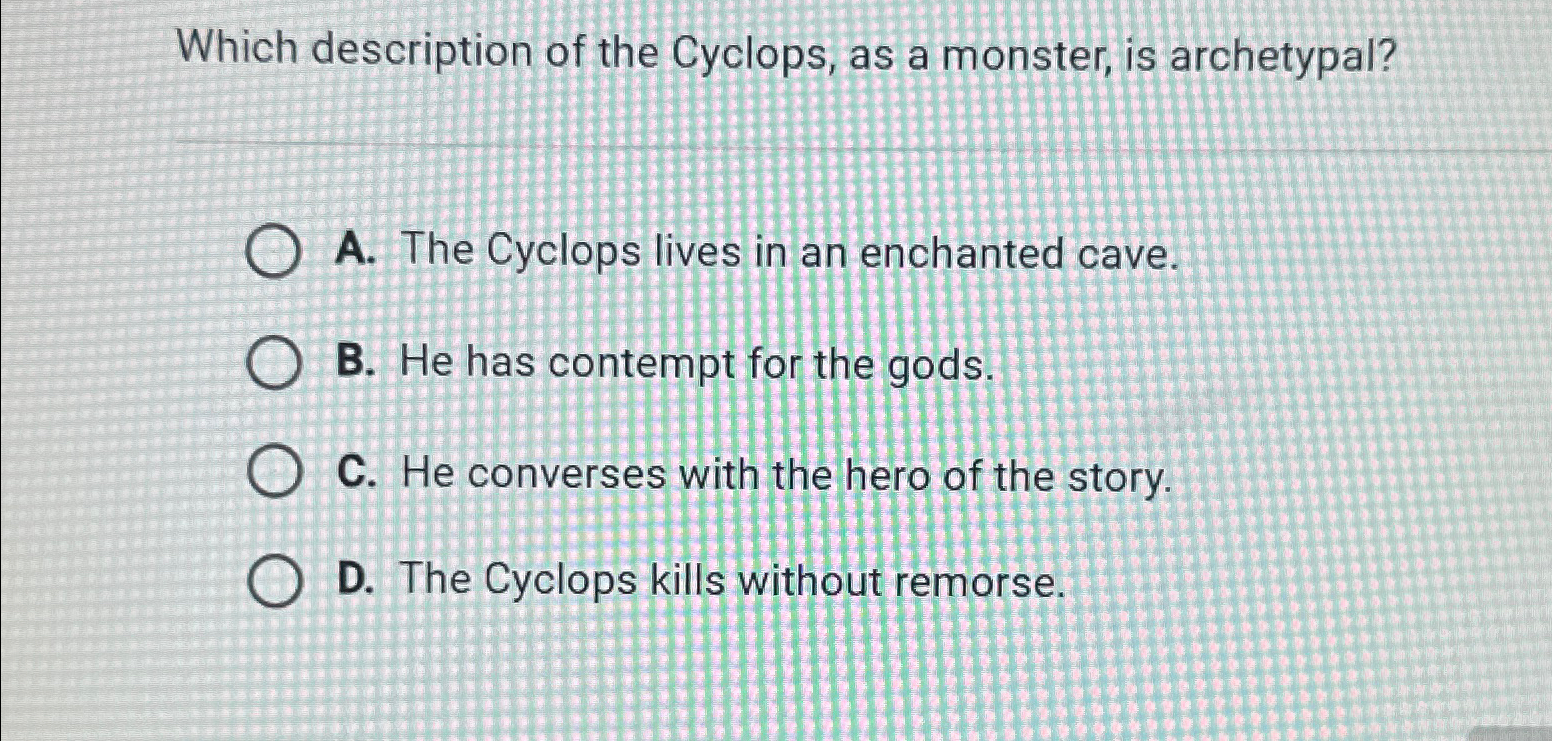
The allure of mythological creatures has perpetuated through ages, capturing the imagination of scholars, writers, and enthusiasts alike. One such figure that piques interest is the Cyclops, a formidable one-eyed giant originating from ancient mythology, particularly prominent in Greek lore. To ascertain which descriptions of the Cyclops as a monster bear archetypal significance, one must delve into various aspects of the creature itself. The narrative of the Cyclops serves not merely as a tale of brute strength, but as a multifaceted symbol replete with thematic depth and archetypal resonance.
Archetypal monsters often embody fundamental human fears, traits, or dilemmas. The Cyclops serves as a prime exemplar of this paradigm, representing a profound disconnection from civilization and the consequences of unmitigated power. At its core, the Cyclops embodies primal instincts devoid of social constructs, which resonates with the archetype of the ‘savage.’ This characterization elicits a visceral response, tapping into the archetype of the ‘Other,’ further accentuating humanity’s inherent fear of the unknown and the unrefined.
In examining the Cyclops, particularly through the lens of the narrative featured in Homer’s “Odyssey,” one uncovers a rich tapestry of characteristics that reinforce its archetypal status. The Cyclopes, as depicted in the epic, dwell in isolated, desolate landscapes—remote from societal norms and civilization. This spatial dislocation reinforces the archetype of the monstrous, detached from the nurturing aspects of community and higher moral order.
Moreover, the Cyclopes are singular in their anatomy; the prominent singular eye serves as a potent symbol of their myopic worldview. This physiological trait extends beyond mere physicality, encapsulating an inability or unwillingness to perceive life with breadth and nuance. The Cyclops, represented by Polyphemus, becomes a representation of ignorance and the peril that accompanies uncheckered strength. This character’s brutish nature suggests that ultimate physical power, devoid of wisdom and foresight, leads to one’s downfall, emphasizing the moral dilemmas inherent in raw ambition and reckless desires.
To further compass the Cyclops as an archetype, one must acknowledge the persistently recurring theme of hubris, a concept deeply rooted in Greek tragedy. The Cyclops’ disdain for the customs of hospitality and the divine order mirrors humanity’s perennial struggle against arrogance and self-oversight. Polyphemus’s declaration, “I am not afraid of the gods,” illuminates the archetype of the disobedient creature—a being that revels in their might while dismissing the repercussions of their actions. This strain of hubris is emblematic within the archetype of the monster, underscoring a sobering lesson about the fragility of human ambition and the inevitable cosmic retribution that follows excessive pride.
Moreover, the Cyclops serves as a metaphoric mirror to the archetypal hero, exemplified by Odysseus. The juxtaposition of the clever hero against the brutish monster highlights essential human values: cunning over sheer force, intellect over brawn. The tale of Odysseus, employing wits to escape the Cyclops, emphasizes the classic archetype of the ‘Hero’s Journey’—a transformative experience marked by challenges that necessitate not only physical prowess but, more critically, intellectual acuity and moral fortitude. As such, the Cyclops becomes a formidable adversary not merely for its size and strength but as the quintessential foil to the hero’s virtues, thus solidifying its role within the archetypal framework.
In terms of thematic symbolism, the solitude of the Cyclops is profoundly illustrative of isolation and alienation. These themes resonate with the modern psyche, drawing parallels between the myths of the past and contemporary existential dilemmas. The Cyclops functions as both a literal and metaphorical embodiment of being ‘cursed’ to remain apart from the world, a salient representation of humanity’s enduring struggle against loneliness and the longing for connection. In a way, the Cyclops reveals the darker aspects of the human condition—the eternal battle between the self and the exterior world.
Furthermore, the representation of the Cyclops contains an element of fear and repulsion, which can be analyzed through the lens of Freud’s theory of the uncanny. The creature, though human-like in stature, embodies a monstrosity that evokes both intrigue and dread. This nexus of fascination and terror encapsulates the transformative element of the archetype, forcing audiences to confront their own fears and uncertainties manifested through the existence of such beasts.
Conclusively, the Cyclops serves as an archetypal monster that encapsulates a mosaic of human fears, ambitions, and moral quandaries. The various descriptions and characteristics associated with the Cyclops resonate deeply within the collective unconscious, shedding light upon timeless themes that transcend cultural boundaries and illuminate the intricacies of the human experience. The Cyclops stands not only as a figure of brute force but embodies the archetypes of the savage, the hubristic, and the isolated, encouraging reflection upon the complexities of fragility and strength that define humanity itself.

Leave a comment