

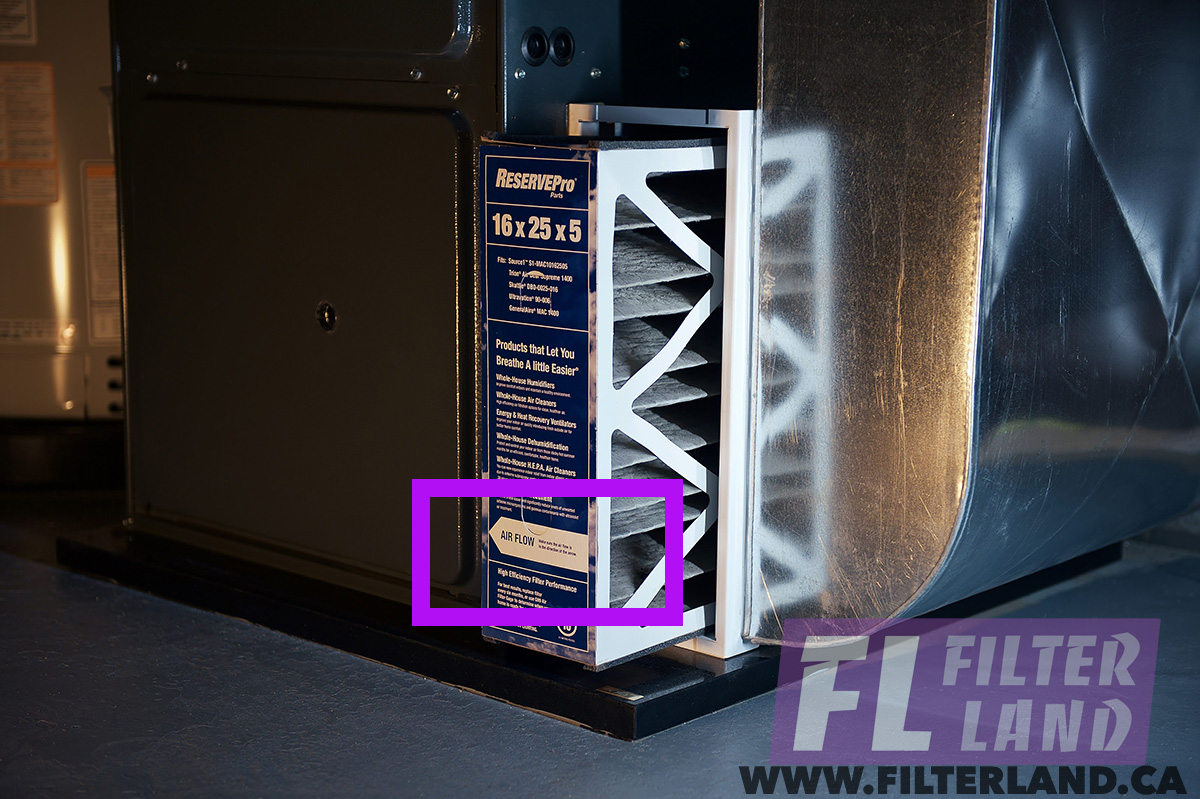
When it comes to maintaining a healthy and efficient home environment, the furnace filter often imagines itself as a mere accessory, easily overlooked and underappreciated. However, understanding the placement and orientation of a furnace filter is crucial for optimizing your heating system’s performance. The question, “Which direction does a furnace filter go?” opens the door to a broader discussion about system efficiency, indoor air quality, and even energy conservation. This article delves deep into the labyrinth of furnace filters, dissecting their orientation, significance, and the intricate nuances that accompany their effective usage.
To commence, it is essential to acknowledge that furnace filters are typically designed with directional indicators. These indicators often manifest in the form of arrows or specific labels located on the filter frame. Such indicators serve as vital navigational beacons, guiding users toward the correct installation orientation. Generally, the air should flow towards the filter material, implying that the arrow on the filter should point in the direction of the airflow, which is typically towards the furnace and away from the return duct. Understanding this basic principle is not merely a matter of convenience; it directly impacts the performance of the entire heating system.
Moreover, a misaligned filter can lead to a cascade of problems, sending ripples throughout your HVAC system. When installed incorrectly, a filter may obstruct airflow instead of facilitating it. This obstruction triggers an adverse cycle: reduced airflow not only diminishes heating efficiency but also forces the furnace to work harder to maintain desired temperatures. Consequently, this strain can escalate energy consumption, inflate utility bills, and considerably shorten the lifespan of the furnace, necessitating premature repairs or replacements.
Another critical aspect to consider is the filter’s composition. Filters are manufactured using various materials, each with unique properties. Common filter types include fiberglass, pleated, HEPA (High-Efficiency Particulate Air), and electrostatic filters. Each type has specific directional flow characteristics, which can add layers of complexity to the installation process. Pleated and HEPA filters, for instance, have more intricate build designs and can become problematic if installed incorrectly. A pleated filter’s pleats, if faced the wrong way, could imped the efficient capture of particulates, rendering it virtually ineffective at its primary task of purifying the air.
Furthermore, understanding the airflow dynamics within a heating system can significantly aid in comprehending the importance of correct filter orientation. Air circulates through your home due to pressure differentials created by the operation of the furnace. The central return duct occasionally receives negative pressure, drawing air in from the living spaces to the furnace, while the furnace expels heated air back through supply ducts. Our filters inhabit this critical juncture of airflow, positioned delicately to maximize particulate filtration while supporting efficient circulation.
In addition to focusing on the direction of airflow, it is prudent to take note of the installation environment. The location of the furnace unit itself may dictate certain parameters regarding filter installation. For example, if a filter is situated in a particularly dusty area, it may require more frequent changes, regardless of installation orientation. Conversely, filters in cleaner environments may last longer. Environmental factors, therefore, must also play a role in how and when to change the filters, regardless of the installation direction.
Moreover, the significance of regular maintenance cannot be overstated. Deadly tight schedules often push filter changes to the periphery of home maintenance tasks, yet neglecting this responsibility can have severe consequences. An overburdened filter can become a repository for dust, allergens, and contaminants, resulting in degraded indoor air quality. High concentrations of pollutants can exacerbate health conditions such as asthma, allergies, or respiratory diseases. Therefore, ensuring proper orientation when installing filters dovetails with the broader philosophy of sustainability and health.
Looking beyond mere installation and maintenance, the discussion shifts toward the conception of the furnace filter as a guardian of home integrity. While their physical presence is often diminished to an afterthought, their role is fundamentally steeped in proactive home care. The symbolic significance of the filter—lying at the nexus of efficiency, health, and economy—cannot be discounted. By fostering an acknowledgment of this role, homeowners can shift their perspective from one of neglect to one of active engagement.
To conclude, the query regarding “Which direction does a furnace filter go?” serves as an entry point into a much larger dialogue about care, consequence, and conscientious living. Installing the filter in alignment with the airflow direction and paying attention to its maintenance is not merely routine; it becomes a pledge to uphold the sanctity of one’s living space. By doing so, individuals can ensure that their furnace operates efficiently, contributing to both comfort and health in equal measure. In essence, appreciate the humble furnace filter, for it holds more significance than meets the eye—addressing a simple question may herald revelations that will enrich your living experience.

Leave a comment