

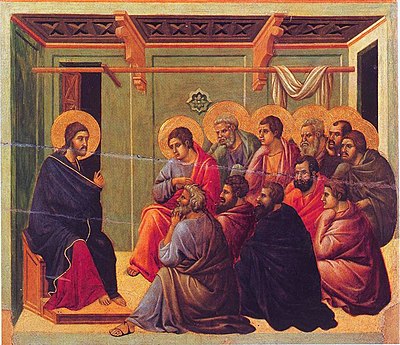
Within the annals of Christian tradition, the Twelve Apostles occupy a quintessential space, revered for their roles in the progenesis of one of the world’s largest religions. Within this cadre, however, one figure stands peculiarly distinct in the narrative of martyrdom: the Apostle John. The inquiry into “Which Disciple Was Not Martyred?” often leads directly to this fascinating character, whose life and legacy evoke a myriad of reflections, both theological and historical.
The Apostle John, traditionally identified as “the Beloved Disciple” and author of several New Testament texts, including the Gospel of John, the Epistles of John, and the Book of Revelation, demonstrates a unique trajectory amongst his peers. Unlike the majority of the apostles, traditionally believed to have perished violently for their faith, John is thought to have died a natural death, possibly around the age of ninety. This distinction raises immediate questions regarding the implications of his non-martyrdom and its relevance within the Christian narrative.
Examining the context of martyrdom in early Christianity, we note a significant penchant for glorifying the act of dying for one’s beliefs. The martyrdom of the apostles served as potent testaments of faith which galvanized the nascent Christian community, lending urgency and fervor to the missionary efforts of the followers of Christ. The apostles who embraced martyrdom—like Peter, who is said to have been crucified upside down, and Andrew, who met his end on an X-shaped cross—embodied an ethos of sacrifice and valor. Contrary to this overarching theme, John’s non-martyrdom raises crucial inquiries regarding divine favor, spiritual resilience, and the varying paths to sanctity.
To delve deeper, one may contemplate what John’s longevity signifies within the context of divine providence. His presence on the earthly plane for an extended duration arguably allowed him to contribute significantly to shaping Christian doctrines and practices. The Gospel attributed to him stands apart from the Synoptic Gospels (Matthew, Mark, and Luke), offering a distinctive theological perspective that emphasizes the divinity of Christ—a poignant counterpoint to the secularization of the faith that increasingly characterized the world in subsequent centuries.
A compelling thread woven through historical accounts is the symbolism of John’s long life. As an aged apostle, he became a living repository of Christ’s teachings. His non-martyrdom represents a form of witness that transcends mere physical suffering; it encapsulates the survival of spiritual insight in a rapidly changing sociopolitical landscape. In this light, John’s role metamorphoses into that of a guardian of tradition, shaping the faith not through the lens of sacrifice but through perseverance in witness and teaching.
Inextricably linked to John’s legacy is the notion of the ‘Beloved Disciple.’ The intimacy of this title engenders a multifaceted exploration of his relationship with Jesus. This closeness could suggest that John possessed an exceptional understanding of the nature of divine love, evidenced in his writings where themes of love and light permeate the texts. Scholars often posit that John’s theological contributions were influenced by his unique position in the inner circle of Christ’s disciples. This intimacy suggests that while John may not have faced physical martyrdom, he bore spiritual trials and tribulations that yielded a deepened understanding of Christian doctrine.
Furthermore, John was subjected to persecution during his lifetime, notably during the reign of Emperor Domitian, who purportedly exiled him to the island of Patmos. This exile could be construed as a form of martyrdom in its own right, affording him a testing of faith that, while not culminating in death, still encompassed a profound fidelity to his convictions amidst adversity. The result of this period of seclusion was the Revelation, a profound text that has since burgeoned into a significant component of Christian eschatology.
The contrast between John’s experience and that of his fellow apostles complements a broader discussion about the nature of martyrdom itself. Does one’s faith necessitate death, or can profound commitment manifest through living a life dedicated to service, teaching, and active engagement with the community? John becomes an emblem of the latter, embodying the notion that the act of living faithfully holds equal—if not greater—value than dying for one’s beliefs.
Moreover, John’s continued theological influence and the preservation of his writings underscore his integral role in shaping early Christian thought. The intersection of his experiences with the trajectories of other disciples draws attention to various paths that individuals may take within their faith journeys. The admiration afforded to John among theologians, scholars, and laypersons informs an enduring fascination with his life—a testament to the multifaceted dimensions of spiritual fulfillment.
In summation, while the question of “Which Disciple Was Not Martyred?” leads us to John, it simultaneously uncovers layers of meaning associated with his unique role in Christian history. John’s non-martyrdom invites deeper discussions surrounding the nature of faith, the enduring impact of theological exploration, and the diverse expressions of discipleship. His life affirms that the essence of being a follower of Christ transcends the ultimate sacrifice; living a life of steadfast faith and enduring love carries monumental significance within the rich tapestry of Christian tradition.

Leave a comment