

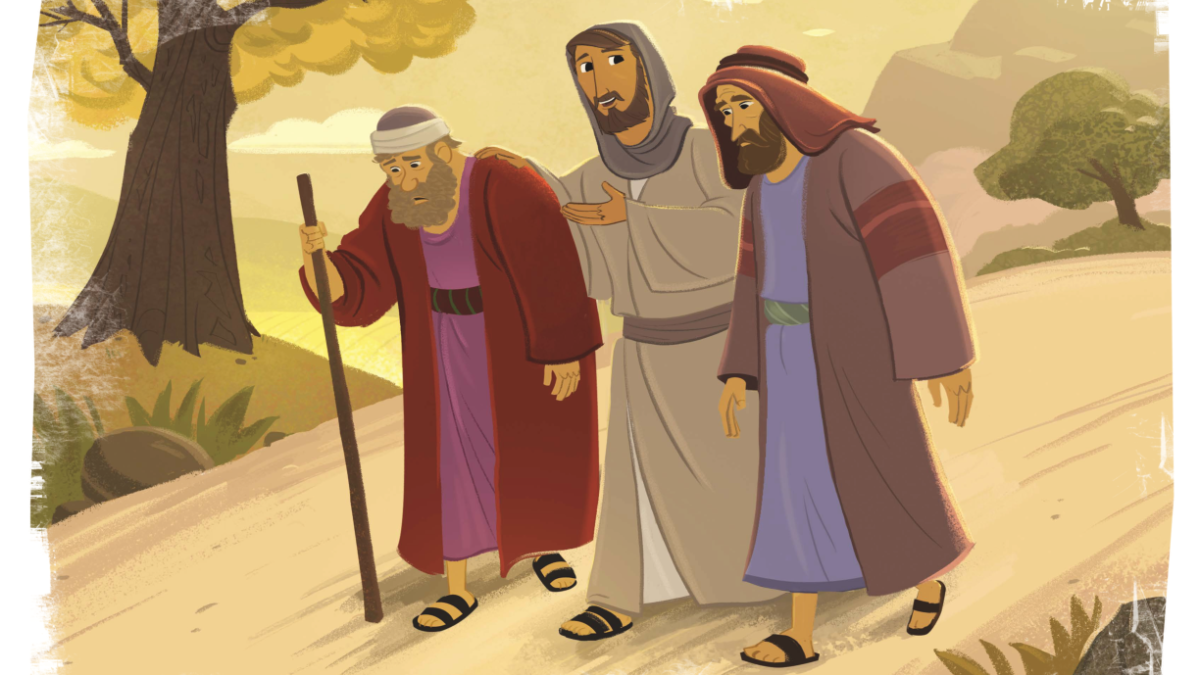
The narrative of the Road to Emmaus is a poignant vignette woven through the fabric of spiritual pilgrimage and post-resurrection reflection. As the sun casts its long shadows over the hills of ancient Judea, two disciples engage in a heartfelt dialogue, their hearts heavy with doubt and disbelief. This story invites us to explore the identities of these disciples, their profound experience, and the broader implications of their journey.
Initially, the foremost question arises: which disciples walked this road? The Gospel of Luke identifies them by name—Cleopas, a figure shrouded in obscurity, and another unnamed disciple, whose identity remains a tantalizing mystery. This anonymity serves as a metaphor for the universal experience of doubt and revelation that transcends the confines of time and place. It allows the reader to insert themselves into the narrative, becoming a participant in the journey towards understanding and faith.
To contextualize the journey, it is vital to envision the psychological landscape through which these disciples traverse. The backdrop is layered with grief, confusion, and an unquenchable thirst for truth. Emmaus, a small village situated approximately seven miles from Jerusalem, becomes a metaphorical way station for transformation. As the disciples walk, their conversation reflects the turmoil of shattered expectations; they grapple with the recent death of Jesus, their Master and friend, whose crucifixion left an indelible mark on their hearts and minds.
This pilgrimage of doubt soon becomes a pathway to enlightenment. The act of walking itself serves as an essential motif, symbolizing a journey toward clarity amidst confusion. The physicality of their movement resonates with our own spiritual journeys—often meandering, filled with questions that seem to linger in the air, weighty and unresolved. In this sense, Cleopas and his companion embody the very essence of humanity, seeking answers in a world fraught with paradoxes.
As these disciples meander along the dusty trails, a stranger joins their fellowship—Jesus, though unrecognized, steps into their narrative as a guiding light. His presence is an elegant reminder of the omnipresence of the divine, even when shrouded in mystery. The disciples share their sorrow and confusion, revealing their inability to comprehend the recent events. This exchange is illustrative of a broader truth: the importance of dialogue and community in navigating crises of faith.
Jesus, unveiling the depths of their misunderstanding, begins to expound on the scriptures, interpreting passages prophetic of the Messiah’s suffering. This shift from despair to hope encapsulates a transformational moment where darkness gives way to light. The act of explaining the scriptures serves as an illuminating beacon; it sparks a flicker of recognition amidst the disciples’ hearts. The encounter articulates an essential truth: understanding is often awarded through shared narratives and reflections, as light breaks through the shadow of despair.
Upon reaching Emmaus, the disciples invite the stranger to share a meal, symbolizing the warm embrace of fellowship. This act of hospitality culminates in a profound moment of revelation. As Jesus breaks the bread, their eyes are opened, and the veil of unrecognition is lifted. This moment, laden with theological significance, symbolizes the Eucharistic communion central to Christian belief. It revels in the idea that often divine presence becomes palpable in the humblest of acts—the sharing of bread and wine, the simple sustenance of life.
In the wake of this revelation, the disciples are propelled back to Jerusalem, their hearts ignited with fervor and conviction. This sudden transformation encapsulates a key theme of the narrative: the catalytic power of encounters with the divine. The journey to Emmaus, marked initially by sorrow, becomes a crucible for faith—demonstrating that in the throes of confusion and despair, illumination can emerge unexpectedly.
Moreover, the anonymous disciple can also be construed as representing the everyman—the one who, although unnamed, signifies the collective quest for truth that transcends individual identities. This empowerment, shared through Cleopas and his companion, highlights a communal dynamic intrinsic to faith development. The journey invites believers into a collective narrative, embracing the transformative moments of recognition and revelation together.
This tale of the Road to Emmaus serves as an allegory for contemporary believers, who often find themselves on their journeys, navigating the tumult of uncertainty. As questions arise about faith, purpose, and understanding, the invitation to walk with others, to share dialogues that can lead to deeper insight, becomes ever more relevant. It eloquently showcases the dynamic interplay of doubt, revelation, and shared experience in our relentless pursuit for meaning.
In conclusion, the story of the disciples on the road to Emmaus transcends time, encapsulating the essence of the spiritual quest. This remarkable encounter, rich with metaphor and imagery, resonates profoundly within the human experience. Both Cleopas and his unnamed companion draw us into a narrative where the journey is as significant as the destination, propelling us toward unwavering faith through understanding and revelation. Indeed, such is the legacy of their path—a testimony to the transformative power of walking together, sharing moments of doubt and enlightenment along the way.

Leave a comment