

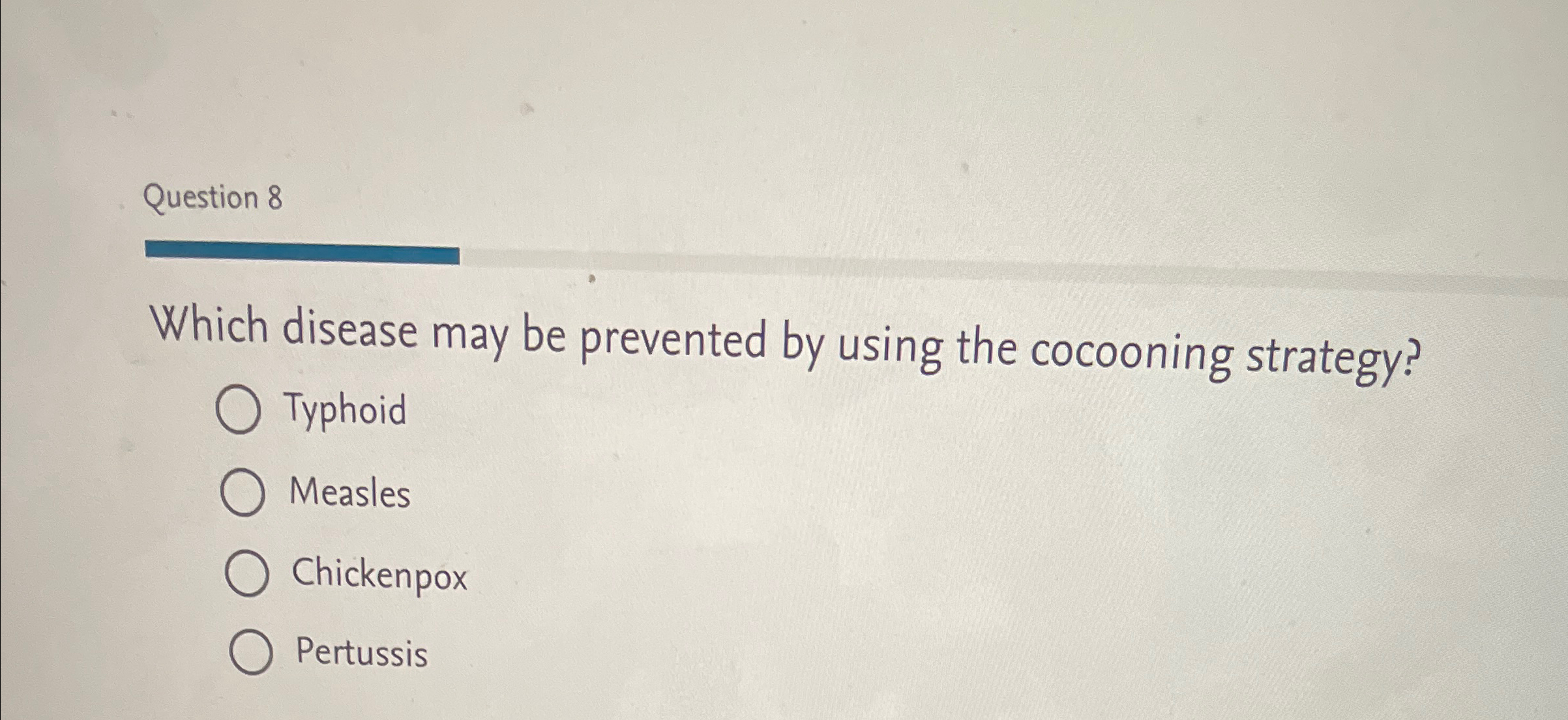
The cocooning strategy is an innovative public health approach designed to shield vulnerable populations from infectious diseases by creating a protective barrier of immunity. At its core, this fascinating strategy is predicated on the simple yet profound notion of intensifying immunity within a community to safeguard those who may be particularly susceptible to certain pathogens. As we delve into the intricacies of this methodology, we uncover the diseases that may potentially be mitigated through its implementation, with a particular focus on pertussis, commonly known as whooping cough.
Understanding cocooning necessitates a thorough examination of its historical context and underlying mechanisms. Developed in response to outbreaks of various communicable diseases, this strategy capitalizes on the principle of herd immunity. This collective immunity arises when a significant portion of a population becomes immune to a disease, thereby inhibiting its spread and effectively neutralizing its threat to those who remain susceptible.
Pertussis, the disease that predominantly illustrates the efficacy of the cocooning strategy, is a highly contagious respiratory illness caused by the bacterium Bordetella pertussis. Characterized by severe coughing fits that can lead to significant complications, particularly in infants and young children, pertussis presents a serious health risk. Disturbingly, infants are particularly vulnerable because they are too young to be fully vaccinated. Thus, creating a protective cocoon around them becomes paramount.
The implementation of cocooning involves vaccinating individuals who are in close contact with infants and other high-risk groups. This includes parents, caregivers, siblings, healthcare providers, and even family members. By immunizing these individuals, the likelihood of transmission to unprotected infants diminishes dramatically. Essentially, this approach encases the most vulnerable within a community of immunized individuals, curbing the potential for the pathogen to proliferate.
One might ponder, why not simply focus on vaccinating infants alone? While vaccination is undoubtedly essential, infants typically receive their first doses of the pertussis vaccine at two months, with the series completed over several visits. During this critical window, the infant remains defenseless against infection. Therefore, the cocooning strategy acts as a timely adjunct to traditional vaccination practices. It creates immediate protective measures while waiting for the infant’s immune system to develop adequate defenses.
The efficacy of this approach is underscored by epidemiological studies demonstrating substantial declines in pertussis incidence following its implementation. In various regions, communities that adopted the cocooning strategy reported notably lower rates of pertussis outbreaks, exemplifying how proactive engagement can catalyze a paradigm shift in public health initiatives. This palpable success engenders curiosity about the broader applications of similar strategies across other infectious diseases.
Beyond pertussis, the principles underlying the cocooning strategy can be extrapolated to address other communicable diseases, particularly those with similar transmission dynamics. For instance, diseases such as influenza and measles also pose significant risks to unvaccinated or under-vaccinated populations. Recognizing the potential for cross-applicability fosters an intriguing dialogue about how cocooning can be adapted and implemented in various contexts to bolster public health responses.
Nonetheless, the cocooning strategy is not without its challenges. Disseminating public awareness and ensuring heightened uptake of vaccinations within target populations remains a significant hurdle. Effective communication strategies must be devised to elucidate the importance of cocooning not just for individual self-protection, but also for the collective well-being of the community. Addressing vaccine hesitancy and misinformation is a critical component in mobilizing community members to participate fully in this health initiative.
Furthermore, the coordination between healthcare providers, public health agencies, and community organizations is crucial to bolster the cocooning strategy’s outreach efforts. Synchronization of immunization schedules, coupled with robust educational initiatives, can accelerate the acceptance and implementation of this proactive health strategy. Therefore, engaging all levels of the community—including schools, workplaces, and healthcare facilities—plays a pivotal role in maximizing the cocooning effect.
In conclusion, the cocooning strategy serves as a significant vehicle for preventing diseases such as pertussis by fostering community-wide immunity. Its innovative approach not only protects the most vulnerable members of society but also enhances the collective resilience to infectious diseases. As we contemplate the broader implications of this strategy, it is essential to consider its versatility and potential adoption across various infectious diseases. By embracing such forward-thinking public health methodologies, communities can shift perspectives on disease prevention, ultimately safeguarding the health of future generations.
In the ever-evolving landscape of public health, the cocooning strategy emerges as a testament to the power of collective action and proactive intervention, promising intrigue and hope in the ongoing battle against infectious diseases.

Leave a comment