

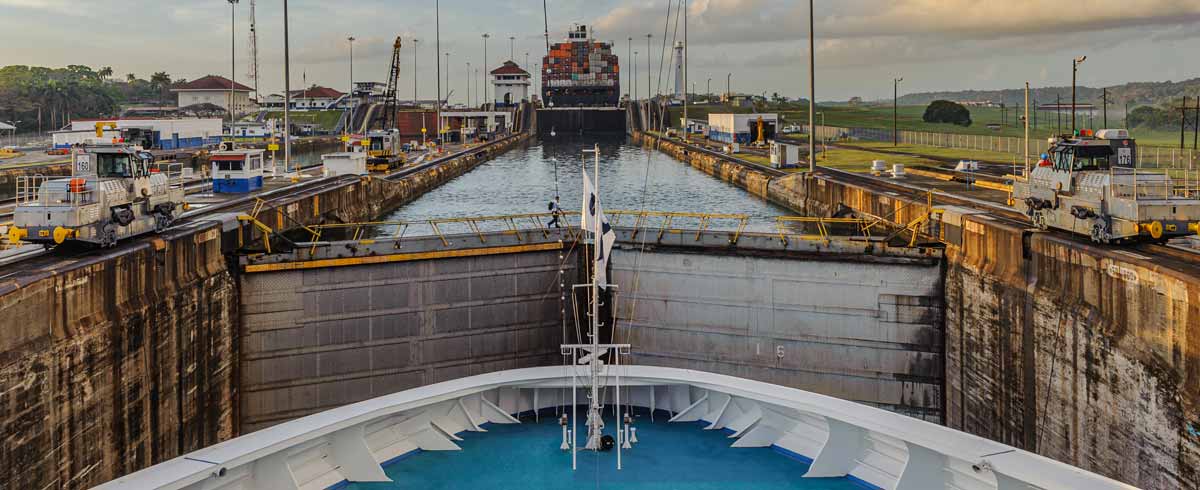
The construction of the Panama Canal, an engineering marvel of the early 20th century, was beset by numerous formidable challenges. One particularly insidious adversary was the proliferation of disease, most notably yellow fever and malaria. Each disease wrought havoc on the workforce, compelling engineers and planners to grapple with both environmental conditions and public health dilemmas. Understanding the significance of these diseases in the context of the Panama Canal’s construction reveals a complex interplay between human endeavor and nature’s formidable adversities.
Yellow fever is an acute viral hemorrhagic disease transmitted by infected mosquitoes, primarily Aedes aegypti. Historically, its presence has instigated public health emergencies and has shaped the socio-political landscapes of afflicted regions. The prevalence of yellow fever in Panama during the early 1900s was disheartening, as it decimated a significant number of workers and incapacitated construction efforts. Reports indicate that thousands succumbed to the disease, leading to high mortality rates that staggered organizational and financial investments in the canal project.
In tandem with yellow fever, malaria emerged as another harbinger of disease, exacerbating the dire situation. This mosquito-borne parasitic infection, characterized by cyclic fever and chills, was rampant in the lush, tropical environments surrounding the canal zone. The interplay between the natural habitat and the various Anopheles mosquito species ensured the persistence of malaria, making it a crucial concern for laborers working in the humid jungle. As a result, these diseases posed significant challenges not only in terms of human resources but also in engineering timelines and financial allocations.
The response to these health challenges necessitated a multifaceted approach, combining medical, military, and engineering interventions. The introduction of preventive measures constituted a pivotal moment in the canal project. The deployment of sanitation officers aimed to eliminate mosquito breeding sites through rigorous environmental management, including the draining of stagnant water and the application of larvicides. These operations, while resource-intensive, were fundamental to minimizing mosquito populations and reducing the transmission rates of both yellow fever and malaria.
Education played a transformative role in the fight against these diseases. Efforts to inform and instruct the workforce on the symptoms of yellow fever and malaria fostered a proactive stance towards illness recognition and prevention. Educational campaigns emphasized the necessity of immediate medical attention for symptomatic individuals, thus enhancing the speed of response to outbreaks. The evolution of public health education during this period marked a significant shift in the management of communicable diseases, echoing principles that resonate in contemporary health discourse.
Nevertheless, medical advancements were critical in this battle against disease. Notable figures such as Dr. William Gorgas made profound contributions, advocating for aggressive vector control and promoting the administration of quinine as a prophylactic measure against malaria. The combination of medical intervention and environmental modification significantly reduced the incidence rates of these maladies, thereby bolstering workforce stability and accelerating construction timelines.
In the broader context of public health, the challenges faced during the canal’s construction underscored the necessity of interdisciplinary cooperation. Collaboration between engineers, public health officials, and military personnel facilitated a comprehensive approach to disease control. Such alliances served as a precursor to modern public health initiatives, highlighting how collaborative endeavors can address complex health crises in the face of large-scale infrastructural projects.
The failures and successes encountered in combating these diseases during the Panama Canal project are significant for their implications beyond architectural achievement. They denote a paradigm shift in the relationship between humans and their environment. The early 20th century was a transformative period in understanding disease ecology, wherein the connection between environmental factors and health outcomes became increasingly recognized. The repercussions of yellow fever and malaria extended far beyond the Canal Zone, influencing public health policies in other tropical regions, highlighting the necessity for social institutions to adapt to the omnipresent threat of vector-borne diseases.
Reflecting on this era unveils an intricate tapestry of human resilience and ingenuity. Overcoming the dual plagues of yellow fever and malaria was not merely a matter of health; it embodied the ethos of perseverance against natural adversities. The Panama Canal stands as a testament to not only engineering prowess but also to the evolution of public health and the critical importance of scientific inquiry in the face of adversity.
Moreover, the legacy of the Panama Canal’s construction resonates in today’s discourse concerning global health issues and disease prevention strategies. The historical events surrounding the diseases faced during its construction serve as a sobering reminder of the perennial challenges posed by infectious diseases in large-scale human endeavors. The victories achieved, facilitated by the confluence of medical science, public health policy, and civil engineering, underscore a model of integrated solutions that remains relevant as humanity faces new health threats in the 21st century.
Thus, the story of the Panama Canal is a compelling intersection of triumph and tribulation, where the shadow of disease loomed large, yet was ultimately mitigated through innovation, cooperation, and tenacity. The legacy constructed alongside the earth and concrete serves as an indelible mark of human fortitude, striving forward in the presence of formidable challenges.

Leave a comment