

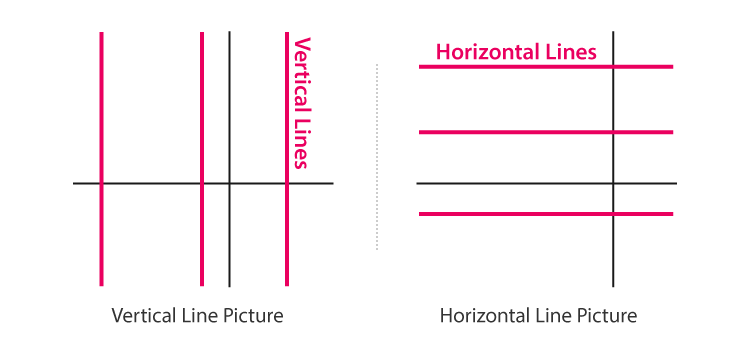
When venturing into the realm of geometry, one often encounters a plethora of angles, each with its own unique characteristics and relationships. Among these, vertical angles stand out, not just for their mathematical significance but for their elegant symmetry and striking properties. In the pursuit of understanding vertical angles, it is essential to explore their definition, characteristics, and various applications. This guide serves as a comprehensive exploration of vertical angles, allowing you to visually and conceptually grasp their essence.
Understanding Vertical Angles
At its core, a vertical angle is formed when two lines intersect. Picture two lines crossing like a pair of crossing swords, creating four angles at the intersection. Vertical angles are those that are diagonally opposite each other. Thus, if we denote the angles formed at the intersection as A, B, C, and D, where angles A and C are opposite and angles B and D are also opposite, then angles A and C, as well as B and D, are classified as vertical angles. This relationship imbues them with a special quality: vertical angles are always congruent. In other words, they possess identical measures, resonating with the harmonious nature of geometry.
Characteristics and Properties
Vertical angles are not mere abstractions; they possess a set of distinctive attributes that reinforce their significance:
- Congruence: The most striking characteristic of vertical angles is their congruence. For instance, if angle A measures 50 degrees, angle C will also measure 50 degrees, demonstrating the inherent balance of oppositional forces at play.
- Formation: Vertical angles arise solely due to the intersection of two lines. This formation can transpire in various contexts, from the simplicity of two crossing lines to complex geometric figures.
- Symmetry: Geometrically, vertical angles embody symmetry. The symmetry not only aesthetically pleases but also makes computations regarding angle relationships more intuitive and straightforward.
- Transitive Property: If angle A equals angle C, and angle C equals angle E, then angle A equals angle E. This property of transitivity further enriches the interconnectedness of angles in geometry.
Identifying Vertical Angles
The identification of vertical angles emerges as a fundamental skill within geometric exploration. To visually discern vertical angles, one can employ a diagrammatic approach. Take, for instance, two intersecting lines forming a standard “X.” Focus your attention on the angles at the peak of the “X.” These angles are the vertical angles you seek. A common visual representation of this can be found in coordinate geometry, where vertical angles may manifest amidst more complex embodiments of lines, shapes, and figures.
To fortify your ability to recognize vertical angles, consider analyzing various geometric situations:
- Intersections of Lines: Test various angles formed by two or more intersecting lines. Measure these angles to confirm their congruence, reinforcing your comprehension of this concept.
- Use of Technology: Leverage graphing software or dynamic geometry tools that allow for interactive exploration of angles. This engagement can enhance your understanding of vertical angles in a modern context.
- Real-World Applications: Observe architectural structures, bridges, and even the layout of city blocks. Vertical angles often arise in the natural world, allowing you to connect abstract concepts to tangible realities.
Applications of Vertical Angles
While vertical angles are foundational in theoretical mathematics, their applications extend far beyond the pages of a textbook. They pervade various fields, offering practical insights and solutions:
- Construction and Architecture: The pivotal role of vertical angles takes center stage in architectural design and construction. Architects must ensure that beams cross at proper angles, creating stable and aesthetically pleasing structures.
- Engineering Mechanics: In the realm of engineering, vertical angles enable the calculation of force and trajectory, ensuring that designs withstand real-world challenges.
- Navigation and Surveying: Surveyors utilize the relationship of vertical angles to determine land boundaries and plot accurate maps, crucial for urban planning and geo-spatial analysis.
Educational Significance
Vertical angles serve a purpose beyond mere calculation— they cultivate critical thinking and problem-solving skills. Engaging with vertical angles prompts learners to make connections, visualize relationships, and develop a deeper appreciation for geometry’s inherent logic. Through exercises and explorations of vertical angles, students sharpen their analytical abilities, empowering them to tackle more complex mathematical challenges with confidence.
Conclusion
Exploring the concept of vertical angles reveals not only their mathematical significance but also their aesthetic and practical applications. Their symmetrical nature, congruence, and relationship with intersecting lines encapsulate a foundational aspect of geometry. Whether traversing the realms of academia or embarking on real-world applications, an understanding of vertical angles is integral to grasping the complexities of geometric relationships. As we visualize these angles and delve into their properties, we unveil an intricate tapestry of mathematical beauty, reflecting the harmony that geometry provides in both theory and practice.

Leave a comment