

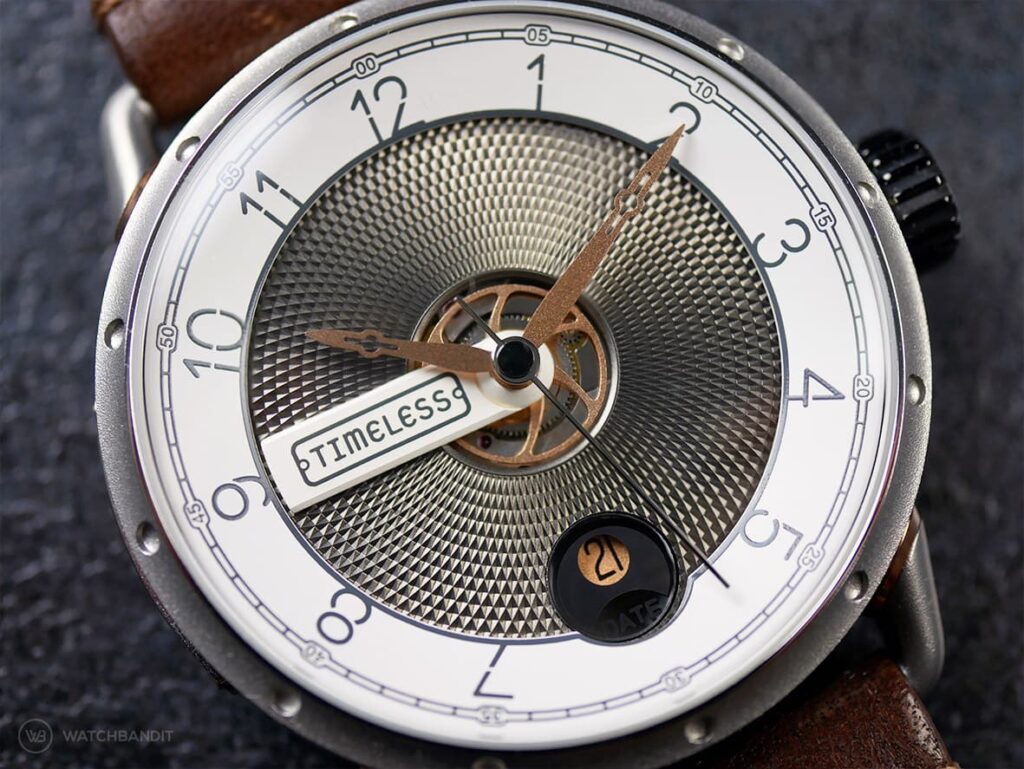
Watches have transcended their primary function of timekeeping, evolving into intricate symbols of status, style, and identity. Their placement on the wrist, while seemingly trivial, whispers of a wearer’s sophistication and understanding of the subtle nuances of etiquette. As such, the age-old question arises: “Which arm does a watch go on?” Exploring the answer requires a voyage through the corridors of timeless etiquette, cultural significance, and personal preference.
Traditionally, the majority of individuals adorn their left wrist with a watch. This practice is often attributed to its practical advantages, as the right hand tends to engage more readily in activities that could risk damaging a timepiece. Additionally, for the majority of people who are right-handed, wearing a watch on the left side allows for freer movement without the cumbersome interference of a wristwatch. This placement is akin to the allegory of a warrior drawing a sword; the left arm is often dedicated to guarding the figure, whilst the right remains agile to strike or defend.
Moreover, during the historical age of pocket watches, the left side was fortuitously favored. Pocket watches were designed to be easily accessed from the waistcoat or vest pocket; thus, the left side became a natural choice for the transition to wristwatches. This historical context elucidates an intrinsic, almost instinctive preference for adorning the left wrist—an homage to tradition, if you will. Yet, the choice remains a matter of personal inclination, nuanced by cultural variances.
In discerning appropriate etiquette, it is imperative to acknowledge the subtle cultural implications associated with watch placement. In several Asian cultures, the left arm is deemed the more auspicious side for watch-wearing. This perspective is rooted in beliefs surrounding the left side being in harmony with positive energies, echoing the principle of yin and yang. In contrast, some cultures exhibit a preference for the right wrist, often informed by regional habits and craftsmanship traditions endemic to that society.
In recent decades, the watch industry has burgeoned into a kaleidoscope of styles—digital, analog, smartwatches, and fashion statements that cater to diverse preferences. This sartorial evolution has amplified opportunities for individual expression. To illustrate, a robust sports watch might be consigned to the dominant hand during intense athletic activities, enhancing accessibility and practicality, while an elegant dress watch may find itself firmly positioned on the left wrist during formal occasions, thereby signifying refinement and poise.
The duality of purpose, in essence, magnifies the ethos of wearing a watch. On one hand, it functions as a utility, capable of guiding one through the constraints of time; on the other, it embodies an aesthetic presence—an artifact of one’s persona. Thus, wearers must ponder their specific motivations. Are they circumscribing societal norms or breaking free of them? Are they adhering to the historic dichotomy of left and right, or are they partaking in a reinvention of norms?
Furthermore, the influence of watch brands plays a pivotal role in shaping arm choice. High-end luxury brands often forge a connection between their timepieces and opulence. The placement of their watches is meticulously designed to complement the wearer’s attire and overall disposition. A classic Rolex, crafted with intricate detail, might provoke the wearer to align their choice with established conventions of presence and power on the left wrist, whilst a trendy smartwatch may inspire unorthodox decisions, reflecting a modernist approach that embraces flexibility and adaptation.
As one meanders further into the labyrinth of etiquette and subjective preferences, the emergence of gender considerations cannot be overlooked. Traditionally, men have donned their watches on the left wrist while women have made fluid choices based on their individual style propositions. The representation of power, femininity, and individualism takes shape, with some women opting for right-hand placement as a bold statement challenging societal conventions. Such choices evoke the notion of watch placement as a canvas upon which wearers paint their narratives of identity.
Often underappreciated is the personal ritual surrounding the practice of wearing watches. The act of sliding a watch onto one’s wrist can be a meditative endeavor, marking the commencement of a day brimming with potential. A watch is not merely an accessory; it is an extension of oneself that can inspire poise, confidence, and directed enthusiasm. Whether it rests on the left or right, it is a companion that accompanies one along the journey of time.
Ultimately, the question of which arm a watch ought to adorn does not yield a single, unequivocal answer. Instead, it opens a portal to deeper reflections on one’s identity, cultural roots, and personal style. Whether you align with the traditionalists who stake their claim on the left wrist or chart a course of individualized expression on the right, the act of donning a watch is an affirmation of one’s unique narrative. The watch, in all its exquisite complexity, serves as a testament to not just the passage of time, but to the intricate tapestry of life experiences interwoven in its framework.
Thus, one arrives at the crux of the matter. While tradition favors the left wrist and modernity invites exploration; ultimately, it is the resonance of personal choice that defines the etiquette of watch placement. Whether you are a stalwart traditionalist or an avant-garde trendsetter, your wrist remains an enduring stage for the artistry of timekeeping.

Leave a comment