

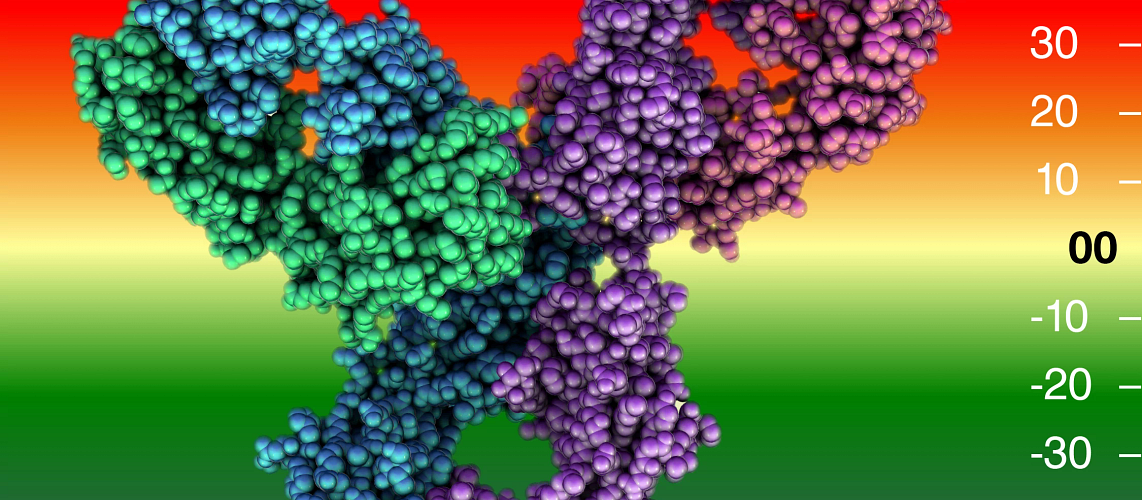
Antibodies, or immunoglobulins, are pivotal components of the adaptive immune response, playing a critical role in the recognition and neutralization of pathogens. The specificity of antibodies is determined by their unique structural features that allow them to bind effectively to antigens. Understanding the various areas of an antibody that contribute to its specificity is paramount for advancing both therapeutic and diagnostic applications. This discourse elucidates the molecular and structural determinants that govern antibody specificity, highlighting the salient regions and their functional implications.
To grasp the intricacies of antibody specificity, one must first consider the structural architecture of antibodies. An antibody is composed of four polypeptide chains: two identical heavy chains and two identical light chains, forming a Y-shaped molecule. The ends of the Y, known as the variable regions, are of utmost significance. These regions, which are situated at the tips of the antibody molecules, are each comprised of a light chain variable domain (VL) and a heavy chain variable domain (VH). The variable regions are responsible for the binding affinity and specificity of the antibody towards its cognate antigen.
At the core of antibody specificity lies the complementarity-determining regions (CDRs). The CDRs, often referred to as hypervariable regions, reside within the variable domains of the antibody and are primarily responsible for the unique binding characteristics of each antibody. There are three CDRs in both the VL and VH domains, leading to a total of six CDRs in each antibody molecule. These regions are characterized by significant amino acid diversity, resulting from somatic hypermutation and recombination during B-cell development. The high variability of the CDRs enables the immune system to create a vast repertoire of antibodies capable of recognizing an equally diverse array of antigens, including proteins, polysaccharides, and nucleic acids.
Equally noteworthy is the role of the framework regions (FRs) of the antibody, which provide structural support to the CDRs. Although the FRs exhibit less variability than the CDRs, they play a vital role in maintaining the structural integrity and stability of the antibody. The frameworks also aid in positioning the CDRs appropriately for optimal antigen binding. The balance between variability in the CDRs and stability in the FRs is essential for generating antibodies that are not only specific but also durable in their function.
Furthermore, the epitope, the actual part of the antigen that an antibody recognizes and binds to, significantly influences antibody specificity. Epitopes are often classified into two categories: linear and conformational. Linear epitopes consist of a continuous sequence of amino acids, while conformational epitopes are formed by the spatial arrangement of non-contiguous segments of the antigen. Antibodies can bind to either type of epitope. Consequently, the precise structure of both the antibody and the antigen is crucial, as the spatial configuration ultimately determines the efficacy of binding interactions.
The spatial relationship between the antibody and its antigen is further refined by the concept of antigenicity. This property encompasses the ability of the antigen to elicit an immune response. Factors that affect antigenicity include the molecular size, complexity, and degree of foreignness of the antigen. A more antigenic structure is likely to elicit a stronger immune response, leading to the production of antibodies with high specificity. Thus, understanding an antigen’s properties is vital for engineering antibodies that exhibit enhanced specificity.
Additionally, post-translational modifications of antibodies can impact specificity. Glycosylation, phosphorylation, and other modifications can alter the binding affinities of antibodies. Such modifications can affect the antibody’s stability, solubility, and ultimately its interaction with the target antigen. The study of these modifications has implications in the development of therapeutic antibodies, as tailoring such characteristics can improve efficacy and reduce immunogenicity.
Moreover, affinity maturation is a critical process that further refines antibody specificity. Following initial exposure to an antigen, B cells undergo a process of rapid division and mutation in their antibody genes, a phenomenon known as somatic hypermutation. Those B cells whose antibodies demonstrate higher affinity for the antigen are selected for clonal expansion. This adaptive process results in the generation of antibodies with enhanced specificity, providing a robust defense against pathogens.
In the context of therapeutic applications, the specificity of antibodies has far-reaching implications. Monoclonal antibodies, engineered for selective targeting of disease-related antigens, are now monumental in the treatment of various conditions, including cancers and autoimmune diseases. Understanding the determinants of specificity enhances the ability to design and produce antibodies that can precisely target pathogenic tissues while sparing healthy cells.
In conclusion, the specificity of antibodies is shaped by a myriad of structural and molecular determinants, with the variable regions, particularly the complementarity-determining regions, playing a pivotal role. The interaction between antibodies and antigens is influenced by various factors, including epitope structure, antigenicity, post-translational modifications, and affinity maturation. Insights into these areas not only advance the foundational understanding of immunology but also propel innovations in therapeutic antibody design. As research in this domain continues to evolve, the potential for developing more specific and effective immunotherapeutics remains promising, underscoring the critical importance of antibody specificity in medical science.

Leave a comment