

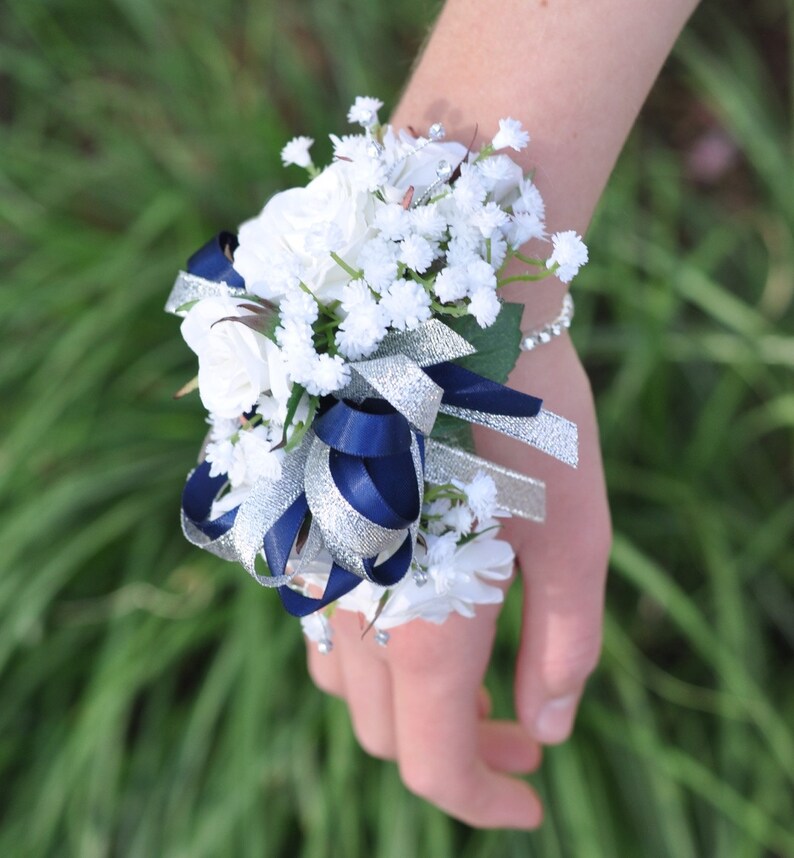
The tradition of wearing a corsage during significant events such as proms and weddings has become a revered rite of passage. Yet, amidst the flurry of preparations, an intriguing question often arises: “Which arm does the corsage go on?” In exploring this query, we unearth the rich tapestry of customs that envelope these celebratory occasions.
To understand the positioning of the corsage, one must delve into the historical significance that belies this floral adornment. Traditionally, the corsage is worn on the left wrist, a choice steeped in sentimental symbolism. This placement is believed to represent the heart—an emblematic reminder of love and affection. The left side, often associated with emotional depth and connection, provides a fitting canvas for such an expressive gesture. The flowers, often delicate and vibrant, seem to bloom from the very essence of one’s emotions, creating a visual representation of love intertwined with tradition.
During proms, where youthful exuberance meets the innocence of adolescence, the left wrist corsage embodies the excitement of first loves and newfound experiences. The wrist becomes a focal point, a beacon of individuality that contrasts against formal attire, blending beauty and elegance in a harmonious dance. In this setting, the corsage serves as a vibrant harbinger of social interactions and cherished memories, much like the lingering fragrance of a timeless bouquet, enchanting all who cross its path.
Conversely, weddings, often deemed the zenith of romantic journeys, carry their own nuances in the placement of the corsage. Here, the wrist corsage takes on a layer of complexity. Typically, it is the groom who presents the corsage, adorning the bride’s wrist with flowers that complement her bridal bouquet. Such an act speaks volumes—an unspoken promise, if you will—waylaying the transient nature of floral cuttings with an eternal testament of love. By donning the corsage on the left wrist, the bride not only pays homage to tradition but also enshrines herself within the blissful narrative of matrimony.
Yet, the sheer artistry involved in selecting the corsage should not be overlooked. The blossoms must reflect personal taste and resonate with the overarching theme of the event. Be it soft pastels for a romantic prom theme or vibrant hues for a lively wedding, the flowers wield a language of their own. They are the unspoken companions of the occasion, capturing the aura of the moment while amplifying the wearer’s charm. A delicately crafted corsage can transform an ensemble; it is akin to icing on a cake—essential, elegant, and eye-catching.
As with any tradition, variations abound. Some may opt to wear a corsage on the right wrist as a statement of distinction, breaking away from the conventional narrative. This choice is often a personalized expression—a defiance against the confines of expectation. In contexts where duality reigns—such as in same-sex couples at proms or weddings—the decision may be made collaboratively, reflecting a shared vision of style and affection.
Furthermore, the role of the corsage is not merely ornamental. It serves a deeper purpose—the creation of bonds among participants. The act of gifting or wearing a corsage can sow the seeds of connection. At a wedding, it signifies the union of families, while in prom scenarios, it symbolizes camaraderie among peers, fostering a sense of belonging and mutual celebration. The delicate structure of the flowers could even be likened to the intricate intertwining of lives—beautiful yet tender.
In folklore, flowers have historically been intermediaries of emotion, a sentiment mirrored in modern interpretations of the corsage. Specific blooms convey distinct meanings: roses represent love, daisies symbolize innocence, and orchids denote luxury and beauty. By selecting flowers with particular significance, wearers transcend mere aesthetics; they embrace a narrative rich in emotions and stories, all encapsulated within horticultural artistry. Thus, the choice of the corsage becomes an act of intentionality, where wearers articulate the sentiments they wish to project.
The multimodal experience of tying a corsage reflects the cultural contexts surrounding proms and weddings. Some may remember delicate hands fastening the wristpiece with care, while others may have experienced the joy of collaborative selection in the floral shop. These moments create a framework of memory—transformative instances encapsulated in time that resonate well beyond the fleeting nature of the corsage itself, much like the human experience itself.
In summation, as one navigates the intricacies of prom and wedding traditions, the query of “which arm does the corsage go on” unveils a plethora of cultural intricacies. While tradition guides us toward the left wrist as the favored locale, the choice ultimately reflects the unique stories and identities of those involved. Thus, the corsage emerges not merely as an accessory, but as an emblem of love, connection, and social significance. Much like the ephemeral beauty of a blooming flower, the memories tied to a corsage will linger, resonating long after the petals have fallen, inscribed in the annals of life’s most cherished events.

Leave a comment