

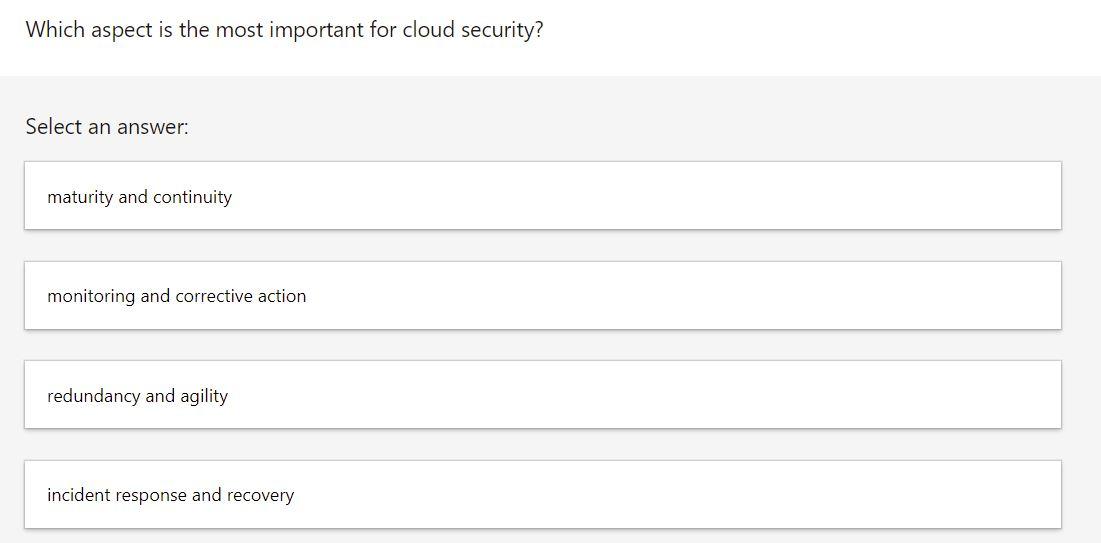
In today’s digital epoch, where vast oceans of data ebb and flow across cloud infrastructures, security stands as a lighthouse guiding organizations through tumultuous waters. As enterprises migrate to cloud environments, understanding which aspect of cloud security reigns supreme becomes a pivotal inquiry. Expert recommendations invariably emphasize various domains, yet one overarching concept emerges as paramount: data integrity.
Data integrity, akin to the keystone in an arch, is fundamental to the structural soundness of cloud security. This concept embodies the accuracy and reliability of data throughout its lifecycle, ensuring that the information is uncorrupted and maintains its intended meaning. The fragility of data integrity has been underscored by numerous incidents where breaches have exploited vulnerabilities, leading to severe repercussions for organizations. Thus, safeguarding data integrity is not merely a technical task; it is an organizational imperative.
Delving deeper, several critical components underpin data integrity within the realm of cloud security. The first is encryption. Encryption can be likened to a sentinel stationed at the gates of an impenetrable fortress. It encodes sensitive information, rendering it incomprehensible to unauthorized observers. By converting plaintext into ciphertext, encryption acts as a formidable barrier against data breaches, ensuring that even if data is intercepted, its meaning is obscured. Experts advocate for end-to-end encryption as a best practice, safeguarding data both in transit and at rest, thus fortifying its integrity.
Another crucial aspect pertains to access controls. Just as a castle has guards to regulate who may enter its gates, organizations must implement stringent access controls to govern who can interact with their data. Role-based access control (RBAC) serves as an effective strategy, delineating permissions according to users’ roles within the organization. By limiting access strictly to authorized users, organizations can significantly mitigate the risk of insider threats and unintentional data mishaps that compromise integrity.
Moreover, the significance of regular audits cannot be overstated. These meticulous examinations serve as a diagnostic tool, akin to a physician assessing a patient’s health. Regular security audits identify vulnerabilities and assess compliance with regulatory frameworks. They act as litmus tests for data integrity, revealing potential chinks in the armor that could be exploited by malicious actors. Engaging in periodic reviews not only enhances data protection but also cultivates a culture of accountability within the organization.
Cloud architecture itself plays a pivotal role in maintaining data integrity. An architecture designed with redundancy can be likened to a multi-layered shield, absorbing potential shocks and ensuring continuity. By leveraging distributed storage solutions, which replicate data across multiple locations, organizations can safeguard against data loss resulting from hardware failures or natural disasters. The resilience embedded in such architectural choices considerably enhances data integrity.
Furthermore, the human element cannot be disregarded in the discourse on cloud security. Providing comprehensive training and creating awareness among employees acts as an antidote to potential pitfalls. Just as a craftsman hones their skills to ensure precision in their work, employees should be adept in recognizing phishing attempts and data handling protocols. Human error frequently serves as the catalyst for data breaches, making employee training an indispensable facet of maintaining data integrity.
Incident response protocols warrant careful consideration as well. The ability to respond swiftly and effectively to security incidents is akin to having a firefighting team at the ready to extinguish blazes before they engulf a community. Organizations must develop and regularly update incident response plans to mitigate potential damage wrought by breaches. A well-structured response not only addresses current issues but also reinforces the organization’s commitment to data integrity, fostering trust among stakeholders.
In addition to these practices, regulatory compliance emerges as a cornerstone in the edifice of cloud security. Adhering to standards such as GDPR and HIPAA not only exemplifies an organization’s ethical responsibilities but also cultivates a framework that safeguards data integrity. Compliance mandates regular data protection assessments and accountability measures, thereby aligning organizational practices with broader societal expectations regarding privacy and security.
Inherent in all these aspects is the necessity for continuous improvement. The landscape of cyber threats evolves ceaselessly, akin to a river changing its course over time. Organizations must remain vigilant, continually adapting their strategies to encompass emerging technologies and new attack vectors. This iterative approach ensures that data integrity is not a static goal but a dynamic process that evolves alongside the broader environment of cybersecurity.
Ultimately, while various components converge to fortify cloud security, data integrity emerges as the heart of the matter. To navigate the intricate labyrinth of cloud technology effectively, organizations must prioritize preserving the sanctity of their data. As they arm themselves with robust encryption, stringent access controls, regular audits, resilient architecture, employee training, and responsive incident plans, they build a formidable bulwark against potential threats. Just as a mariner trusts the lighthouse to guide them home, organizations can find solace in the strength of their commitment to data integrity as they traverse the boundless seas of cloud computing.

Leave a comment