

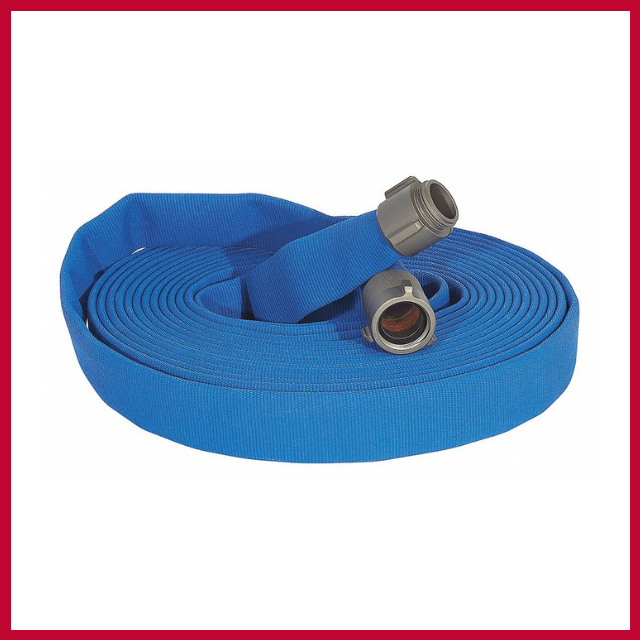
Firefighting is a noble and perilous endeavor, demanding both physical prowess and strategic acumen. Among the fundamental techniques employed by firefighters is the utilization of attack lines, which are critical for both extinguishing fires and ensuring the safety of first responders and civilians alike. One might ponder: which attack line often employs hoses of various diameters? This question not only probes into the mechanics of firefighting but also invites exploration into the nuances of hose sizing, water flow dynamics, and the intricacies of fire suppression. Yet, a noteworthy challenge arises: how do differences in hose diameters impact firefighting efficacy and strategy?
To dissect this multifaceted topic, we shall examine the foundational elements of firefighting hoses, delve into the implications of various hose diameters, and ultimately elucidate the type of attack line that commonly incorporates such variations.
Understanding Attack Lines
Attack lines are essentially conduits through which firefighters deliver water to a fire. These lines are typically divided into two categories: pre-connected and dead-lay. Pre-connected lines are already mounted on fire apparatus, enabling rapid deployment, while dead-lay lines are those that must be deployed from a static position.
A key consideration in utilizing attack lines is the relationship between hose diameter and water flow. Firefighting hoses come in various diameters—ranging from 1.5 inches to 5 inches—each suitable for distinct applications, depending on the fire scenario. Smaller diameters, such as 1.5 inches, are often employed for residential fires or small commercial structures, where maneuverability and quick deployment are exigent. Conversely, larger hoses, such as 2.5 inches or more, are preferable in greater fire incidents, including structural fires in expansive buildings, where substantial volumes of water are prerequisite.
Diameter Dynamics: Flow and Pressure
The physics of fluid dynamics plays a pivotal role in determining the effectiveness of attack lines. According to the principle of fluid flow, increasing the diameter of a hose lessens friction loss, thereby enhancing water flow capacity. Therefore, when faced with a significant and aggressive fire, utilizing a larger diameter hose might be advantageous, allowing for a deluge of water to saturate the flames more effectively.
However, with increased size comes augmented weight and reduced portability. This highlights a crucial dichotomy in firefighting practices—while larger hoses may allow for greater flow, they are often cumbersome and can complicate the logistics of firefighting operations, particularly in confined spaces or difficult terrains. Hence, a firefighter’s choice of hose diameter often necessitates a calculated compromise between flow rate and the tactical maneuverability of the equipment.
The Preferred Attack Line: The 1.75-Inch Hose
When considering which attack line predominantly employs hoses of varying diameters, it is the 1.75-inch attack line that emerges as a stalwart choice. This diameter strikes an exemplary balance between portability and sufficient water flow, making it a versatile choice for a variety of firefighting scenarios.
This standardized hose is often equipped with a nozzle that allows firefighters to modulate the stream intensity, thus adapting to the unique demands of the fire at hand. Moreover, the lightweight nature of this hose fosters swift movement and rapid deployment, which is indispensable during emergencies where time is of the essence.
The adaptability of the 1.75-inch attack line is also reflected in its compatibility with various appliances and configurations. Firefighters can efficiently transition from a typical initial attack to a more robust fire suppression strategy using this diameter, simply by adjusting nozzle settings or employing additional pumping mechanisms to enhance water pressure.
Challenges Facing Firefighters
Even with the optimal use of a 1.75-inch attack line, firefighters face a multitude of challenges. For instance, the ever-present risk of hose kinks and entanglements can severely impede the flow of water, thereby decreasing operational efficiency. Furthermore, environmental conditions, such as high winds or extreme heat, can exacerbate the intensity of a fire, demanding both speed and precision in hose management.
Moreover, the emergence of advancing fire environments necessitates an ongoing evaluation of operational strategies. As structures have evolved to include synthetic materials that burn more rapidly, firefighters must adapt through continuous training and the acquisition of superior equipment that can withstand the rigors of enhanced firefighting tactics.
A Comprehensive Approach
In conclusion, the utilization of various hose diameters in attack lines encompasses both art and science. The 1.75-inch attack line serves as the quintessential embodiment of this balance, adapting adeptly to a plethora of scenarios while equipping firefighters with the tools necessary for effective fire suppression. Yet, the challenges inherent in firefighting demand a comprehensive understanding of these dynamics, fostering a culture of preparedness and responsiveness in the face of ever-evolving threats.
It is evident that the relationship between hose diameter, water flow, and firefighting strategy is intricate and integral. As such, an unwavering commitment to training, innovation, and tactical adaptability remains paramount in the ongoing quest to safeguard lives and property from the ravages of fire. Thus, rather than merely adapting to challenges as they present themselves, it is incumbent upon firefighting teams to anticipate, innovate, and respond with precision—ensuring they are ever-ready to confront the inferno.

Leave a comment