

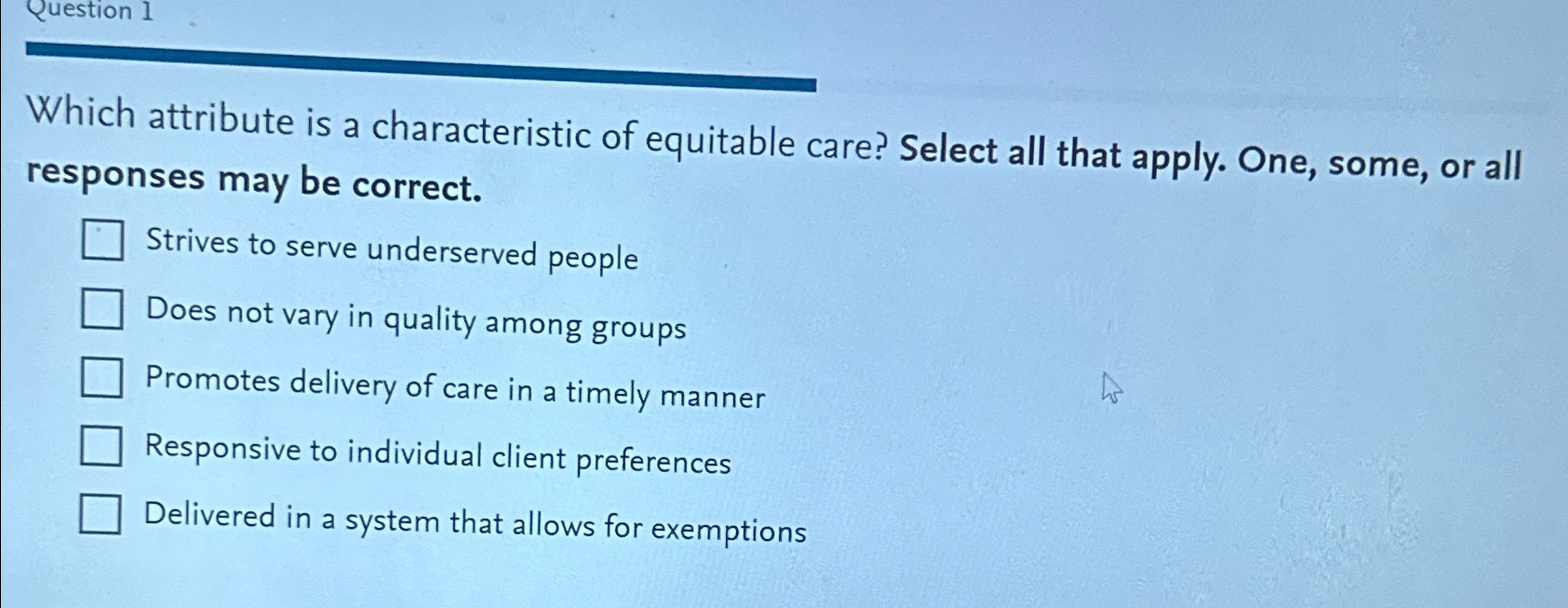
Equitable care is a fundamental principle in the landscape of healthcare, especially in an era marked by increasing diversity and complexity in patient needs. This concept extends beyond mere equality; it embodies a nuanced understanding of fairness and justice in health service delivery. To grasp which attributes characterize equitable care, it is imperative to delve into its definition, differentiate it from related concepts, and explore the multi-faceted dimensions that contribute to its implementation.
For clarity, equitable healthcare refers to the provision of care that is fair and just, addressing individual patient needs and social determinants of health while aiming to eliminate disparities. It demands that all individuals receive care that is tailored to their specific health challenges, cultural backgrounds, and personal circumstances. The attributes of equitable care are diverse, but several stand out in defining its essence.
1. Accessibility
Accessibility remains a cornerstone of equitable healthcare. This attribute involves not merely geographic proximity but also financial affordability and availability of culturally competent services. Providing healthcare that is accessible necessitates breaking down barriers—be they economic, linguistic, or systemic—that typically impede individuals from receiving necessary medical attention. Initiatives aimed at enhancing public transit options, telehealth services, and sliding-scale payment systems exemplify efforts to increase accessibility. Such strategies ensure all individuals, regardless of their socio-economic status, can attain necessary healthcare interventions in a timely manner.
2. Cultural Competence
Cultural competence emerges as another critical attribute, requiring healthcare providers to recognize and respect the cultural differences that influence patients’ health perceptions and behaviors. This entails understanding the values, beliefs, and practices that shape individual healthcare experiences. Healthcare professionals must be trained to engage with patients from diverse backgrounds effectively, ensuring communication is not only clear but also sensitive to cultural nuances. This proficiency fosters trust and rapport, essential components in the therapeutic relationship, and leads to better health outcomes.
3. Patient-Centeredness
At the core of equitable care is the principle of patient-centeredness. This approach emphasizes the importance of involving patients in decision-making about their own health. Individuals are not merely passive recipients of care; rather, they are active participants in forming their treatment plans based on informed choices. This highlights the necessity for healthcare systems to foster environments where patients feel empowered and supported. Inclusion of patient feedback, adaptation of the care process based on individual preferences, and open dialogues about treatment options are vital to enacting patient-centered care.
4. Transparency and Accountability
Transparency is an essential attribute that involves clear communication about care processes, treatment options, and potential risks. Patients must be equipped with accurate information to make knowledgeable decisions about their health. Furthermore, accountability ensures that healthcare institutions uphold a standard of care that equitably serves all patients. This can involve monitoring performance metrics, ensuring compliance with ethical guidelines, and facilitating patient grievances to be addressed adequately. Transparency and accountability not only enhance trust but also drive continuous improvements in care quality.
5. Community Engagement
Engaging with the community stands out as a compelling attribute of equitable care. Healthcare does not exist in a vacuum; it is influenced by the community’s social structures, economic conditions, and cultural dynamics. By actively involving community members in discussions related to healthcare needs and priorities, providers can develop services that are more aligned with the realities of those they serve. This engagement might take forms such as community health fairs, focus groups, and partnerships with local organizations. Such collaborative approaches foster a shared responsibility for health outcomes, enhancing both service efficacy and community trust.
6. Addressing Social Determinants of Health
Equitable care necessitates an explicit focus on the social determinants of health—factors such as education, income, and environment that significantly impact health status. By recognizing and addressing these determinants, healthcare providers can offer interventions that are more effective and personalized. This might involve integrating services such as social support, mental health resources, and community resources into the healthcare framework. Holistic approaches that consider these myriad influences contribute to comprehensive care that resonates with patients’ lived experiences.
7. Integration of Services
Lastly, integration of services enhances the equitable care paradigm by providing a seamless experience for patients navigating multiple health needs. Integrated care models bring various disciplines together, ensuring that physical, mental, and social health services are coordinated. Patients often face challenges when managing complex health issues that require inputs from different specialties. By breaking down silos in care provision, the health system can respond more effectively to the complexities of individual patient scenarios, thus promoting a more coherent and equitable care experience.
In conclusion, the attributes of equitable care are foundational to achieving healthcare equality. Accessibility, cultural competence, patient-centeredness, transparency, community engagement, focus on social determinants, and integration of services interconnect to create a healthcare environment that truly serves all individuals. With ongoing efforts and a commitment to these principles, it is possible to forge a healthcare landscape where equitable care is not merely an aspiration but a tangible reality, ensuring that every person, irrespective of their background, has access to the healthcare they deserve.

Leave a comment