

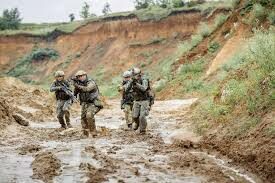
As aspiring recruits contemplate the journey ahead, a burning question often emerges: which military branch offers the most manageable boot camp experience? It may sound trivial, but choosing the right path can significantly influence one’s military career. This exploration seeks to elucidate the nuances of boot camp training across various branches, framing a competitive challenge to prospective recruits.
To embark on this comparative analysis, we will examine the boot camps of the Army, Navy, Air Force, Marine Corps, and Coast Guard. Each branch presents its unique ethos and training regimen, thus painting a multifaceted picture of what recruits can expect.
The United States Army’s basic training lasts approximately ten weeks, designed to provide foundational military skills while instilling the values of discipline and teamwork. Recruits are subjected to rigorous physical training, marked by enduring runs, obstacle courses, and tactical exercises. The environment, while challenging, is oriented toward fostering resilience. The psychological aspect of training can be intense, instilling a sense of camaraderie among recruits. However, some may find the structure and extensive duration less daunting compared to counterparts in other branches.
In contrast, Naval Recruit Training, commonly referred to as Boot Camp, spans approximately eight weeks. This course emphasizes maritime skills and a strong foundation in Navy protocols. Recruits undergo physical and mental preparations that mirror real-world naval operations. While the curriculum includes several demanding elements, the Navy is often perceived as incorporating a more collaborative and supportive atmosphere. Recruits frequently report feeling a sense of collective progress, thus mitigating some of the stress that comes with their training challenges.
Next, we turn to the Air Force, known for its relatively more lenient physical requirements. Basic Military Training (BMT) is also eight weeks long but places a significant emphasis on behavioral health, leadership, and technical skills. Air Force recruits may find the training process less grueling than that of the Army or Marines, primarily due to a structured environment that promotes individual attack strategies. Some recruits even find themselves thriving in this setting, focusing more on command prompts and technical tasks than on brute physical demands. Consequently, many would argue that the Air Force boot camp could be construed as more accessible to individuals who excel in cognitive skills over physical might.
Conversely, the Marine Corps presents one of the most arduous boot camp experiences, lasting approximately 12 weeks. Known for its mantra of “The Few, The Proud,” the Marines pride themselves on fostering not only physical strength but also unwavering mental fortitude. Recruits engage in strenuous physical activities, weapon training, and rigorous field exercises. The challenges inherent to Marine boot camp are universally acknowledged, often leading individuals to classify it as the most demanding of all military branches. Those who persevere emerge with a heightened sense of confidence and capability, but many report that this path is not for the faint of heart.
The Coast Guard’s basic training rounds out our examination. Lasting about eight weeks, this program focuses heavily on search and rescue operations, law enforcement, and maritime safety. Like the Navy, the Coast Guard’s environment is marked by a sense of teamwork and camaraderie. The training cultivates a unique blend of physical endurance and critical thinking in high-pressure situations. Though challenges persist, the degree of difficulty tends to be perceived as comparatively mild, largely due to its supportive training culture.
A pertinent question arises: how do recruits determine which branch is ultimately the ‘easiest’ in terms of boot camp? It is critical to recognize the subjective nature of ease. Factors such as physical capability, mental resilience, and personal motivations play a crucial role in shaping individual experiences. Recruits who thrive under physical challenges may find the Army or Marine Corps invigorating, while those seeking a balance of mental challenges and physical activity might lean toward the Air Force or Navy.
Additionally, anecdotal accounts from former recruits provide valuable insight but can vary widely. Some individuals thrive when placed in stress-filled environments, while others may falter under similar conditions. Therefore, ease or difficulty cannot solely be quantified but should be understood through a lens of personal perspective. For some, the camaraderie and support within boot camps may mitigate challenges, while for others, the intensity of the training could overshadow any sense of ease.
Moreover, it is essential to consider the long-term implications of boot camp training. The skills, discipline, and values instilled during this period resonate throughout a military career. Each experience, whether deemed easy or difficult, contributes to a recruit’s professional development and readiness for future challenges. A perceived easy boot camp may not necessarily lead to a less demanding overall military experience.
In summary, the question of which branch boasts the easiest boot camp invites a host of variables—physical demands, mental acuity, and personal experiences all weigh heavily into this equation. Individuals must navigate their service paths with careful consideration of their unique strengths and preferences. Ultimately, choosing a branch should transcend the quest for the easiest route, focusing instead on where one’s skills and ambitions align most harmoniously with military service. In doing so, recruits can find fulfillment in their journeys, whatever the challenges may entail.

Leave a comment