

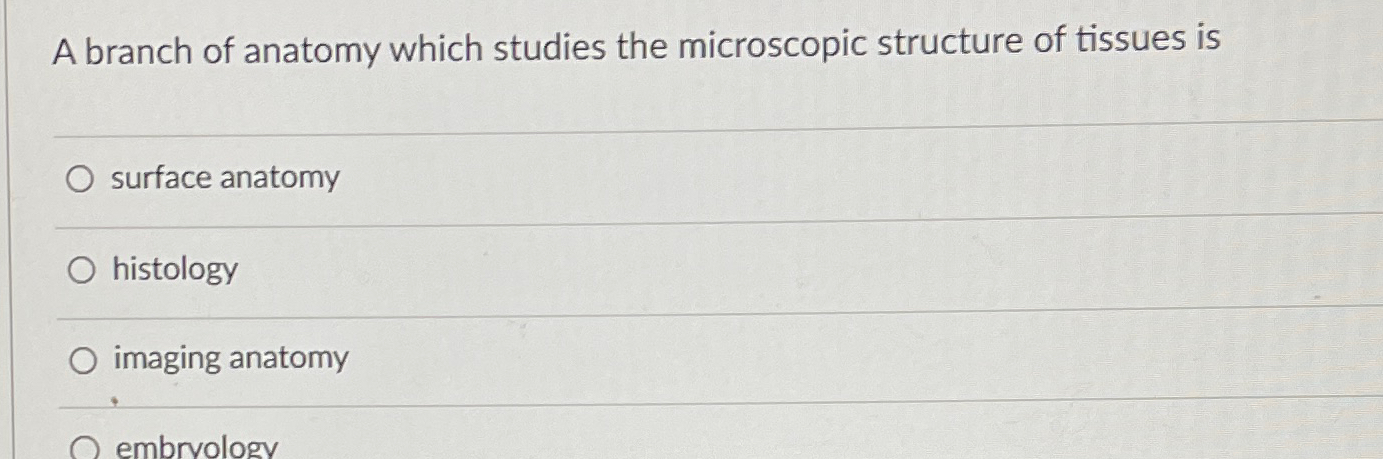
Microscopic anatomy, a specialized branch of anatomy, delves into the intricate complexities of biological structures at a cellular level. Prominently, it encompasses histology, the study of tissues. Histology serves as a critical cornerstone for understanding the organization and function of various tissues in the body. This article elucidates the fundamental principles of histology, its historical evolution, techniques employed, key tissue types studied, and the essential role histology plays in both education and clinical practice.
The Evolution of Histology
The study of tissues can be traced back to the Renaissance when pioneering scientists began to utilize the microscope. Figures such as Marcello Malpighi and Antoine van Leeuwenhoek made significant strides in elucidating cellular structures. Over centuries, histology advanced from rudimentary observations to a sophisticated field employing an array of techniques to visualize and understand tissue architecture. Today, it integrates modern imaging technologies and molecular methods, facilitating insights into the pathophysiology of diseases.
Core Techniques in Histological Examination
A fundamental aspect of histology is the preparation of tissue samples for microscopic analysis. The following are key techniques involved in the examination of tissues:
- Fixation: This critical process preserves the cellular structure by preventing autolysis and decay. Common fixatives include formaldehyde and alcohol.
- Embedding: After fixation, tissues are embedded in paraffin or resin to create a solid medium that facilitates slicing thin sections.
- Sectioning: Using a microtome, tissues are sliced into thin sections, typically 5-10 micrometers in thickness, allowing for detailed examination under a microscope.
- Staining: Tissue sections are treated with various dyes to enhance contrast and identify specific cellular components. Common stains include Hematoxylin and Eosin (H&E), which differentiate between cellular components based on their chemical properties.
- Microscopy: Histologists employ various forms of microscopy, including light microscopy, fluorescence microscopy, and electron microscopy, each providing distinct visualizations of tissue architecture.
The Fundamental Types of Tissues
Histology primarily encompasses the study of four basic tissue types: epithelial, connective, muscle, and nervous tissues. Each type has distinct structures and functions that contribute to the overall physiology of an organism.
Epithelial Tissue: Epithelial tissues form protective barriers and facilitate absorption, secretion, and sensation. They are classified based on cell shape (squamous, cuboidal, columnar) and layering (simple, stratified). Notably, the presence of specialized structures, such as cilia in respiratory epithelium, exemplifies the diverse adaptations of epithelial cells to their functions.
Connective Tissue: As the framework of the body, connective tissues support, bind, and protect other tissues. This category includes a variety of tissues such as loose connective tissue, adipose tissue, dense connective tissue, cartilage, bone, and blood. The matrix component, composed of fibers and ground substance, is crucial in determining the specific function of each connective tissue type.
Muscle Tissue: Muscle tissues are specialized for contraction and are classified into three types: skeletal, cardiac, and smooth muscle. Skeletal muscle, characterized by voluntary control and striated appearance, enables locomotion; cardiac muscle, found exclusively in the heart, facilitates involuntary contractions; while smooth muscle is involved in involuntary movements within internal organs.
Nervous Tissue: This tissue is essential for the transmission of electrical signals throughout the body. Neurons, the primary functional units, communicate through synapses, orchestrating complex bodily functions. Supporting cells, such as glial cells, provide structural and metabolic support to neurons, ensuring the integrity of the nervous system.
The Importance of Histology in Medicine
Histology plays an indispensable role in the medical field, particularly in diagnosing diseases. Pathologists utilize histological techniques to examine biopsy samples, identifying abnormalities that may indicate pathological conditions such as cancer. Furthermore, histology enhances our understanding of disease mechanisms, guiding therapeutic approaches and interventions.
The educational value of histology cannot be understated. It serves as a foundational component in various health-related disciplines, including medicine, nursing, and biomedical sciences. A solid grasp of histological principles enables students and professionals to appreciate human biology and pathology deeply.
Emerging Trends and Future Directions in Histology
The domain of histology is continuously evolving. Advances in imaging technologies, such as 3D histology and digital microscopy, are revolutionizing the visualization and analysis of tissue samples. Additionally, the integration of molecular techniques, such as immunohistochemistry and in situ hybridization, allows for the examination of specific proteins and gene expression within tissues, facilitating a more nuanced understanding of their functions and roles in disease.
As research progresses, histology will inevitably intertwine with other emerging fields, such as genomics and personalized medicine, further enhancing its relevance and application. The future of histology promises to unveil even deeper insights into the complexities of life at a microscopic level, enabling advancements in both diagnostics and therapeutics.
In conclusion, histology stands as a vital branch of microscopic anatomy, unlocking the mysteries of tissues and their functions. It underpins our understanding of biological systems and disease mechanisms, establishing a critical link between structure and function in the living organism. With continuous advancements in technology and methodology, the study of histology will remain integral to the medical sciences, contributing to improved health outcomes and enhanced scientific knowledge.

Leave a comment