

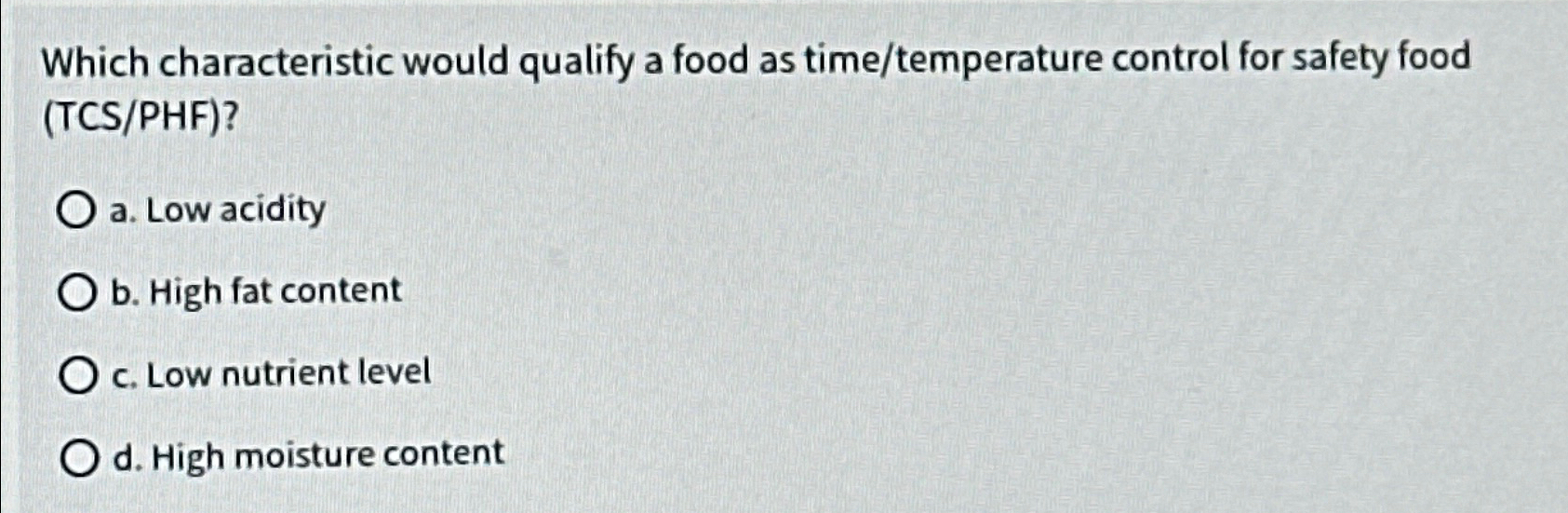
The multifaceted world of food safety regulations often leaves both culinary practitioners and food enthusiasts at a crossroads, particularly when it comes to the classification of food items as Time/Temperature Control for Safety (TCS) or Potentially Hazardous Foods (PHF). At the nexus of culinary safety lies a complex web of characteristics that delineate which foods require specific handling and storage to avert the insidious dangers of foodborne illnesses. To navigate through this labyrinthine domain, one must unearth the core characteristics that qualify a food item as TCS/PHF, unveiling the intrinsic relationship between temperature, time, and microorganisms.
Food can be likened to a delicate ecosystem in a fragile balance. At its core, TCS foods are akin to perishable flowers in a garden, demanding specific conditions to thrive and flourish. Similarly, understanding the defining traits of TCS/PHF is imperative for anyone involved in the food industry or engaged in the culinary arts.
1. The Role of Moisture Content
One of the primary characteristics that qualifies a food as TCS/PHF is its moisture content. This factor serves as a harbinger for microbial growth. Foods that exhibit high moisture levels—typically measured by a water activity (aw) scale—are more likely to become breeding grounds for pathogenic bacteria. In this sense, items such as fresh meats, dairy products, and cut fruits possess an abnormal thirst, necessitating stringent handling protocols to curb potential microbial onslaught.
The perfect balance of moisture creates an environment where microorganisms can flourish, much like a rain-soaked forest teeming with life. Thus, foods exhibiting an aw value greater than 0.85 qualify as TCS/PHF. They demand vigilant temperature control to mitigate the risks of foodborne hazards.
2. Nutritional Value: A Bounty for Microorganisms
Following moisture content, the nutritional composition of TCS/PHF bears significant implications. Foods that offer ample sources of nutrients—such as proteins, carbohydrates, and fats—act as a banquet for microorganisms. When discussing TCS/PHF, one cannot overlook the pivotal roles of proteins, which serve as a veritable feast for bacteria such as Salmonella and Listeria. Items such as poultry, eggs, and seafood are not only nutritional powerhouses but also microbiological juggernauts, making them susceptible to rapid spoilage if not handled with care.
To this end, food safety implies maintaining a diligent watch over the “nutritional buffet” that these foods present to bacteria. This necessitates cohesive strategies that include proper cooking techniques, regular monitoring, and adherence to storage guidelines—all vital to preserving the integrity of TCS foods.
3. pH Level: The Acid-Base Dilemma
The pH level of food is another key characteristic that serves as a litmus test, establishing whether an item falls into the TCS/PHF category. Foods with pH values between 4.6 and 7.5 are particularly vulnerable; they epitomize the “Goldilocks Zone” for pathogens—neither too acidic nor too alkaline. An ideal example is cooked rice and pasta, which, while seemingly innocuous, harbor great potential for bacteriological thrive if improperly cooled or stored.
Moreover, acidic foods, such as vinegar or citric fruits, fall outside the TCS/PHF criteria due to their inherent ability to inhibit microbial growth. Conversely, the careful management of the pH levels in various food categories can act as a formidable line of defense in food safety regulation.
4. Temperature: The Crucial Element
In its essence, temperature control acts as the bedrock of TCS classification. The “danger zone,” typically ranging between 41°F and 135°F (5°C to 57°C), is where pathogenic bacteria proliferate exponentially. Foods that are left in this perilous temperature range for extended periods become ticking time bombs, ready to unleash foodborne illness upon the unsuspecting consumer.
Thus, it is imperative for culinary establishments to adhere to strict temperature guidelines, akin to a conductor leading an orchestra through a symphony. The performance of food safety hinges upon the proper monitoring of temperature during storage, cooking, and holding phases, ensuring that TCS foods remain safely outside the danger zone.
5. Handling Practices: The Human Element
Although the inherent characteristics of TCS/PHF foods set the stage, the human element cannot be discounted in the choreography of food safety. Safe handling practices serve as the linchpin in preserving the quality and safety of these foods. Cross-contamination, improper food storage, and inadequate cooking or reheating techniques can wreak havoc on the microbiological landscape of TCS foods.
Moreover, the role of personnel hygiene in food safety cannot be overstated. The proper training of food handlers in safe practices—including handwashing protocols, using gloves, and cleaning surfaces—enhances the protective milieu surrounding TCS foods. This human responsibility transforms food safety from mere regulations into a culture, ensuring that the dance of culinary delight occurs within the safety of defined parameters.
Conclusion: The Symphony of Safety
In summation, the multifarious characteristics of foods that qualify as TCS/PHF underscore a complex interplay between moisture, nutrition, pH, temperature, and handling practices. By discerning these traits, one can effectively orchestrate food safety measures that mitigate the risks of foodborne illnesses. Just as a symphony relies on harmonization for its success, so too does food safety necessitate a collective understanding of these fundamental characteristics. The journey through the echelons of culinary safety and regulatory compliance is not merely about adhering to guidelines; it is a profound commitment to safeguarding public health and celebrating the art of gastronomy in its purest form.

Leave a comment