

In the intricate tapestry of molecular biology, DNA serves as the keystone—its structure and charge not merely functional, but emblematic of life itself. To understand the charge of a DNA molecule is to decipher a universal language, a lexicon of information that governs the biological cosmos. This exploration will illuminate the fundamental characteristics of DNA, elucidate its inherent charge, and contextualize its significance within the greater biological framework.
At its core, DNA (deoxyribonucleic acid) is a macromolecule that carries the genetic blueprint for all living organisms. The very architecture of DNA comprises two antiparallel strands that twist together to form the iconic double helix. Each strand is constructed from a linear sequence of nucleotides, the building blocks of genetic information. Each nucleotide contains three essential components: a phosphate group, a five-carbon sugar (deoxyribose), and a nitrogenous base. The sequence and arrangement of these nucleotides ultimately dictate the synthesis of proteins, the workhorses of the cell.
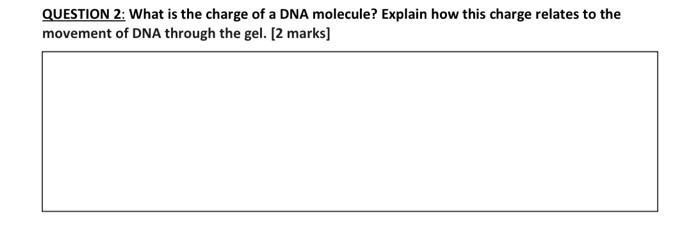
Now, to comprehend the charge associated with DNA, one must delve into its molecular composition. The phosphate group—an inorganic chemical entity consisting of phosphorus and oxygen—plays a pivotal role in the charge landscape of DNA. Each phosphate group carries a negative charge, imparting an overall negative polarity to the DNA molecule. This charge arises from the presence of ionized phosphate groups along the backbone of each strand, creating a negatively charged environment. Consequently, this unique electrochemical property facilitates crucial interactions with positively charged molecules in the cellular milieu.
These interactions are often likened to a symphony in which charged molecules play distinct notes, harmonizing to produce a coherent biological narrative. The negative charge of DNA enables it to attract positively charged ions, such as magnesium (Mg²+) and sodium (Na+), which help stabilize the structure. Imagine a tightly woven fabric, where each thread finds solace and security through the interplay of contrasting hues.
Moreover, the negative charge of DNA plays a critical role in the processes of replication and transcription. During these processes, various proteins and enzymes must selectively bind to specific regions of the DNA molecule. The negative charge acts as a signaling unifier, guiding the attachment of positively charged transcription factors, which in turn delineate the path for the transcription of RNA. Here, DNA emerges not merely as a passive conduit of information but as an active participant within the cellular narrative.
The electrostatic properties of DNA also influence its interaction with histones and other chromatin-associated proteins to form a structure called chromatin. This relationship is fundamental for gene regulation and expression, echoing the idea that the charge intrinsic to DNA helps sculpt cellular identity and function. The compact structure of chromatin, densely packed in the nucleus, allows for efficient storage of genetic information, akin to a well-organized library where each volume is meticulously categorized, waiting to be consulted at a moment’s notice.
From a physiological standpoint, the implications of DNA’s charge become even more fascinating. During the process of gel electrophoresis, a method used to analyze DNA fragments, its negative charge propels it towards the positively charged electrode. This stark display of electrokinetic behavior is instrumental in genetic analysis, allowing scientists to discern the size and purity of DNA molecules with remarkable precision.
Furthermore, the charge of DNA is not merely a static characteristic; it embodies adaptability and responsiveness to the external environment. Environmental factors, such as pH and ionic strength, can modulate the charge density of DNA, affecting its stability and interactions. In this way, DNA steadfastly maintains its role as the custodian of hereditary information while showcasing an elegance in its interplay with the surrounding biochemistry.
Through this lens—applying both metaphor and scientific rigor—DNA is portrayed not simply as a biochemical entity but as a dynamic architect of life. Its charge, in the grand scheme, is a fundamental feature that facilitates communication and coordination across the vast expanse of biological systems. The subtleties of this charge weave within numerous physiological processes, playing a decisive role in heredity, gene expression, and cellular response to environmental stimuli.
As we ponder the charged nature of DNA, it is crucial to appreciate its intricate involvement in holistic biological contexts. Each strand, each charge, and each interaction serves as a testament to the complexity and beauty inherent in the molecular orchestration of life. Thus, the charge of a DNA molecule transcends mere electrical characteristics; it symbolizes the foundational essence of existence itself, anchoring us to the profound interconnectedness of all living organisms.
In conclusion, the charge of a DNA molecule is a cornerstone of molecular biology. It underpins not only the structural integrity of DNA but also its functional capacity to direct the flow of genetic information. The electrostatic dance within the cellular environment enhances our understanding of biological systems, reinforcing the notion that every molecule, every atom has a role steeped in the art of life’s narrative. To grasp the charge of DNA is to embrace the very essence of our biological heritage.

Leave a comment