

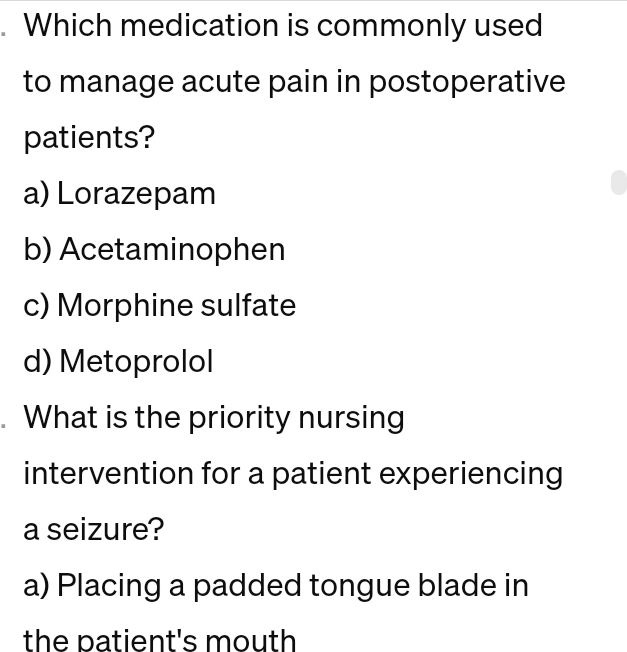
In the realm of acute medical conditions, the administration of medication serves as a critical intervention that can markedly alter patient outcomes. Understanding the classes of medications employed in such scenarios not only equips nursing professionals with the necessary knowledge but also underscores the multifaceted nature of acute care. The following discourse delves into the primary classes of medications commonly administered to patients experiencing acute conditions, with a focus on their mechanisms of action, indications, and implications for nursing practice.
1. Analgesics
Analgesics are medications primarily designed to alleviate pain. In acute scenarios, pain management is paramount as it significantly influences patient satisfaction and facilitates recovery. Opioids, such as morphine and fentanyl, belong to this class and are frequently administered in emergency settings for their potent analgesic effects. Non-steroidal anti-inflammatory drugs (NSAIDs), including ibuprofen and ketorolac, are also commonly utilized, particularly for inflammatory conditions. Understanding the pharmacodynamics of these agents, alongside their potential side effects like respiratory depression in opioids, is crucial for safe nursing practice.
2. Antibiotics
In the context of acute infections, antibiotics are indispensable. Their role is pivotal in combating bacterial pathogens that can provoke severe bodily responses—ranging from sepsis to localized infections. Broad-spectrum antibiotics, such as piperacillin-tazobactam and ceftriaxone, are often chosen empirically to provide immediate coverage while awaiting culture results. Nurses must be cognizant of the implications of antibiotic resistance, emphasizing the importance of stewardship and appropriate selection to mitigate this growing concern.
3. Antipyretics
The necessity for antipyretics arises in cases where fever exacerbates discomfort or indicates an underlying inflammatory process. Acetaminophen and NSAIDs serve as primary agents in this category. Their mechanism involves the inhibition of prostaglandin synthesis, thereby reducing thermoregulation set point in the hypothalamus. While administering these medications, a thorough assessment of the patient’s temperature trends, alongside potential contraindications such as liver dysfunction in the case of acetaminophen, is essential.
4. Vasopressors
In acute situations synonymous with shock or severe hypotension, vasopressors come to the forefront as lifesaving pharmacological interventions. Agents such as norepinephrine and dopamine act by constricting blood vessels and increasing cardiac output, thereby enhancing perfusion to vital organs. The prudent titration of these medications requires vigilant monitoring of hemodynamic parameters, highlighting the nurse’s role in ensuring optimal therapeutic outcomes while mitigating potential complications, such as ischemia due to excessive vasoconstriction.
5. Anticoagulants
Anticoagulants play a crucial role in the management of acute thromboembolic events, including deep vein thrombosis (DVT) and pulmonary embolism (PE). Medications such as heparin and low molecular weight heparins (LMWH) are commonly initiated to prevent further clot formation. Familiarity with the mechanisms of action, dosing protocols, and the necessity for regular monitoring of coagulation parameters is imperative in preventing adverse events like bleeding, reinforcing the multifactorial responsibilities of nursing professionals.
6. Corticosteroids
Corticosteroids are employed to manage acute inflammatory and autoimmune conditions due to their immunosuppressive properties. In situations such as acute asthma exacerbations or severe allergic reactions, agents like methylprednisolone provide a rapid reduction in inflammation and immune response. Nurses must be astute in monitoring for side effects, including hyperglycemia and gastrointestinal disturbances, following administration, ensuring patient safety remains a priority.
7. Antiemetics
Patients with acute conditions often experience nausea and vomiting, either as a symptom or as a side effect of other medications. Antiemetics, such as ondansetron and metoclopramide, can be crucial in providing symptomatic relief. Understanding the underlying etiologies of nausea and the pharmacological pathways influenced by these agents can aid nursing professionals in delivering comprehensive care while addressing patients’ comfort needs.
8. Bronchodilators
In acute respiratory distress, the administration of bronchodilators, such as albuterol, is paramount. These agents facilitate bronchodilation by relaxing bronchial smooth muscles, thereby improving airflow. Timely intervention with bronchodilators can vary significantly in efficacy; hence, nurses must evaluate respiratory status meticulously and gauge the patient’s response to treatment to ensure optimal outcomes.
Conclusion
In conclusion, the administration of medications in acute care settings is a multifaceted process steeped in complexity and responsibility. From analgesics to bronchodilators, each class of medication plays a distinctive role in alleviating symptoms, managing conditions, and enhancing patient recovery. The nurse’s role extends beyond administration; it encompasses comprehensive patient assessment, vigilant monitoring, and continuous education regarding medication management. As the landscape of medicine evolves, it remains imperative for nursing professionals to engage in lifelong learning to navigate the intricate world of pharmacotherapy in acute care effectively.

Leave a comment