

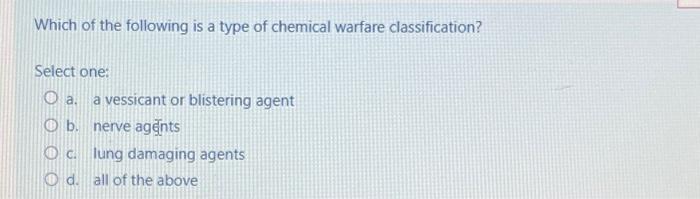
Understanding the Classification of Chemical Agents: Cellular Asphyxiants
As we navigate through the intricate landscape of toxicology, one might ponder: What would it mean for our physiology if a silent predator could deprive us of life through the very air we breathe? Allow this curious question to orient your exploration into the classification of chemical agents, specifically cellular asphyxiants. These agents play a significant role in chemical warfare and public health, representing an alarming intersection of toxicity and human vulnerability.
What Are Cellular Asphyxiants?
Cellular asphyxiants are a categorization of chemical agents that interfere with the ability of cells to utilize oxygen. Unlike classical asphyxiants, which simply inhibit the physical inhalation of air, cellular asphyxiants engage in more insidious tactics. They may disrupt cellular respiration processes, inhibit the transport of oxygen, or interfere with hemoglobin’s function. The result is a devastating impact on the organism’s overall oxygen supply and energy production, leading to cellular death if exposure is prolonged.
Causation Mechanisms of Cellular Asphyxiants
At the core of the cellular asphyxiants’ categorization lie various mechanisms through which they exert their effects. Illustratively, consider carbon monoxide (CO), one of the most potent cellular asphyxiants. CO binds with hemoglobin more readily than oxygen does, forming carboxyhemoglobin and effectively preventing hemoglobin from delivering vital oxygen to tissues. This binding can lead to systemic hypoxia, resulting in symptoms ranging from headache and fatigue to unconsciousness and death.
Similarly, hydrogen cyanide (HCN) operates by inhibiting cytochrome c oxidase, a crucial enzyme involved in the electron transport chain in mitochondria. By obstructing this enzymatic activity, HCN causes cellular respiration to falter, resulting in a rapid onset of hypoxia. The time frame for injury is alarmingly brief, revealing just how critical understanding these agents can be.
Categorizing Cellular Asphyxiants
Chemical agents classified as cellular asphyxiants can be broadly categorized into three principal groups: those that interfere with oxygen transport, those that inhibit cellular respiration, and those that displace oxygen in the environment. Understanding these distinctions is integral to both the medical management of exposures and the development of effective countermeasures.
- Oxygen Transport Disruptors: Carbon monoxide and methemoglobin-forming agents fall under this category, impacting the blood’s oxygen-carrying capacity.
- Cellular Respiration Inhibitors: As previously highlighted, hydrogen cyanide acts here, wherein the impairment of metabolic processes leads to cellular demise.
- Oxygen Displacers: Gases such as methane or argon, while not inherently toxic, can displace oxygen in confined spaces, causing asphyxiation by altering the environmental atmosphere rather than through a direct chemical reaction.
Symptoms and Diagnosis
The symptoms of exposure to cellular asphyxiants can initially mimic those of common conditions, such as flu-like symptoms or anxiety—an insidious aspect of these agents. Therefore, accurate diagnosis is crucial. Clinicians often rely on a combination of patient history, symptomatology, and pertinent laboratory tests, such as carboxyhemoglobin levels in cases of suspected carbon monoxide poisoning. Recognizing the nuances can be a formidable challenge in a clinical setting.
Immediate Response and Treatment
The treatment protocols for cellular asphyxiant exposure hinge on prompt recognition and decisive action. For carbon monoxide exposure, high-flow oxygen therapy emerges as the frontline intervention. This method not only helps displace carbon monoxide from hemoglobin but also accelerates recovery from associated symptoms. Conversely, for hydrogen cyanide poisoning, hydroxocobalamin is administered as an antidote. This medication forms a non-toxic complex with cyanide, allowing for its excretion through the renal system. Timeliness is of the essence; each moment lost can significantly compound morbidity.
Prevention and Mitigation Strategies
Mitigation of risks associated with cellular asphyxiants encompasses a multifaceted approach. In industrial settings, stringent safety standards must be upheld, including proper ventilation systems and personal protective equipment. In addition, public awareness campaigns can inform individuals about the risks of using certain appliances that may generate harmful gases. The importance of community education cannot be overstated, as it fosters an environment where individuals are equipped to respond effectively to potential exposures.
The Future of Chemical Agents in Toxicology
As the field of toxicology evolves, ongoing research continues to unveil the complexities inherent to cellular asphyxiants and their effects on human health. Innovative studies aim to better understand the molecular interactions underlying exposure and injury, potentially leading to novel therapeutic interventions. Moreover, advancements in detection technology could enhance our ability to identify and respond to these agents swiftly, thereby minimizing their impact.
In conclusion, the classification and understanding of cellular asphyxiants represent critical domains within toxicology. Armed with thorough knowledge about these agents, we enhance our capacity to safeguard health and respond to crises effectively. What strategies might we adopt to fortify our defenses against these silent threats? The facilities for learning and adaptation present an ongoing challenge and opportunity, inviting us to remain vigilant in our pursuit of safety and understanding.

Leave a comment