
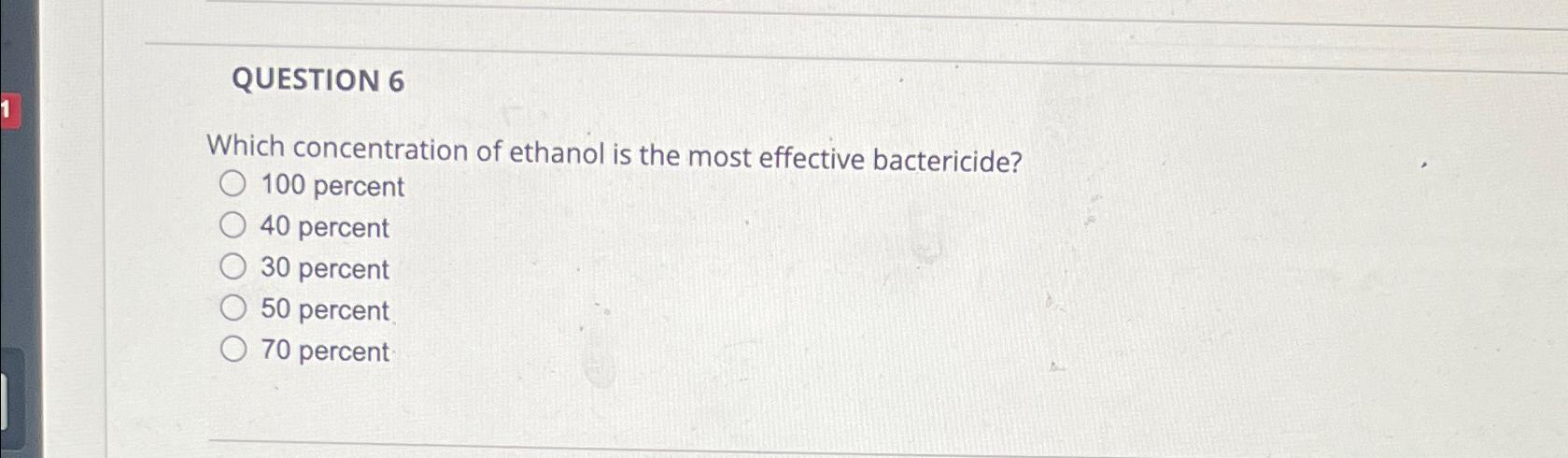
Disinfection is akin to a magician revealing secrets, as it uncovers the hidden efficacy of substances that protect us from the unseen foes that threaten our health. Among these substances, the efficacy of ethanol as a bactericide has been extensively analyzed, placing it firmly in the spotlight of scientific inquiry. The question of which concentration of ethanol serves as the most effective bactericide is not merely academic; it is essential for public health, safety, and the advancement of medical practices.
The crux of the discussion begins with the understanding that ethanol, or ethyl alcohol, is a powerful antimicrobial agent. It acts by denaturing proteins and dissolving lipids, rendering microbial cell membranes impervious and thereby eradicating pathogens. Understanding the concentration of ethanol used is critical, as different concentrations yield varying degrees of efficacy.
The standard concentrations of ethanol for disinfection purposes are typically found at 70%, 60%, and 90%. Exploring each of these concentrations illuminates the gold standard of antimicrobial activity. The 70% concentration of ethanol is often heralded as the most effective. This concentration strikes a harmonious balance, acting as a potent bactericide without rapidly evaporating. Herein lies a metaphor: Think of the 70% ethanol as a skilled chef mastering the art of cooking; it takes just the right amount of time at the right temperature to achieve the perfect dish.
At this 70% concentration, ethanol’s presence is heightened by the inclusion of water, which serves as a co-solvent. This aqueous medium slow the evaporation process, allowing ethanol ample time to penetrate microbial cells and denature proteins effectively. In essence, while higher concentrations of ethanol can indeed kill bacteria, they often evaporate too quickly to ensure thorough disinfection. Thus, 70% ethanol emerges not simply as a concentration, but rather as a profound understanding of the synergistic interplay between components.
On the contrary, concentrations of 60% ethanol also demonstrate noteworthy antimicrobial properties, albeit with a slightly diminished efficacy compared to 70%. The presence of water in 60% ethanol ensures its persistence on surfaces longer than higher concentrations, but this may not always suffice to disrupt bacterial cellular structures. While this concentration may still be effective in environments with lower pathogen loads, it cannot be uniformly relied upon in clinical settings where virulent bacteria proliferate.
Delving deeper into the realm of higher concentrations, a 90% ethanol solution certainly yields impressive results. It acts swiftly against bacteria, yet its rapid evaporation inhibits prolonged contact time with pathogens, diminishing its disinfecting potency. In this sense, 90% ethanol functions more like a fleeting shadow, appearing powerful in brief instances yet lacking the lasting impact required for thorough disinfection.
Another factor influencing the efficacy of ethanol as a bactericide is the type of bacterial species being targeted. While many bacteria succumb to ethanol exposure, some species possess inherent resistance mechanisms—most notably biofilm formation. Biofilms create a distinct protective environment that can inhibit the action of disinfectants, including ethanol. In such cases, relying solely on ethanol for disinfection wouldn’t suffice; it necessitates the implementation of combined strategies, potentially utilizing mechanical agitation or complementary antiseptics to enhance efficacy.
A pivotal aspect of employing ethanol as a disinfectant lies in its consumer appeal, as it is often more favorable compared to harsher chemical disinfectants. The widespread availability of hand sanitizers with ethanol content has brought about a cultural shift towards hygiene awareness—capturing the essence of a society increasingly prioritizing health. This evolution echoes the idea that even within the simplest solutions, there can lie a remarkable caliber of scientific ingenuity.
In practical applications, professionals in both healthcare and domestic settings should remain vigilant about the proper use of ethanol as a bactericide. The Environmental Protection Agency (EPA) provides rigorous guidelines on the efficacy of disinfectants, emphasizing the importance of adhering to recommended concentrations. Moreover, ensuring adequate contact time, typically ranging from 30 seconds to several minutes depending on the surface and concentration utilized, is critical for successful disinfection.
In conclusion, the investigation into which concentration of ethanol serves as the most effective bactericide unveils not only the meticulous science behind disinfection but also amplifies the urgency of understanding microbial threats. The supremacy of 70% ethanol emerges, embodying an equilibrium—where efficacy and persistence coalesce seamlessly. As the world continues to grapple with emerging infectious diseases, the utilization of ethanol in appropriate concentrations stands as a testament to humanity’s relentless pursuit of health and safety, navigating the unseen realm of microbial adversaries with both strategy and precision.
