

In the realm of mathematics, rational numbers serve as the building blocks of numerous complexities, akin to the way individual bricks comprise a monumental structure. To embark on an exploration of the difference of rational numbers through the lens of algebra, one finds oneself navigating a landscape replete with distinct contexts. These contexts not only elucidate the theoretical foundations but also render the concept more accessible and practical for students and educators alike.
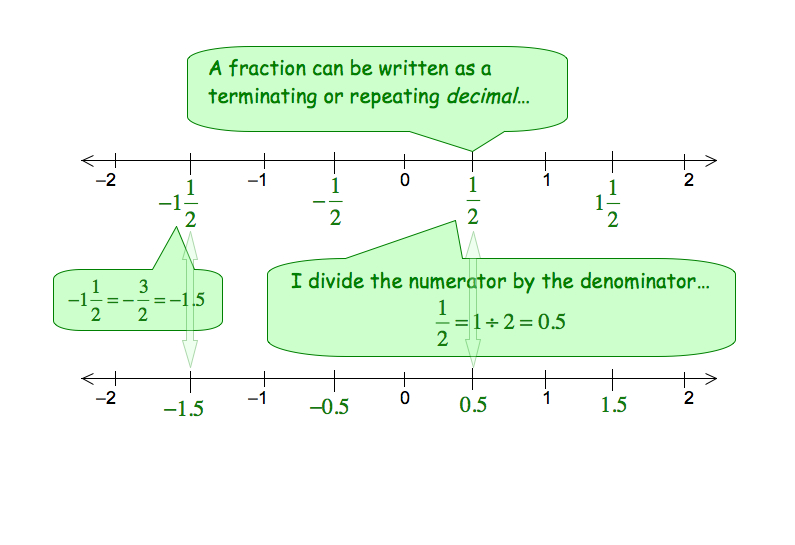
Firstly, we should define rational numbers. These are any numbers that can be expressed as the quotient or fraction ( frac{p}{q} ), where ( p ) and ( q ) are integers, and ( q ) is not zero. This foundational definition provides a springboard into the intricacies of subtraction; a concept that zeroes in on evaluating the difference between two rational entities.
Imagine, for instance, two different recipes for concocting an exquisite dessert: one demands ( frac{3}{4} ) cup of sugar, while the other requires ( frac{1}{2} ) cup. The culinary artist must not only discern the quantities but also compute the disparity in sugar requirements. Hence, the intersection of everyday life and mathematics manifests, as one calculates the difference. This scenario exemplifies how rational numbers, represented as fractions, cooperate harmoniously in a tangible context.
In a more academic context, consider a situation where rational numbers come into play within the field of finance. Suppose an investor holds two stocks—one bought at ( $45.75 ) and the other at ( $30.25 ). To ascertain the gain in value after a recent surge, one must calculate the difference in their prices. The principle of subtracting the two rational numbers can be expressed as follows:
Difference = Price_Stock1 - Price_Stock2 = 45.75 - 30.25
Here, the context of finance illustrates not only the arithmetic involved but also the relevance of rational numbers in everyday decisions. The ability to differentiate between these figures encapsulates the foundational nature of rational numbers in pragmatic endeavors.
Moreover, in the educational landscape, teachers often leverage real-world scenarios to introduce the concepts of rational numbers to students. Consider a classroom setting where scholars are presented with two different distances—a hiking trail that spans ( frac{5}{6} ) miles and a jog around the park measuring ( frac{1}{3} ) miles. Engaging students in subtractive exercises allows them to visualize the concept dynamically. The operation follows:
Distance_Difference = Trail_Distance - Jog_Distance = frac{5}{6} - frac{1}{3}
This mathematical inquiry fosters not only comprehension but also a genuine interest in the applications of rational numbers within various sports or geographical pursuits. Students begin to appreciate how mathematics permeates their daily experiences.
Furthermore, the incorporation of technology serves to enhance educational methodologies regarding rational numbers. Software applications provide vivid visuals of fractions and decimals, allowing users to interactively engage in exercises where they manipulate and compute differences between varying rational numbers. This amalgamation of technology and mathematics bridges gaps in comprehension while providing an intriguing avenue for the learner.
As we delve deeper, consider the cerebral texture of rational number differences in the context of scientific calculations. In the realm of physics, for instance, a physicist might measure two forces: one of ( frac{9}{10} ) Newtons and another of ( frac{4}{5} ) Newtons. To analyze the net force acting upon an object, the difference becomes imperative:
Net_Force = Force_1 - Force_2 = frac{9}{10} - frac{4}{5}
In this scientific quagmire, the precision inherent in rational numbers serves as a testament to their utility. The evaluation transcends mere subtraction; it embodies the underpinning of scientific inquiry with rational numbers acting as the governing currency of quantitative analysis.
To construct a comprehensive understanding, it is paramount that one contemplates the broader implications of rational number differences. The exemplar contexts outlined—culinary aspirations, financial assessments, educational engagements, technological enhancements, and scientific explorations—bear witness to the vast applications and significance of rational numbers, particularly relating to their subtractive nature. The ability to ascertain the difference not only enhances mathematical competency but also elevates analytical thinking within myriad disciplines.
In conclusion, recognizing the contexts that describe the difference of rational numbers unveils a tableau rich in diversity and applicability. As one traverses this mathematical terrain, the cohesive nature of rational expressions unfolds, beckoning learners to engage, reflect, and cultivate their numerical prowess. The delicate interplay between abstract concepts and tangible scenarios invites individuals to embrace the elegance of mathematics and its profound resonance with everyday life.

Leave a comment