

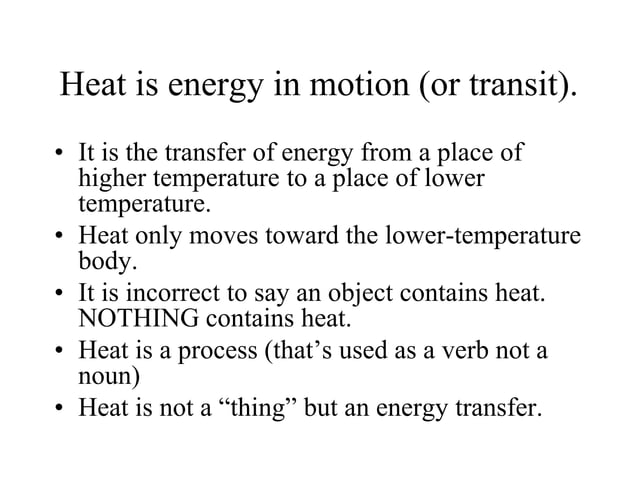
Understanding the mechanisms of heat transfer is fundamental in the field of physics and essential for a myriad of practical applications in engineering, environmental science, and everyday life. Heat transfer is the process by which thermal energy moves from one object or substance to another, and it occurs through three primary methods: conduction, convection, and radiation. Each method operates on distinct principles and is applicable in diverse contexts. This article endeavors to elucidate these three modes of heat transfer, providing a clear and concise overview, bolstered by relevant examples and applications.
1. Conduction: The Direct Transfer of Thermal Energy
Conduction is the process by which heat is directly transferred through materials, driven by the interaction between neighboring molecules and atoms. This mechanism is primarily observed in solids, where thermal energy propagates as a result of molecular collisions. When one part of a material is heated, its particles vibrate more vigorously, gradually imparting kinetic energy to adjacent particles.
This method can be understood through Fourier’s Law of Heat Conduction, which states that the heat transfer rate is proportional to the negative gradient of temperature and the area through which the heat is being transferred. The formula can be simplified to illustrate the concept:
Q = -k A (dT/dx)
In this equation, Q represents the amount of heat transferred, k is the thermal conductivity of the material, A is the cross-sectional area through which heat is flowing, and dT/dx is the temperature gradient. Materials with high thermal conductivity, such as metals, will conduct heat efficiently, while insulative materials, such as rubber or wood, hinder this transfer.
Practical applications of conduction are ubiquitous. Consider a metal spoon placed in a hot bowl of soup; the spoon warms up because the heat from the soup is conducted through the metal into your hand. Similarly, in construction, insulating materials are utilized to minimize heat loss or gain in buildings, thereby enhancing energy efficiency.
2. Convection: The Transfer of Heat Through Fluids
Convection describes the transfer of heat through the motion of fluid particles, which can be liquids or gases. Unlike conduction, convection involves bulk movement, making it an essential process in thermal flows where fluid dynamics are significant. This mechanism hinges on the principle that warmer fluid, being less dense, will rise while cooler fluid, being denser, will sink, thereby creating circulation currents.
Convection can be categorized into two distinct types: natural and forced convection. Natural convection occurs due to buoyancy effects induced by temperature differences, as seen in a heated pot, where steam rises, creating a continuous circulation of water. Forced convection, by contrast, is propelled by external means such as fans or pumps, exemplified by a radiator heating a room or a car radiator cooling engine coolant.
The heat transfer rate in convection can be articulated by Newton’s Law of Cooling:
Q = h A (Ts – Tf)
Here, h represents the convective heat transfer coefficient, A denotes the surface area, Ts is the surface temperature, and Tf is the fluid temperature.
Consider the practical implications of convection in daily life. In weather systems, convection currents in the atmosphere facilitate the distribution of heat, contributing to phenomena such as wind and ocean currents. In culinary practices, convection ovens employ fans to circulate hot air around food, providing even cooking and browning.
3. Radiation: The Transfer of Energy Through Electromagnetic Waves
Radiation is the unique method of heat transfer that requires no medium; it transmits thermal energy through electromagnetic waves. This process occurs in a vacuum and is governed by the principles of thermodynamics and electromagnetic theory. All objects emit radiation depending on their temperature; for instance, the sun radiates energy that reaches Earth, warming the planet.
The quantification of radiative heat transfer can be expressed by the Stefan-Boltzmann Law, which states:
Q = εσAT^4
In this formula, Q signifies the radiant heat transfer, ε is the emissivity of the surface, σ is the Stefan-Boltzmann constant, A is the area of the radiating surface, and T is the absolute temperature measured in Kelvin. High temperatures accelerate the radiation process, resulting in significant energy transfer.
Radiation plays a pivotal role in various scientific and engineering fields. The warmth felt from sunlight is a direct consequence of radiative heat transfer. Similarly, in the realm of astronomy, understanding radiation is crucial for analyzing the thermal characteristics of celestial bodies. Furthermore, in engineering design, radiation is accounted for in systems such as cooling towers and thermal insulation to optimize energy efficiency.
Conclusion
In summary, heat transfer is an integral component of physics that encompasses conduction, convection, and radiation. Each method operates under unique physical principles and has relevant applications across diverse fields. Acquainting oneself with these methods not only enhances one’s comprehension of thermal dynamics but also serves as an indispensable tool in practical problem-solving and innovation. By harnessing the knowledge of these transfer methods, individuals can make informed decisions in engineering, environmental practices, and everyday contexts, optimizing energy efficiency and understanding the physical world around us.

Leave a comment