
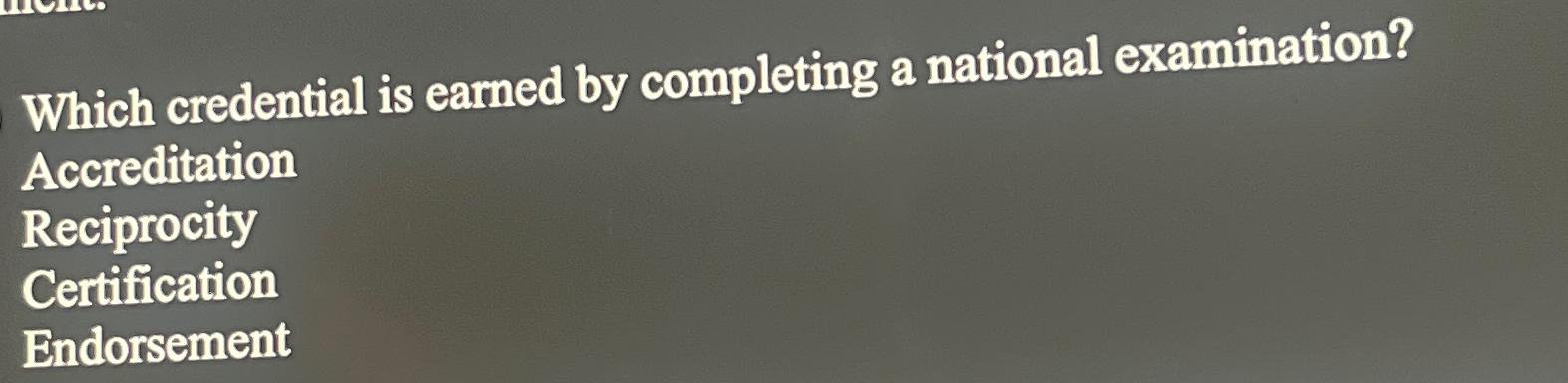
In the contemporary professional landscape, numerous certifications are available that can significantly enhance one’s credentials. Acquiring a certification by completing a national examination is an accomplishment that affirms a professional’s expertise and commitment to their field. Herein, we explore the various credentials available across multiple domains, elucidating their significance and the pathways they offer for aspiring professionals.
Firstly, it is paramount to recognize the overarching categories of national certifications. These often fall into three primary segments: technical certifications, healthcare certifications, and education-based certifications. Each category serves distinct professional spheres, catering to specific career aspirations.
Technical Certifications
Within the realm of technology, certifications such as CompTIA A+, Cisco Certified Network Associate (CCNA), and Microsoft Certified Solutions Expert (MCSE) signify a benchmark of technical proficiency. CompTIA A+ serves as an entry-level certification that confirms foundational IT skills, which is invaluable for positions such as IT support technicians. The CCNA credential, on the other hand, showcases expertise in networking foundational technologies, thus positioning individuals for roles in network administration and systems engineering.
Moreover, the MCSE certification delineates advanced skills in managing and implementing Microsoft technologies. Such credentials are recognized globally and often function as a prerequisite for advanced job roles in IT management and cloud solutions.
Healthcare Certifications
In the healthcare sector, certifications such as Registered Nurse (RN) licensure and Certified Nursing Assistant (CNA) are pivotal. The RN credential is earned through rigorous examinations, typically following the completion of a qualifying degree in nursing. This certification denotes the capability to provide patient care and carry out medical procedures, which are essential skills in any healthcare setting.
The CNA certification, while more entry-level, is equally vital. It prepares individuals to assist patients with daily activities and basic health care needs, serving as a stepping stone for aspiring healthcare professionals. Both credentials are indispensable, establishing a foundation for further specialization—such as becoming a Nurse Practitioner or a Clinical Nurse Specialist.
Education-Based Certifications
Moving into the education sphere, teachers often pursue certifications such as the National Board Certification, which is recognized in various states as an indicator of a teacher’s dedication and proficiency. This certification emphasizes pedagogical skills and a commitment to continuous improvement in teaching methodologies. It requires candidates to demonstrate their teaching impact through a comprehensive portfolio and content knowledge assessments.
Moreover, educational leadership certifications, including the Principal Certification, engage aspiring leaders in systematic management and administrative duties within schools. Such credentials serve to enhance educational standards by ensuring that leaders are sufficiently equipped to foster academic environments that stimulate student success.
The Value of Attaining National Certifications
The pursuit of national certifications transcends mere professional acknowledgement; it fosters a culture of lifelong learning and skill development. Earning a certification cultivates credibility and instills confidence among employers and clients. According to professional organizations, individuals with certifications often experience enhanced career prospects, increased earning potential, and a competitive edge in job markets saturated with skilled professionals.
Furthermore, national examinations typically adhere to rigorous standards, ensuring that only qualified individuals attain these credentials. This vetting process guarantees the integrity of the certification, ultimately benefitting employers and clients alike by assuring service_quality and professional competency.
Navigating the Certification Landscape
As one contemplates embarking on the certification journey, several factors warrant consideration. Firstly, assessing the alignment of the certification with career goals is crucial. Researching industry demands and understanding the requisite knowledge domain can illuminate pathways that align both personal and professional ambitions.
In addition, prospective candidates should explore the prerequisites for certification examinations. Many require a combination of educational qualifications and practical experience, thereby necessitating careful planning and preparation. Engaging in preparatory courses or study groups can bolster confidence and improve exam performance.
Moreover, maintaining a certification may also necessitate ongoing education or periodic retaking of examinations. Being aware of these requirements ensures that credential holders remain compliant and informed about their fields.
Networking also plays a vital role in the certification process. Connecting with professionals who have attained desired credentials can provide valuable insights and guidance. Attending workshops, seminars, and industry conferences can enhance one’s knowledge base while also expanding professional circles.
Conclusion
Ultimately, the pursuit of credentials via national examinations is a strategic move for individuals aiming to bolster their professional qualifications. The array of certifications spanning technical, healthcare, and educational sectors underscores the importance of specialization and lifelong learning in today’s dynamic job market. As individuals navigate their certification journeys, remaining informed and engaged with industry developments will further enhance their professional opportunities and contributions to their chosen fields.
