

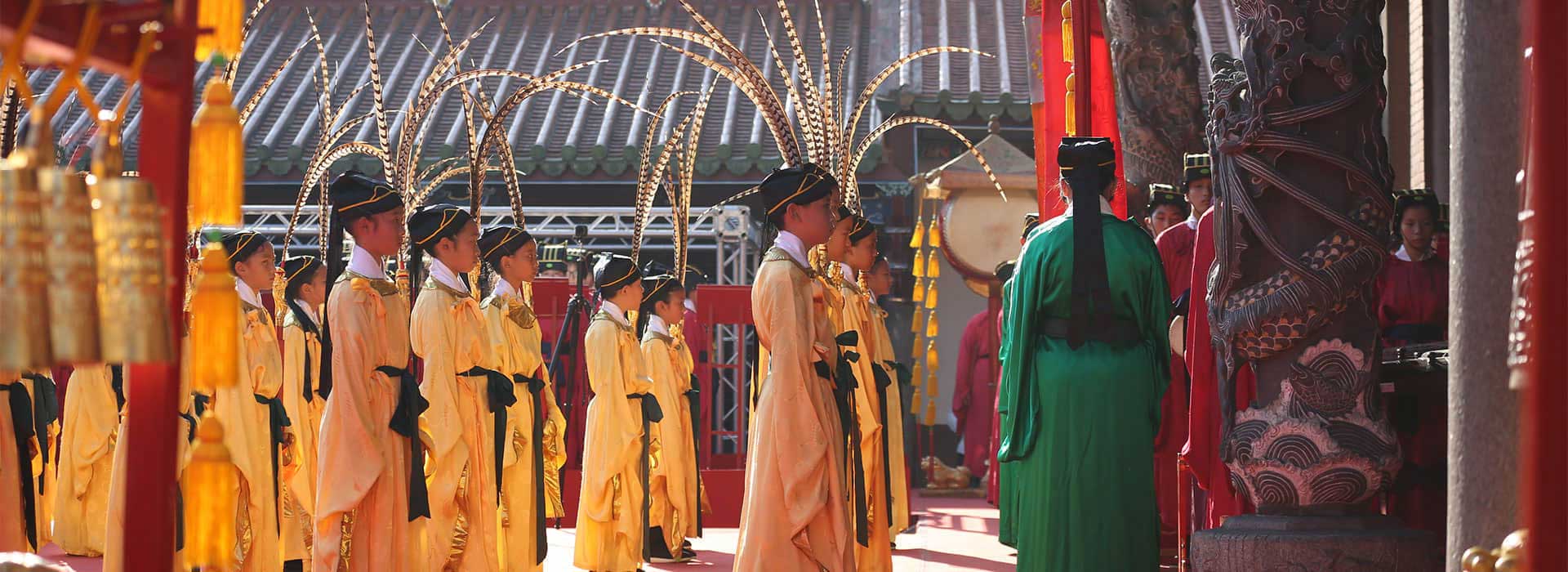
Confucianism, a philosophical and moral system developed by Confucius during the 5th century BCE, has profoundly influenced the cultural fabric of various East Asian societies. An exploration of the cultures that embrace Confucian principles reveals an intricate tapestry of social norms, ethical guidelines, and governance structures rooted in Confucian thought. While Confucianism predominates in China, its precepts also permeate the cultural landscapes of countries such as Korea, Japan, and Vietnam, thus warranting a comprehensive examination of their respective interpretations and adaptations of these philosophical tenets.
At its core, Confucianism extols the virtues of filial piety, loyalty, and righteousness, advocating for a harmonious societal structure where individual duties are aligned with communal responsibilities. This emphasis on relational ethics manifests distinctly across different cultures, illustrating varied adaptations of Confucian principles. A notable characteristic of Confucian-influenced societies is their reverence for education as a means to cultivate moral integrity and societal leadership. In this regard, the pursuit of knowledge becomes not just an individual aspiration but a societal necessity, underpinning the continuity of Confucian ideals.
In China, the birthplace of Confucianism, adherence to its ideals is palpable in everyday life, policy-making, and education systems. Chinese culture venerates the teachings of Confucius, viewing them as foundational to moral character and effective governance. The pervasive influence of Confucian philosophy is particularly evident in the concept of “Ren” (仁), which embodies humaneness and compassion toward others. This principle serves as a guiding ethos for interpersonal relationships and community interactions, fostering a culture premised on mutual respect and familial bonds.
Korea, too, exemplifies a culture steeped in Confucian doctrines. The Korean interpretation of Confucianism, often referred to as “Korean Confucianism,” has been instrumental in shaping its social hierarchy and familial structures. In Korea, the respect for elders and the ancestral veneration are paramount, deeply embedding Confucian values within the societal framework. The Korean educational system, characterized by a rigorous emphasis on respect for teachers and elders, mirrors the Confucian ideal of lifelong learning and moral cultivation. Consequently, this adherence to authority and education engenders a strong sense of social cohesion and continuity, a hallmark of Confucian influence.
Japan’s engagement with Confucian principles, albeit through a unique lens, similarly illustrates the adaptations of these teachings. The intertwining of Confucianism with Shinto and Buddhist beliefs has fostered a distinct cultural landscape wherein moral responsibilities intersect with spiritual obligations. In Japan, the concept of “Wa” (和), denoting harmony, resonates with Confucian ideals, promoting tranquility and cooperation within communities. The Japanese educational philosophy is thus influenced by Confucian thoughts, emphasizing respect, duty, and collective responsibility, which is evident in group-oriented activities and hierarchical social structures.
Vietnam presents another fascinating case of Confucian doctrine’s pervasiveness. The Vietnamese have uniquely integrated Confucian tenets into their own traditional beliefs, culminating in a cultural milieu where ancestor worship and respect for hierarchy are significant aspects of daily life. The concept of “Trọng đạo” (重道), or respect for the path of virtue, accentuates the importance of ethical conduct and filial piety, echoing foundational Confucian principles. The Vietnamese educational and social systems reflect this commitment to Confucian ideals, as they prioritize collective wellbeing and familial loyalty.
While each culture has adapted Confucian principles uniquely, underlying themes of respect, moral integrity, and social harmony unify these diverse expressions. This fascination with Confucianism can be attributed to its ability to address fundamental human concerns such as social order, moral righteousness, and the cultivation of virtue. In an increasingly globalized world, where distinctions between cultures often blur, the persistent relevance of Confucian thought suggests a collective yearning for ethical frameworks that foster community and interpersonal relationships.
Moreover, the contemporary relevance of Confucian principles in East Asian cultures bears relevance to pressing social issues today. Issues such as social inequality, moral decay, and intergenerational conflicts challenge the fabric of modern societies, making the teachings of Confucius pertinent in addressing these dilemmas. The resurgence of interest in Confucian ethics underscores a societal desire to reintegrate moral considerations within the public discourse, thus fostering a more cohesive and virtuous society.
In conclusion, the cultures that embrace Confucian principles—whether in China, Korea, Japan, or Vietnam—exemplify a remarkable synthesis of ethical values and social norms influenced by Confucian thought. As these societies adapt the teachings of Confucius to their unique cultural contexts, they perpetuate a legacy that resonates across centuries. This admiration for Confucian ideals speaks to a universal pursuit of moral integrity, social harmony, and the cultivation of human relationships, offering a poignant reflection on the enduring relevance of these age-old principles in addressing contemporary challenges.

Leave a comment