

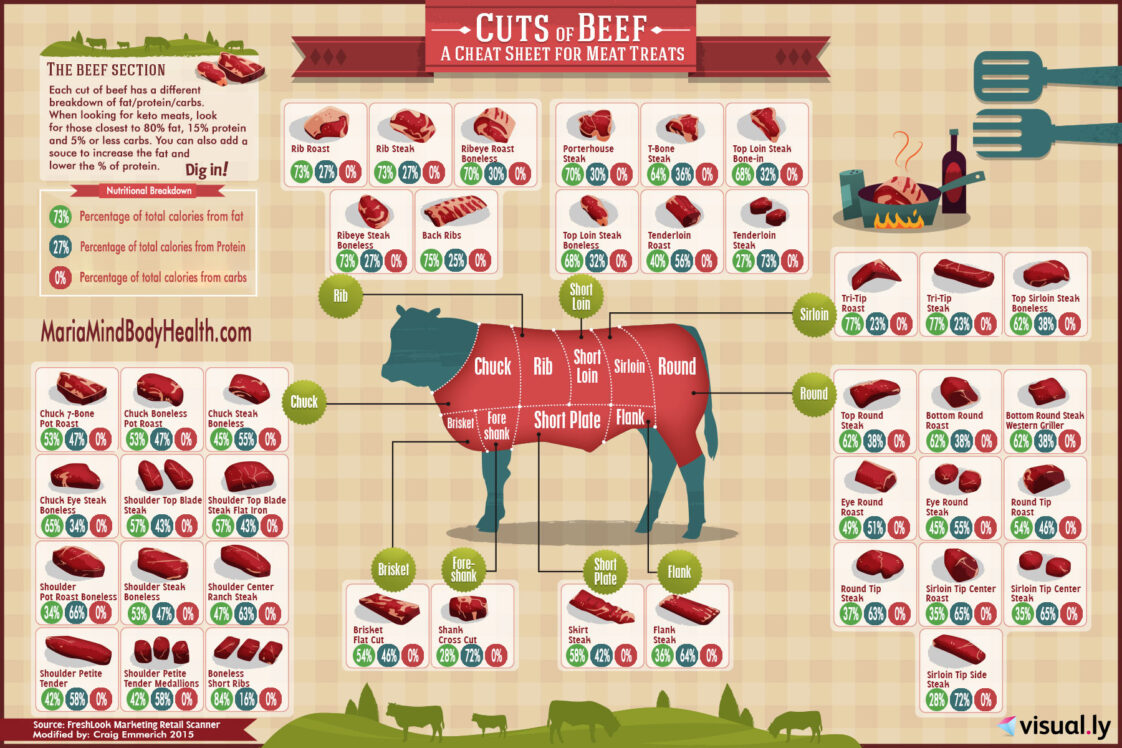
When navigating the intricate world of beef, one may sometimes feel akin to a cartographer charting the vast terrains of culinary landscapes. Among the myriad of cuts available, the quest for the leanest option often surfaces as a paramount concern for aficionados of health-conscious cuisine. Indeed, choosing a cut of beef involves a careful balance between flavor and nutrition—an endeavor akin to walking a tightrope where precision is key. This exploration seeks to illuminate which cut of beef has the least fat, thus guiding those who aspire to indulge without compromising their health.
Before delving into specifics, it is essential to grasp the anatomy of beef and the significance of fat content. In every cut, intramuscular fat—often referred to as marbling—plays a critical role in dictating both flavor and tenderness. However, for those who are watchful of their dietary fat intake, it is prudent to consider cuts that minimize this facet.
Among the pantheon of beef cuts, the tenderloin emerges as a paragon of leanness. This cut, often revered for its buttery tenderness, is situated beneath the ribs and boasts remarkably low-fat content. In culinary terminology, the tenderloin is akin to a chiseled statue—refined, elegant, and desirable. A standard 3-ounce serving of tenderloin contains approximately 5 grams of fat, a veritable feast for those seeking indulgence without excess.
Adjacent to the tenderloin in both location and leanness is the sirloin, which encompasses several sub-cuts including the top sirloin and bottom sirloin. The top sirloin, in particular, stands out with its relatively low fat content, sometimes clocking in at around 7-9 grams of fat per 3-ounce portion. While it possesses a slightly firmer texture compared to the tenderloin, its robust flavor makes it a worthy contender in numerous culinary applications, from grilling to sautéing.
The eye of round is another commendable choice for those who prioritize a lean profile. This cut is derived from the hindquarters of the animal and is characterized by its lack of significant fat marbling. Roughly 6-8 grams of fat per 3 ounces places the eye of round in a favorable position on the health-conscious spectrum. Its dense texture, while not as tender as the tenderloin, delivers a satisfying mouthfeel and is particularly well-suited for slow cooking applications that enhance its natural flavors.
Exploring further, we encounter the flank steak and the skirt steak, which present exciting options for those inclined toward bold flavors. The flank steak, coming from the abdominal area, may carry higher fat contents than the eye of round or top sirloin but can still be relatively lean, generally falling in the range of 10-12 grams of fat per 3-ounce serving. Its distinct grain and rich taste make it an excellent candidate for marination, thereby allowing the beef to absorb myriad flavors that can mask its leanness, rendering each bite a nuanced symphony of taste.
Skirt steak, on the other hand, while typically slightly marbled, can be prepared in a way that accentuates its inherent deliciousness while remaining mindful of fat. It is important to note that preparation methods and accompanying ingredients play significant roles in the ultimate fat content of a dish. Opting for dry rubs or grilling methods rather than saucing generously can elevate this cut to a delightful centerpiece without overstepping dietary boundaries.
Not to be overlooked, the brisket cut contains an unfortunate reputation for being fatty; however, certain cooking methods can amend its profile. Traditional brisket is often synonymous with barbecue, where the long, slow cook allows for the fat to render down, resulting in a sort of self-basting effect. Nonetheless, when opting for brisket, one must be discerning about the trimmings and how they influence the overall nutritional aspects of the meal.
In the grand tapestry of beef cuts, it becomes apparent that choice relies heavily on the interplay of consumer preference and culinary application. The leanest cuts—such as the tenderloin, top sirloin, eye of round, and certain preparations of flank and skirt steak—exist as honored contenders. Each cut transports the eater toward a different flavor destination, offering various textures, culinary possibilities, and, certainly, a range of fat contents to suit individual dietary pursuits.
In conclusion, while flavor undoubtedly adds to the allure of beef, the quest for leanness does not necessitate a compromise on taste or satisfaction. The pursuit of the least fatty cut can transform a humble meal into a culinary triumph, enhancing the experience while aligning with nutritional goals. Whether one aims to savor tenderloin at a gourmet gathering or enjoy a robust sirloin at a family barbecue, the options are abundant and diverse. The journey through bovine landscapes, then, is not merely about nourishment; it is an exploration of rich flavors, textures, and the delight of mindful eating—a vibrant celebration of resources both earthly and delectable.

Leave a comment