
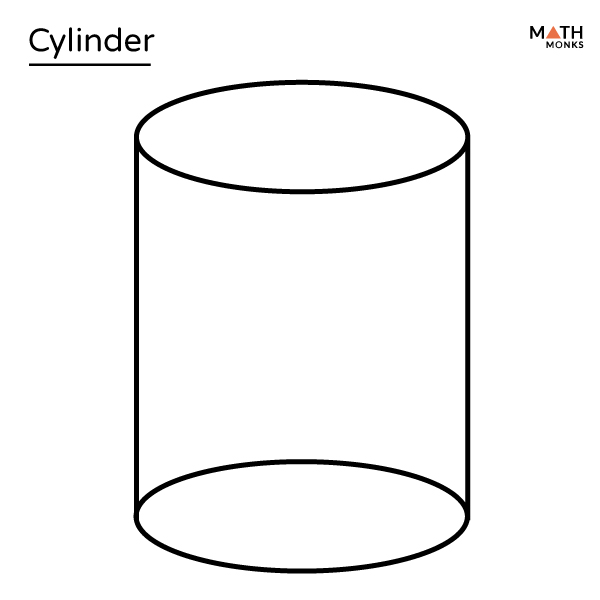
The exploration of cylindrical volumes encompasses a fascinating array of geometrical principles and practical applications. This article delves into the question, “Which Cylinder Has The Greatest Volume?” by examining the defining characteristics of cylinders, the mathematical principles governing their volumes, and various factors influencing these measurements.
Understanding the Cylinder
A cylinder is a three-dimensional geometric figure characterized by two parallel bases connected by a curved surface at a constant distance from the center axis. The standard mathematical representation of a cylinder is articulated in terms of its radius (r) and height (h). The formula for calculating the volume (V) of a cylinder is given by:
V = πr²h
Where:
- V = Volume of the cylinder
- r = Radius of the base
- h = Height of the cylinder
- π (pi) = Approximately 3.14159, a constant used in circular calculations
To discern which cylinder has the greatest volume, we must consider the pivotal role of both the radius and the height. Variations in these dimensions yield distinct volume outcomes, necessitating a comprehensive analysis.
The Role of Radius
The radius is a critical component in the volume equation. An increase in radius leads to a quadratic enhancement of the volume since it is squared in the formula. For instance, doubling the radius of a cylinder while maintaining a constant height augments the volume by a factor of four. Therefore, if you are to exploit maximum volume potential, the selection of a cylinder with a larger radius is paramount.
The Role of Height
Height, while crucial, influences volume linearly. Essentially, for a fixed radius, magnifying the height will proportionally increase the volume. Therefore, to maximize the volume of a cylinder, one should seek to optimize both the radius and height in unison. If a cylinder possesses a smaller radius yet a substantially greater height, it may still yield a considerable volume compared to a shorter, broader cylinder.
Optimizing Volume: An Analytical Approach
To optimize the volume of a cylinder, one should analyze various radius-to-height ratios. For example, in engineering applications where material constraints exist, the volumetric efficiency of materials necessitates careful consideration of both radius and height. A cylinder with a radius of 3 feet and a height of 5 feet yields a volume of approximately 141.37 cubic feet. However, if we were to increase the radius to 4 feet but maintain the same height, the volume jumps to around 150.8 cubic feet. Thus, this emphasizes the substantial impact of radius over height.
Practical Applications and Context
The theoretical implications of cylindrical volume extend beyond solely academic curiosity. In various fields, such as civil engineering, manufacturing, and pharmaceuticals, the dimensions of cylindrical containers are paramount. For instance, in storage tanks, the configuration must be optimized to handle maximum liquid volume while considering stability and material costs. Here, understanding which cylinder yields the greatest volume becomes fundamentally important.
Comparative Analysis of Cylinder Types
There are several types of cylinders: right cylinders and oblique cylinders, among others. Right cylinders stand perpendicular to their bases, while oblique cylinders lean to one side. Interestingly, right cylinders are typically more efficient in terms of volume capacity as their height can be manipulated without affecting the base orientation, while oblique cylinders may result in wasted volume due to the inclination.
Specialized Cylinders: The Role of Composite Shapes
Consider a specialized scenario where composite shapes are involved, such as a cylinder topped with a hemisphere. The incorporation of varied geometrical forms can lead to complex calculations regarding total volume. For a cylinder topped with a hemisphere, the total volume can be calculated as:
VTotal = Vcylinder + Vhemisphere = πr²h + (2/3)πr³
This amalgamation exemplifies how innovative design can yield greater volumetric efficiency through the integration of different shapes.
Constructing Cylinders for Maximum Volume
For industry practitioners, constructing cylinders with maximal volume capacity involves a lattice of considerations. The choice of materials, structural integrity, and the intended use all dictate the design parameters. An engineer aiming to produce a cylindrical tank for water storage must weigh the volumetric benefits against the mechanical constraints dictated by material properties and cost factors.
Conclusion
In conclusion, determining which cylinder has the greatest volume necessitates an integrated understanding of both radius and height parameters, as well as the interplay of various geometrical forms. Ultimately, by manipulating these dimensions judiciously and considering the contextual applications, one can derive a cylindrical configuration optimized for maximum volume capacity. Understanding these principles not only enriches theoretical knowledge but also translates into practical applications across numerous industries.
