

Legumes, particularly dals, are a cornerstone of nourishment across various cultures, especially in the Indian subcontinent. Comprised of diverse variations, each type of dal presents unique nutritional profiles, with an emphasis on protein content. Understanding which dal has the highest protein concentration can significantly inform dietary choices, especially for vegetarians and vegans seeking optimal sources of this macronutrient. This exploration promises to illuminate the intriguing world of dals while enhancing our understanding of their nutritional benefits.
Proteins are fundamental to the human body, serving as the building blocks of tissues, enzymes, and hormones. A protein-rich diet is essential for growth, repair, and overall health optimization. For those who may connote animal proteins as superior, it is intriguing to note that certain legumes, such as dals, can rival or even exceed the protein content found in some animal products. This perspective shift beckons further investigation into the individual varieties of dal.
The term “dal” encompasses a wide-ranging selection of dried legumes, which are often split, including lentils, peas, and beans. Each variety offers distinct flavors and nutritional profiles. Herein lies the crux of the matter: Which dal emerges as the champion when it comes to protein density?
The methodologies for measuring protein content can vary, with values typically expressed per 100 grams of the respective dal. However, beyond mere statistics, one must consider the bioavailability of these proteins, their amino acid profiles, and how they integrate into the larger dietary context. In this regard, several contenders warrant discussion.
1. Moong Dal (Green Gram)
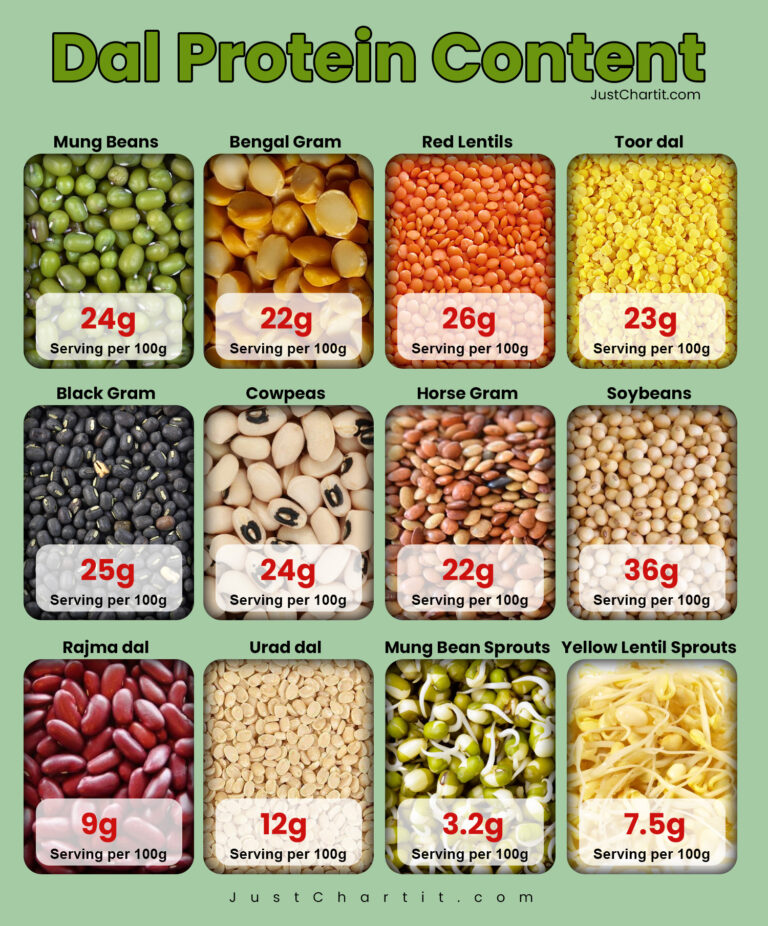
Moong dal, or green gram, is renowned for its delicate flavor and culinary versatility. With an impressive protein content ranging approximately between 24 to 25 grams per 100 grams, moong dal not only satiates hunger but also contributes to muscle health and repair. It is particularly lauded for its high lysine content, an essential amino acid that is often deficient in other plant-based sources. Additionally, moong dal is easy to digest, making it a preferred choice for those seeking light yet nourishing meals.
2. Masoor Dal (Red Lentils)
Dynamic and vibrant, masoor dal is another strong contender in the protein department. With a protein composition hovering around 25 grams per 100 grams, these red lentils not only provide a robust protein source but also encompass considerable dietary fiber, which assists in digestive health. Their quick cooking time and ability to absorb flavors make masoor dal a staple in various culinary applications. Furthermore, their high iron content is advantageous for those looking to bolster their energy levels.
3. Chana Dal (Split Bengal Gram)
Eclipsing the protein content of many others, chana dal presents approximately 22 to 24 grams of protein per 100 grams. This split chickpea variant is celebrated for both its earthy flavor and its nutritional punch. Rich in antioxidants and micronutrients, chana dal supports overall health and wellness while being a significant protein source. Its fibrous structure contributes not only to a sense of satiety but also to the maintenance of digestive harmony. A consideration of its cooking versatility reveals opportunities for innovative recipes.
4. Toor Dal (Pigeon Pea)
Toor dal, known for its characteristic yellow color, provides a protein content of around 22 grams per 100 grams. While slightly lower than its contemporaries, toor dal is packed with essential vitamins and minerals, including folate and magnesium. Its flavor is distinct, often imparting a rich depth to various dishes while contributing positively to one’s protein intake. The slow-cooked curries that feature toor dal are not only comforting but also nutritionally valuable.
5. Urad Dal (Black Gram)
Urad dal, with its black outer covering, offers a unique nutty flavor and boasts a protein content of approximately 25 grams per 100 grams. This legume is particularly rich in iron and folic acid, making it a fantastic choice for pregnant women and those seeking to support their immune system. Furthermore, urad dal’s fermented forms, such as dosa and idli, enhance its digestibility and nutritional value, showcasing the potential for culinary creativity.
Transitioning from individual assessments, it is also crucial to consider the amino acid profiles imparted by these dals. While plant-based proteins are generally less prominent in specific amino acids like methionine and cysteine, combining various types of dals can yield a more complete protein profile, thereby improving their efficacy as meat substitutes.
Moreover, the cultural implications of dals cannot be understated. Historically revered in various culinary traditions, these legumes not only serve nutritional purposes but are also woven intricately into the tapestry of cultural identity. The communal aspect of cooking and sharing dal dishes fosters relationships, nourishes communities, and honors culinary heritage.
In conclusion, while moong dal, masoor dal, chana dal, toor dal, and urad dal each possess commendable protein content, the choice of which to consume ultimately depends on personal preferences, dietary restrictions, and culinary applications. As dietary paradigms shift towards plant-based nutrition, the exploration of dals invites deeper reflection and appreciation for their multifaceted roles in human nourishment. Thus, the quest for the “most protein-rich” dal reveals a delicate interplay between flavor, nutrition, and cultural significance. This multifarious nature of dals embodies a compelling narrative of sustenance and enjoyment.

Leave a comment