

In the intricate realm of mathematics, decimals play a pivotal role as they often serve as the bridge between whole numbers and more refined numerical expressions. When contemplating which decimal is less than 0.8, one embarks on a journey through the numerical landscape, much like a traveler seeking to navigate an intricate maze. This voyage is not merely about identifying numbers; it is about understanding their relationships, their positions on the number line, and the subtleties that distinguish one decimal from another.
At the outset, it is essential to comprehend the concept of decimals themselves. A decimal is essentially an extension of the base ten system, representing fractions of whole numbers. For instance, the number 0.8 signifies eight tenths, which can also be expressed as 8/10. This representation serves as a starting point for our exploration; any decimal that occupies a position before 0.8 on the number line will inherently be less than it.
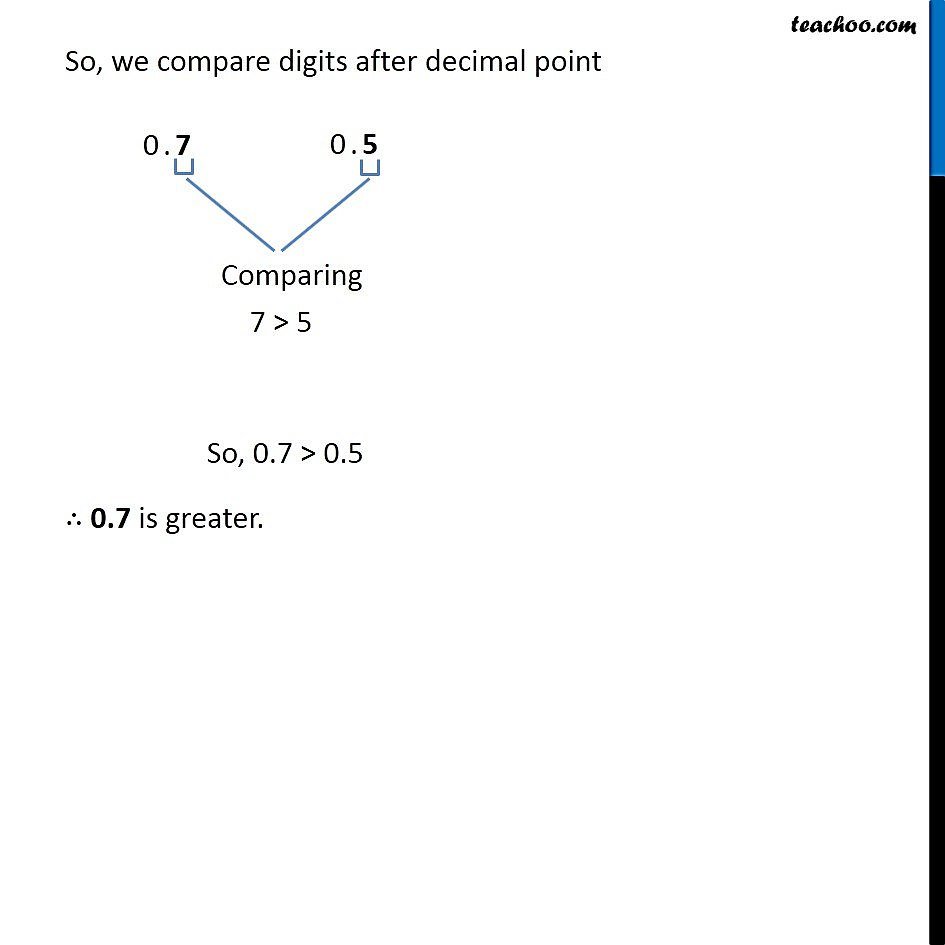
One of the most straightforward examples of a decimal less than 0.8 is 0.7. Visually, if we were to metaphorically depict the decimals on a horizontal spectrum, 0.7 would be akin to a star positioned to the left of the radiant 0.8, dimmer perhaps but still undeniable in its presence. The value of 0.7 can be likened to seven tenths, a fraction of a whole that casts a shadow just shy of the luminous figure of 0.8.
Yet, the landscape of numbers offers a plethora of decimals that fall below 0.8. For instance, consider 0.75, known as three-fourths in fractional terms. This figure gleams with the brightness of its own significance—three parts out of a total of four, showcasing the elegance of the fraction-digital interplay. As it resides closer to 0.8 than 0.7 does, it exemplifies the nuanced hierarchies that decimals establish among themselves.
Furthermore, the realm of decimals stretches infinitely, inviting a multitude of possibilities. Consider 0.78; while it closely approaches 0.8, it remains firmly ensconced beneath it. Like a caterpillar aspiring to become a butterfly, it is in a metamorphosis of sorts, alluringly dancing on the threshold of 0.8 yet content within its own identity. Likewise, decimals such as 0.76, 0.79, or even more intricate representations like 0.7593 inhabit this domain, each possessing its unique characteristics and significance.
One may wonder about the utility of comprehending these subtleties. The practical applications of distinguishing one decimal from another extend into various fields: economics, physics, engineering, and even daily life decisions. For instance, in financial contexts, understanding the magnitude of decimals can be the difference between fiscal success and failure. A mere difference of 0.1 in interest rates or profit margins can have monumental implications, demonstrating the intricate tapestry of decimals woven into our existence.
The philosophical implications of decimals can also be profound. They compel us to confront the notion of precision and the importance of details. In a world that frequently opts for approximations, decimals remind us that there is merit in specificity. Every decimal represents a distinct idea or value, underscoring the belief that understanding the minutiae can lead to greater enlightenment in our comprehension of the broader universe.
When considering the decimal 0.8, it becomes clear that this numerical landmark serves as an apex in a vast terrain filled with diverse values. Each decimal, whether it be 0.1, 0.5, or 0.79, contributes to a greater understanding of numerical relationships and enables one to navigate the intricate pathways of quantitative analysis. This landscape is not merely a static portrayal of values; it is dynamic and bursting with potential.
To gain proficiency in identifying decimals that are less than 0.8, one must cultivate an awareness of place value. The position of each digit following the decimal point determines its weight. For instance, 0.89 and 0.81 are both greater than 0.8, while digits beginning with 0.0 to 0.7 will always fall short. This lexicon of numerals acts as a cartographic guide through the numerical territory, allowing for an informed traversal through this delicate order of operations.
In conclusion, the question of which decimal is less than 0.8 unfurls into an expansive dialogue about the nature of numbers themselves. Each decimal represents not merely a value but contributes to a broader tapestry of meaning and significance. In our exploration, we uncovered familiar figures like 0.7 and 0.75, alongside a slew of intricacies that adorn the landscape beneath 0.8. Ultimately, our journey reveals that in a world driven by data and analytics, understanding even the minutiae of decimals can yield profound insights into the fabric of reality itself.

Leave a comment