

When faced with the vast array of deodorants available on the market, one might ponder, “Which Degree deodorant is truly white?” This question not only evokes curiosity but also presents a delightful challenge. In a world where personal care products claim multifarious benefits, distinguishing the right variant can feel akin to searching for the elusive needle in a haystack. This inquiry compels us to delve deep into the realm of Degree deodorants, examining their offerings to identify those that possess a distinctly white formulation.
First and foremost, let’s explore the foundational attributes that characterize Degree deodorants. Degree has cultivated a reputation for producing antiperspirants that promise long-lasting protection against wetness and odor, catering to diverse consumer needs. The brand has proliferated its lineup to include various scents, forms, and functional benefits. Among these, white variants typically encapsulate the ethos of freshness without compromising on efficacy.
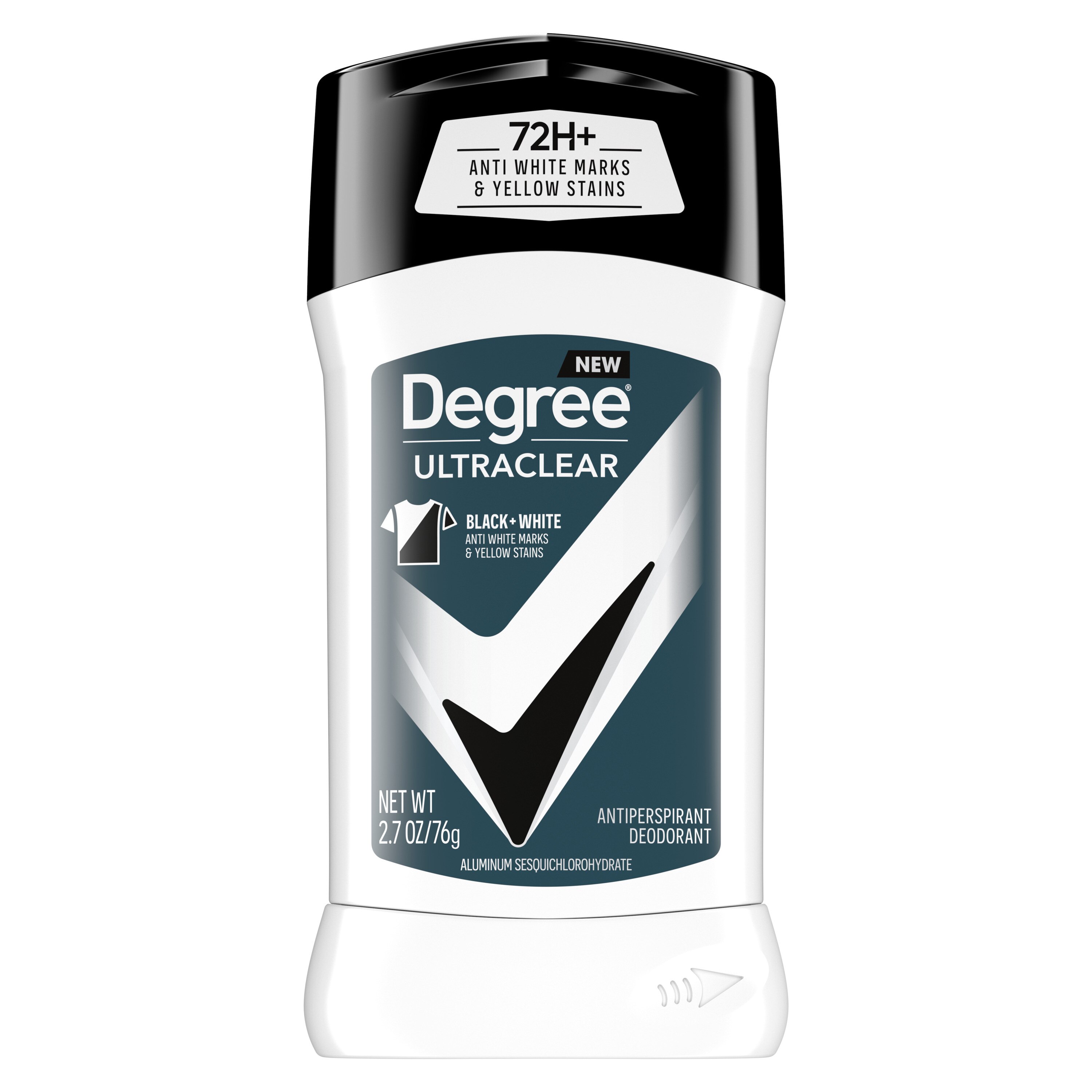
The hallmark of Degree UltraClear 72-Hour Black + White Antiperspirant and Deodorant Stick stands out as a prime candidate meeting the criteria for being distinctly “white.” This formulation, with its smooth application, is explicitly designed to alleviate the common dilemma of leaving residue on clothing. One must gnaw on the curious thought: Is this the quintessential choice for those prioritizing a white deodorant experience?
Degree’s UltraClear line has garnered attention for its innovative approach to combating underarm stains on both white and colored fabrics. The intriguing premise here is the clever use of technology—Degree’s proprietary formulation works assiduously to ensure that the application not only maintains a fresh scent but also minimizes the risk of unsightly marks. Thus, this product may serve as an ideal solution for the fashion-conscious consumer who desires both form and function.
In navigating this aisle, another noteworthy contender emerges: Degree Men’s UltraClear Black + White Antiperspirant Stick. While marketed towards men, the product’s unisex application empowers anyone seeking a reliable white deodorant. With a focus on combating the dual threats of sweat and odor, it becomes an intriguing option across the spectrum of potential users. Does this expansive application challenge traditional gender norms in deodorant marketing?
Furthermore, the efficacy of Degree deodorants in terms of duration is a compelling consideration. The UltraClear formulation promises a formidable 72-hour shield against perspiration, presenting a unique selling proposition that could be particularly enticing for those with demanding schedules. But herein lies another question: Does one really need 72 hours of protection, or is this a marketing maneuver designed to appeal to the busy modern individual?
Continuing our quest for identification, one must also consider the alternative offerings within the Degree family. Certain formulations are described as “invisible” and “invisible solid,” hinting at their potential to dry clear and leave no residue. However, the distinction between a clear deodorant and a white one can become obscured with such nuanced labels. It is essential, therefore, for consumers to meticulously read product descriptions and reviews to fully grasp the implications of “invisibility” versus “whiteness.”
Engaging in consumer behavior research reveals an array of modifiable factors influencing buyers’ choices. Many individuals today are increasingly conscious of their purchase’s environmental impact. Degree has taken strides toward producing deodorants that harness sustainable practices, such as recyclable packaging. A pressing question arises: How can sustainability and product efficacy coexist in the world of personal hygiene?
Nevertheless, the science behind the formulation of these white deodorants merits examination. Degree’s antiperspirants contain active ingredients designed to inhibit sweat production by blocking sweat glands. Aluminum-based compounds are prevalent in these formulations, resulting in a perplexing discussion around safety versus efficacy. As consumers gain awareness of potential health implications, one is encouraged to weigh the scientific perspectives on such ingredients. Why do some individuals gravitate towards aluminum-free alternatives, and do those alternatives truly measure up?
Ultimately, selecting the right Degree deodorant boils down to personal preference and lifestyle considerations. While Degree UltraClear 72-Hour Black + White and Degree Men’s UltraClear Black + White stand out as advisable options for anyone seeking a white deodorant, prospective customers should scrutinize their own needs: Do you prioritize longevity, scent, or fabric preservation? Engaging with this complex matrix of choices can turn the mundane act of choosing a deodorant into an insightful exploration into personal hygiene.
In conclusion, navigating through the myriad selections of deodorants can be a labyrinthine adventure. The interplay of branding, efficacy, and consumer preference shapes one’s decision-making process. With Degree deodorants like the UltraClear formulations at your disposal, the quest for the perfect white deodorant yields fascinating territory to explore. So, when posed with the question, “Which Degree deodorant is white?” the answer lies not solely in the products themselves, but within the lens through which we approach the concept of personal care. The challenge, therefore, may not just be identifying the product, but also understanding why we choose what we choose.

Leave a comment