

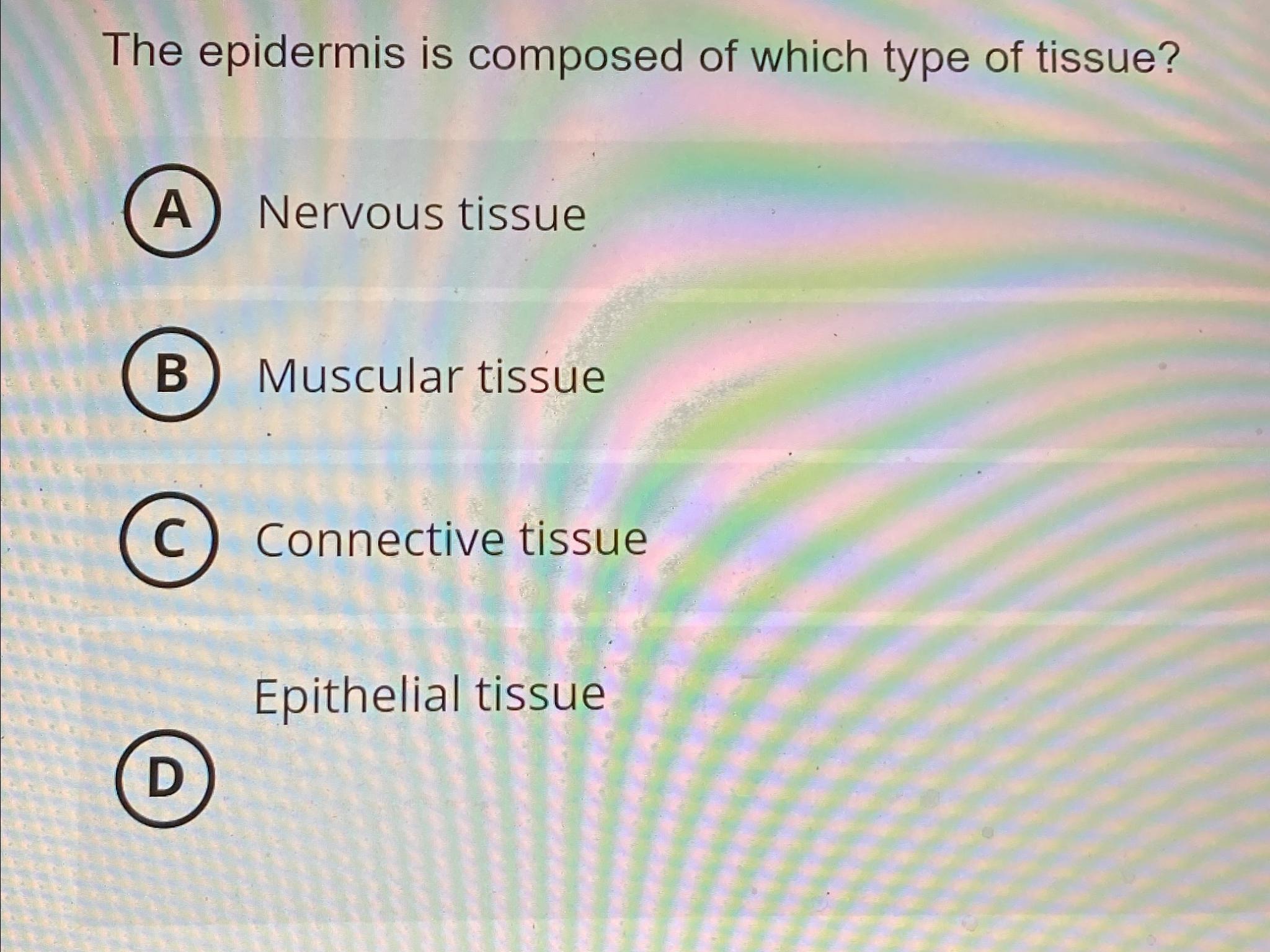
The epidermis, a critical outer layer of the skin, serves as a multifaceted barrier, protecting the underlying tissues from environmental hazards. Understanding the tissue type that composes the epidermis not only elucidates its functional significance but also enriches one’s appreciation for the complexities of human biology. This article delineates the histological characteristics of the epidermis, its classification as a specific tissue type, and its integrative role in homeostasis.
At the core of the epidermis lies the fundamental understanding that it is predominantly composed of stratified squamous epithelium. This specific type of epithelial tissue is characterized by multiple layers of flat cells, which confer resilience and protection against mechanical stress, pathogens, and dehydration. The stratification not only enhances durability but also facilitates the continuous renewal of skin cells. As one delves deeper into this tissue type, it becomes evident that the epidermis is devoid of blood vessels, relying instead on the underlying dermis for nutrient supply through diffusion.
Another salient feature of the epidermis is its remarkable ability to regenerate. This regenerative capacity is primarily facilitated by the presence of keratinocytes, the predominant cell type within the epidermis, which undergo a process of keratinization. This process involves the gradual transformation of keratinocytes as they migrate from the basal layer to the surface. As these cells ascend through the strata of the epidermis, they accumulate keratin—a fibrous protein that bestows strength and waterproofing properties to the skin.
The epidermis can be further stratified into distinct layers, each possessing unique functions and cellular compositions. The major layers include the stratum corneum, stratum lucidum, stratum granulosum, stratum spinosum, and stratum basale. The outermost layer, the stratum corneum, is composed of dead keratinized cells, which form a barrier resistant to water loss. Below this, the stratum lucidum, found predominantly in thick skin areas such as the palms and soles, provides an additional layer of protection.
The stratum granulosum contains keratinocytes that undergo significant changes, developing keratohyalin granules which play a pivotal role in the keratinization process. Below this lies the stratum spinosum, where keratinocytes are interconnected by desmosomes, imparting structural integrity. Finally, at the base, the stratum basale is composed of a single layer of actively dividing keratinocytes, serving as the primary source for new cell production. This dynamic cellular architecture underscores the epithelial tissue’s role in the maintenance and repair of the skin.
Moreover, the epidermis houses melanocytes—specialized cells responsible for the synthesis of melanin, the pigment that determines skin color and provides some protection against UV radiation. These melanocytes are interspersed amongst the keratinocytes in the stratum basale and contribute not only to pigmentation but also to the skin’s photoprotective mechanisms.
The presence of Langerhans cells, another integral component of the epidermal architecture, adds another layer of complexity. These dendritic cells are vital components of the immune system, acting as antigen-presenting cells that initiate immune responses against pathogens that penetrate the skin’s barrier. This immunological role, paired with the physical protective functions provided by the keratinocytes, illustrates the multifaceted nature of the epidermis as more than just a simple lining.
From a functional perspective, the epidermis plays an essential role in the integumentary system, participating actively in thermoregulation, sensation, and protection. The intricate vascular network in the dermis assists the epidermis in regulating temperature through sweat production and altering blood flow. Meanwhile, sensory receptors embedded in the dermal-epidermal junction provide tactile feedback, allowing for the perception of touch, pressure, and pain, thus contributing to the body’s interaction with its environment.
The interplay between the varying cell types and layers of the epidermis underscores its specialization as a tissue type with a unique structural design that fulfills multiple roles critical to human health. Understanding these dimensions deepens the comprehension of dermatological conditions and their treatment. For instance, conditions such as psoriasis and eczema arise from disruptions within the epidermal tissue, highlighting the importance of integrity in its cellular composition and arrangement.
In sum, the epidermis exemplifies stratified squamous epithelium, an epithelial tissue type characterized by its layered structure, cellular diversity, and functional versatility. The composite structure—not merely a passive barrier but an active participant in immunological defense, sensory perception, and homeostasis—underscores the intricate nature of this epidermal layer. With ongoing research, the insights gleaned from studying this microscopic marvel continue to progress our understanding of tissue pathology, regenerative medicine, and the overall dynamics of skin health.

Leave a comment