

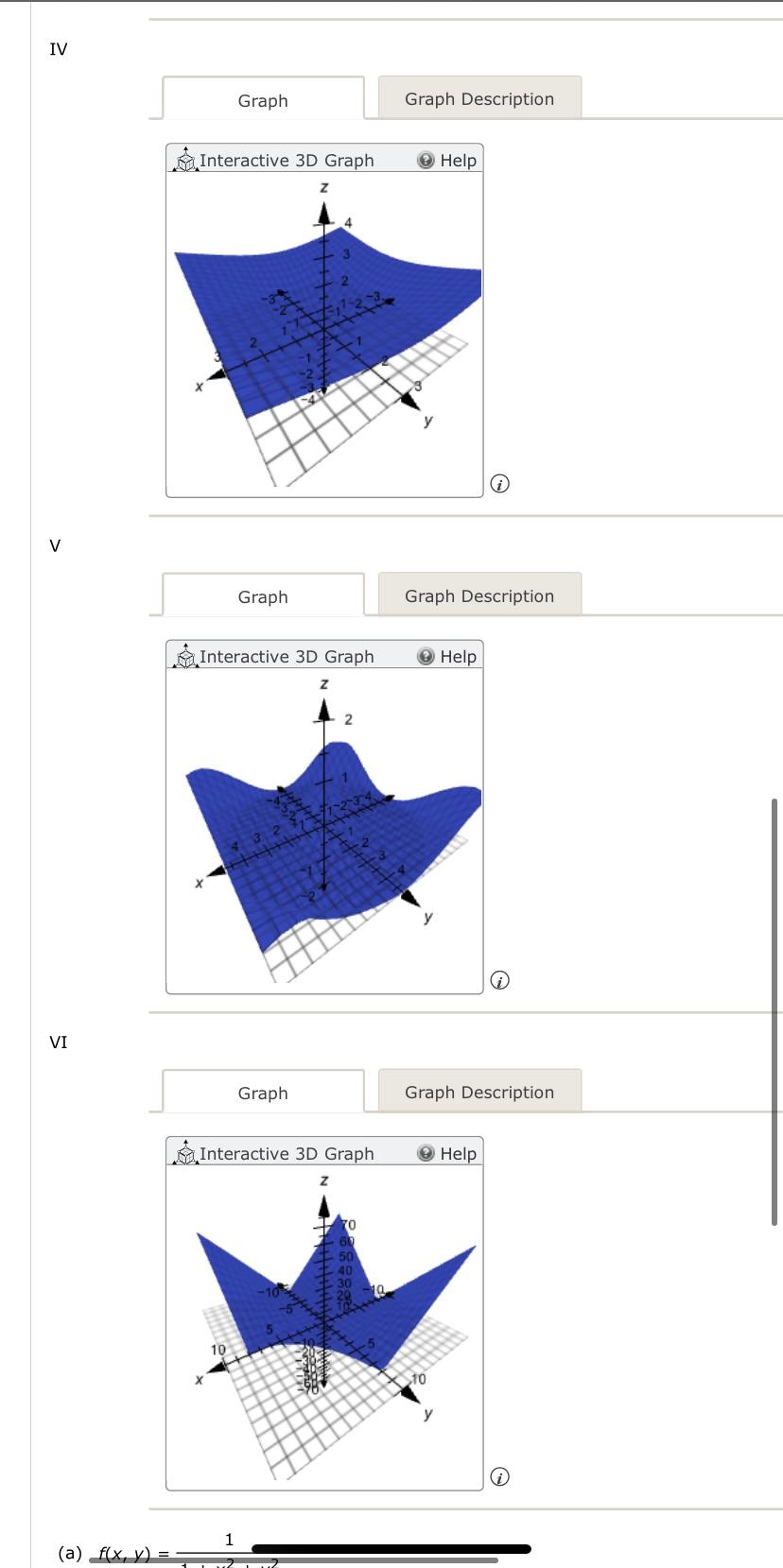
In the realm of mathematics, functions serve as the building blocks of understanding various phenomena. Like a well-composed symphony, each function has its own unique characteristics that resonate in different ways with its graphical representation. In this guide, we shall embark on an exploration to discern the appropriate descriptions that align with the function represented by a specific graph. This journey will illuminate the interconnectedness between abstract numerical expressions and their tangible graphical counterparts.
The first step in this analysis is to attune oneself to the fundamental properties of functions. Every function can be categorized by its degree, monotonicity, and continuity, among other features. Utilizing these properties, we can draw parallels to ascertain which description accurately encapsulates the graph in question.
Understanding the Properties of Functions
The degree of a function, often identified by the highest power of its variable, serves as a foundational element for understanding its behavior. A polynomial function, for instance, might manifest as a simple linear graph or extend into the more complex parabolic shape known for its vertex. Similarly, exponential and logarithmic functions evoke distinct curves that can tell tales of growth and decay. Familiarizing oneself with these shapes is akin to becoming an astute art critic, trained to identify the brushstrokes and techniques behind a masterpiece.
Next, one must consider the monotonicity of the function. Is it increasing, decreasing, or consistent? This aspect is crucial in interpreting how the function behaves across its domain. An increasing function is like a relentless current, powering steadily in one direction, while a decreasing function resembles a cascading waterfall, steeply plunging downwards. Constant functions, on the other hand, are uniquely serene, providing a platform of stability amidst a sea of variability.
Analyzing the Graph
Asupon observing the graph, one must carefully note its key features. Are there intercepts with the axes that reveal where the function crosses the x-axis or y-axis? The x-intercepts are particularly significant, as they elucidate the roots of the equation, where the function’s value equates to zero. The y-intercept provides insight into the function’s initial value, acting as a touchstone for further explorations.
Moreover, we must examine any turning points—these are the local maxima and minima where the graph changes direction. Each turning point serves as a pivotal moment, much like a narrative climax in a compelling story, signaling a transition in the function’s trajectory. Such points often reveal the nature of the function, offering insights into its overall shape and behavior.
Contour and Curvature
The contour of a graph is equally essential in conveying its essence. The curvature, which can either exhibit concavity or convexity, alters the perception of the graph significantly. A graph that curves upward suggests a positive concavity, where the rate of increase accelerates. Conversely, downward concavity signals a deceleration in the function’s growth. This aspect can often lead to profound insights about the nature of the function portrayed.
Visual aesthetics are vital; a symmetrical graph may hint towards even functions, while an asymmetrical graph can signal odd functions. An elegant parabolic curve, reminiscent of a graceful arc, might reflect quadratic functions, while a markdown linear graph conveys straightforwardness akin to a clear path through dense forest. Recognizing these shapes is paramount in identifying the mathematical descriptions that best suit the graph.
Choosing Descriptions Based on Evident Patterns
Once the properties, behaviors, and aesthetics have been evaluated, one can begin choosing appropriate descriptions for the graph. Given the identified traits, descriptions might involve specific function types: linear, quadratic, cubic, exponential, or trigonometric, each bearing its own distinctive attributes.
For instance, an accelerating curve could correlate with exponential growth, exemplifying the mathematics behind compound interest or population growth. Alternatively, a parabolic graph with its characteristic U-shape could evoke images of projectile motion—enhancing our appreciation for the profound unity between mathematics and the physical world.
In contemplating these descriptions, one should also consider contextual factors, such as the application of the function in real-world scenarios. Does it represent the trajectory of a thrown object, the growth of a bacteria colony, or even the oscillation of a pendulum? Tying the mathematical to the practical provides a more profound understanding and enhances the allure of the function itself.
Reflections and Conclusions
To conclude, the task of matching descriptions to the function represented by a graph offers a delightful intellectual challenge that transcends mere computation. It invites a contemplative exploration of the interrelation between abstract mathematical concepts and their physical representations within the universe. As we decode the intricacies of the graph, we appreciate not only the function itself but also the underlying mathematics that enrich our understanding of the world around us.
As with any masterpiece, it is essential to approach the function’s graph with an open yet critical mind—to appreciate its aesthetic qualities while simultaneously unraveling its mathematical significance. As we delve deeper into these explorations, we ultimately sharpen our analytical skills, enhancing our capacity to interpret the myriad graphical stories that unfold across the plane of mathematics.

Leave a comment